Many packaging problems start with material mismatch. Paper tears during packing, prints look dull, or bags fail under weight. These issues often happen when the real characteristics of kraft paper are not fully understood.
Kraft paper is characterized by high strength, good flexibility, natural appearance, and stable performance in packaging and industrial use. These features come from its fiber structure and controlled manufacturing process.
Kraft paper is not chosen by accident. Its characteristics are the result of raw material selection, pulping method, and factory-level process control.
High Strength and Tear Resistance
One of the most important characteristics of kraft paper is strength. This strength is built into the fiber itself.
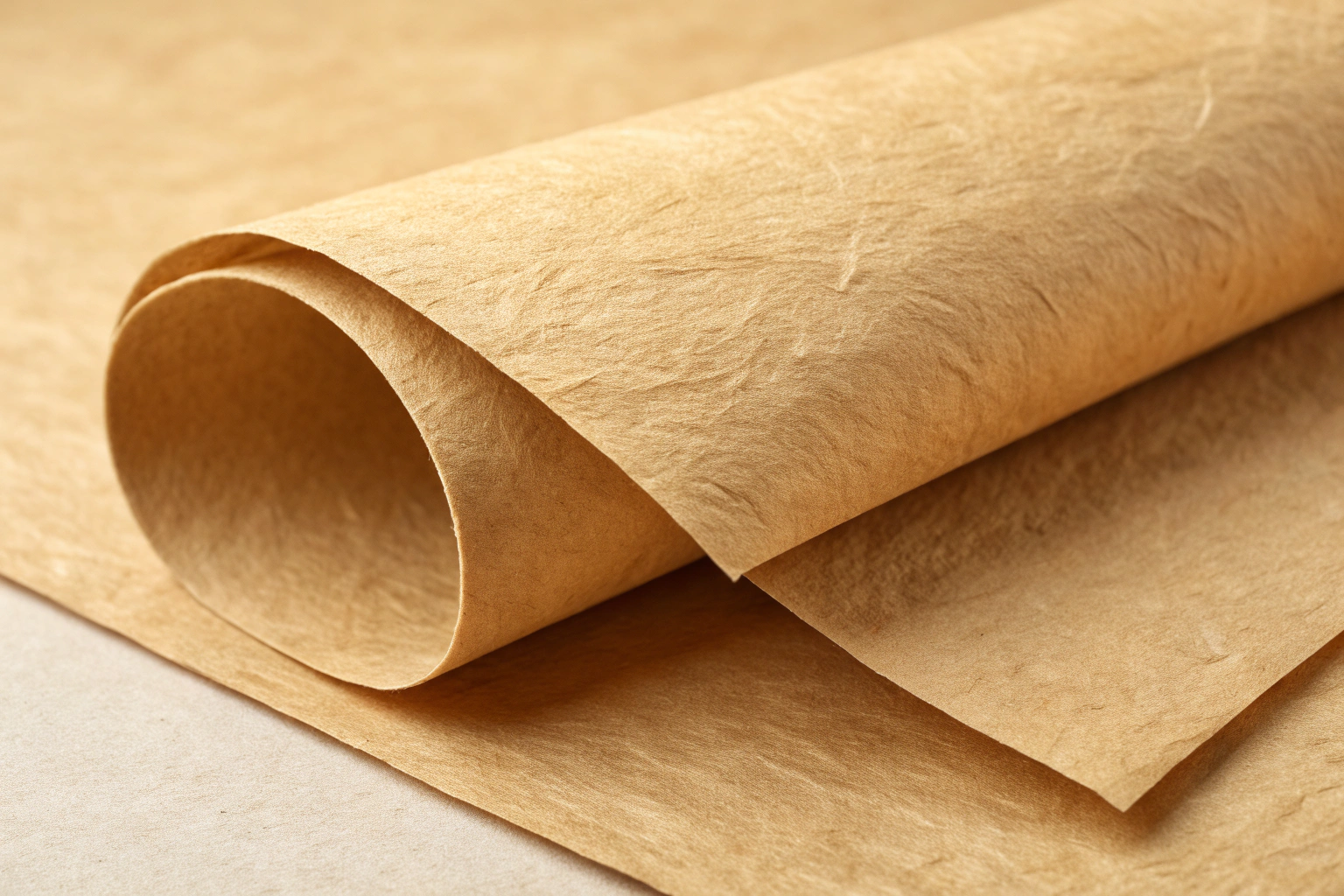
Kraft paper has high tensile and tear strength due to long wood fibers and strong fiber bonding.
Softwood fibers used in kraft paper are long and flexible. During papermaking, these fibers overlap and lock together. This creates strong resistance to tearing and pulling forces.
In factory production, refining levels are carefully controlled. Over-refining weakens fibers. Under-refining reduces bonding. Stable refining ensures kraft paper performs well on bag machines, wrapping lines, and corrugators. This strength makes kraft paper suitable for bags, liners, and protective packaging where failure is not acceptable.
Good Flexibility and Folding Performance
Strength alone is not enough. Packaging materials must also bend and fold without cracking.
Kraft paper combines strength with flexibility, allowing clean folding and forming without surface breakage.
Unlike rigid boards, kraft paper bends smoothly. It does not snap or split at fold lines when properly produced. This is critical for bag making, wrapping, and inner packaging.
In manufacturing workshops, moisture content is tightly controlled to maintain flexibility. Paper that is too dry cracks. Paper that is too wet loses stiffness. Balanced moisture ensures smooth converting and stable machine running.
Natural Appearance and Texture
Another clear characteristic of kraft paper is its visual appearance.
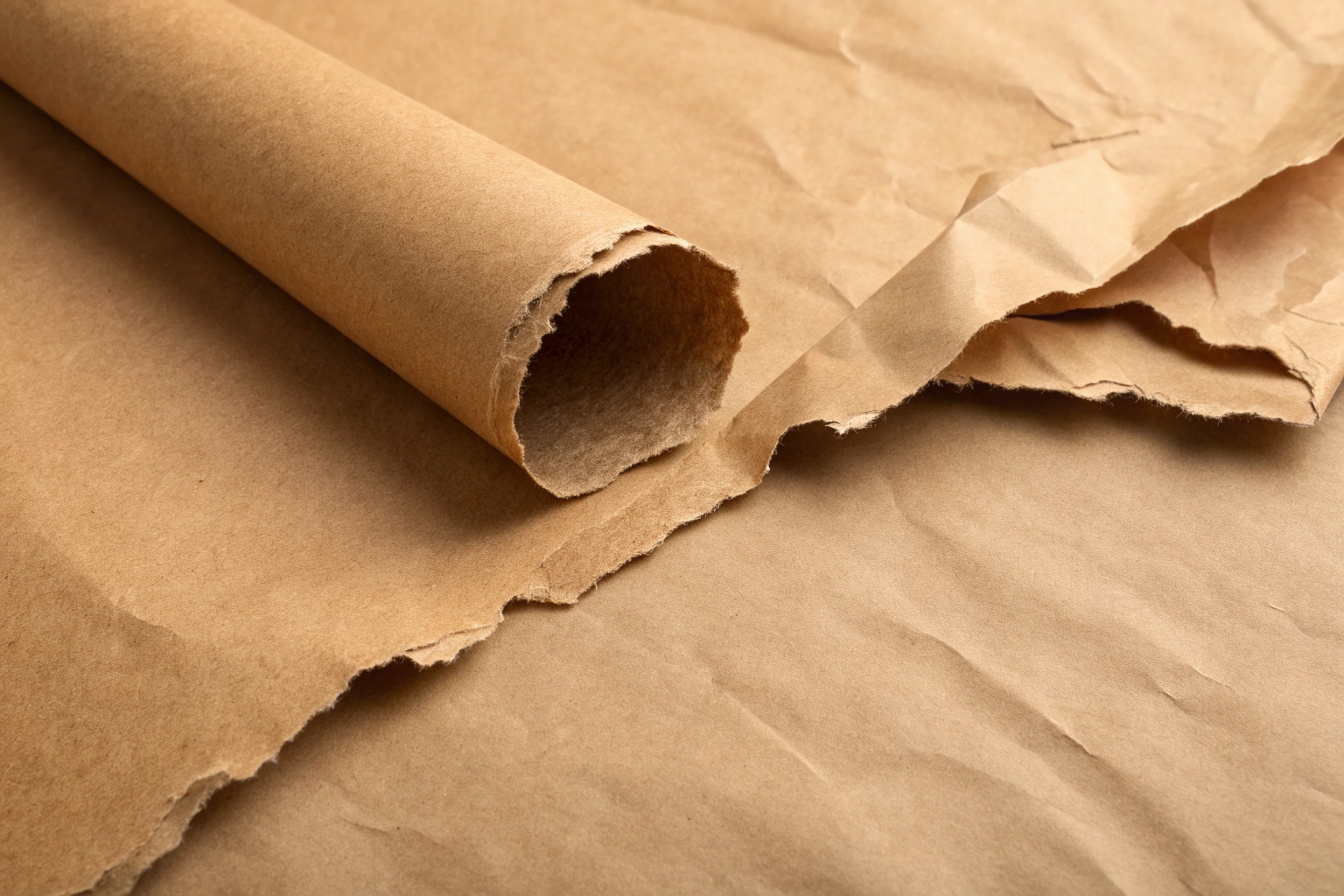
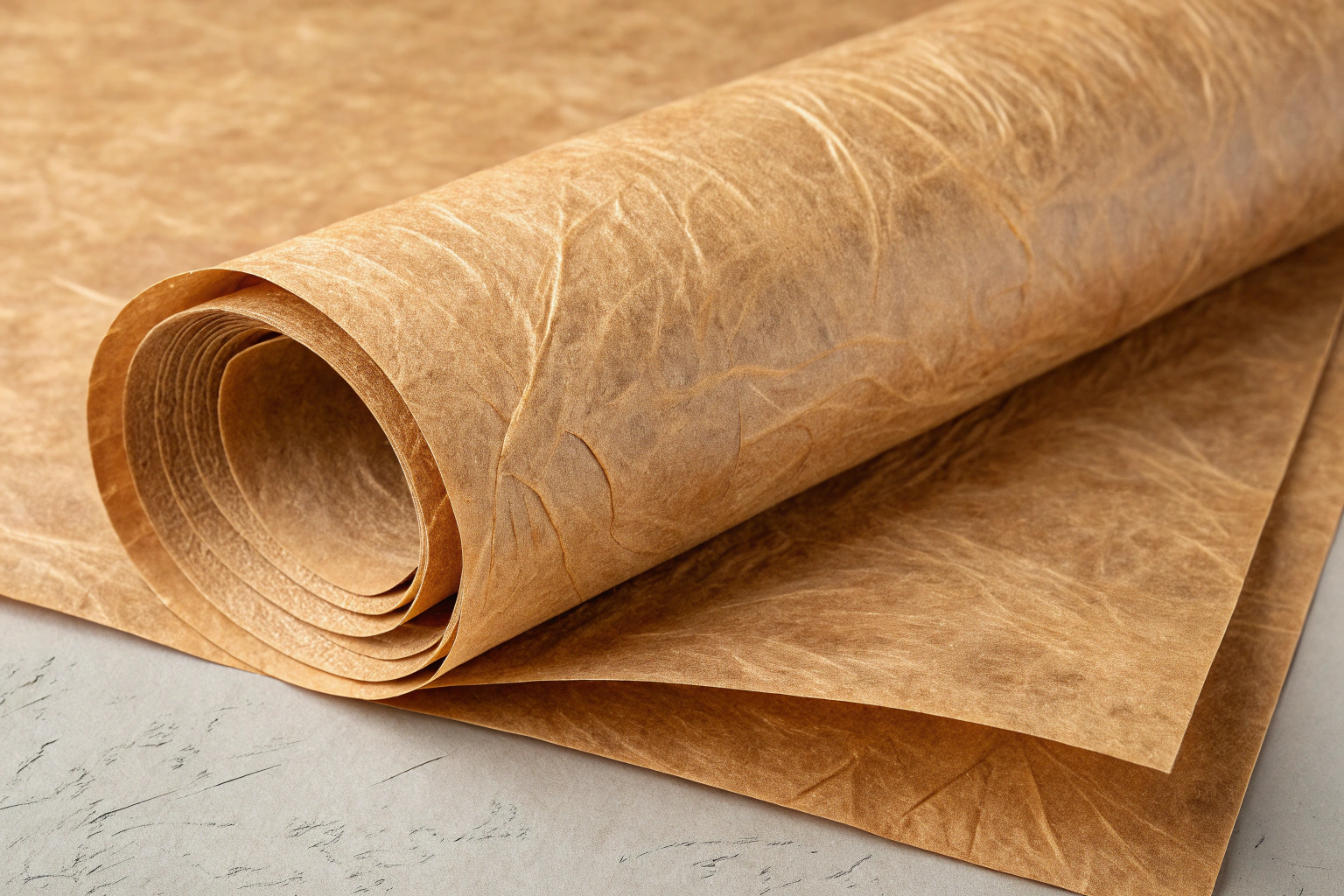
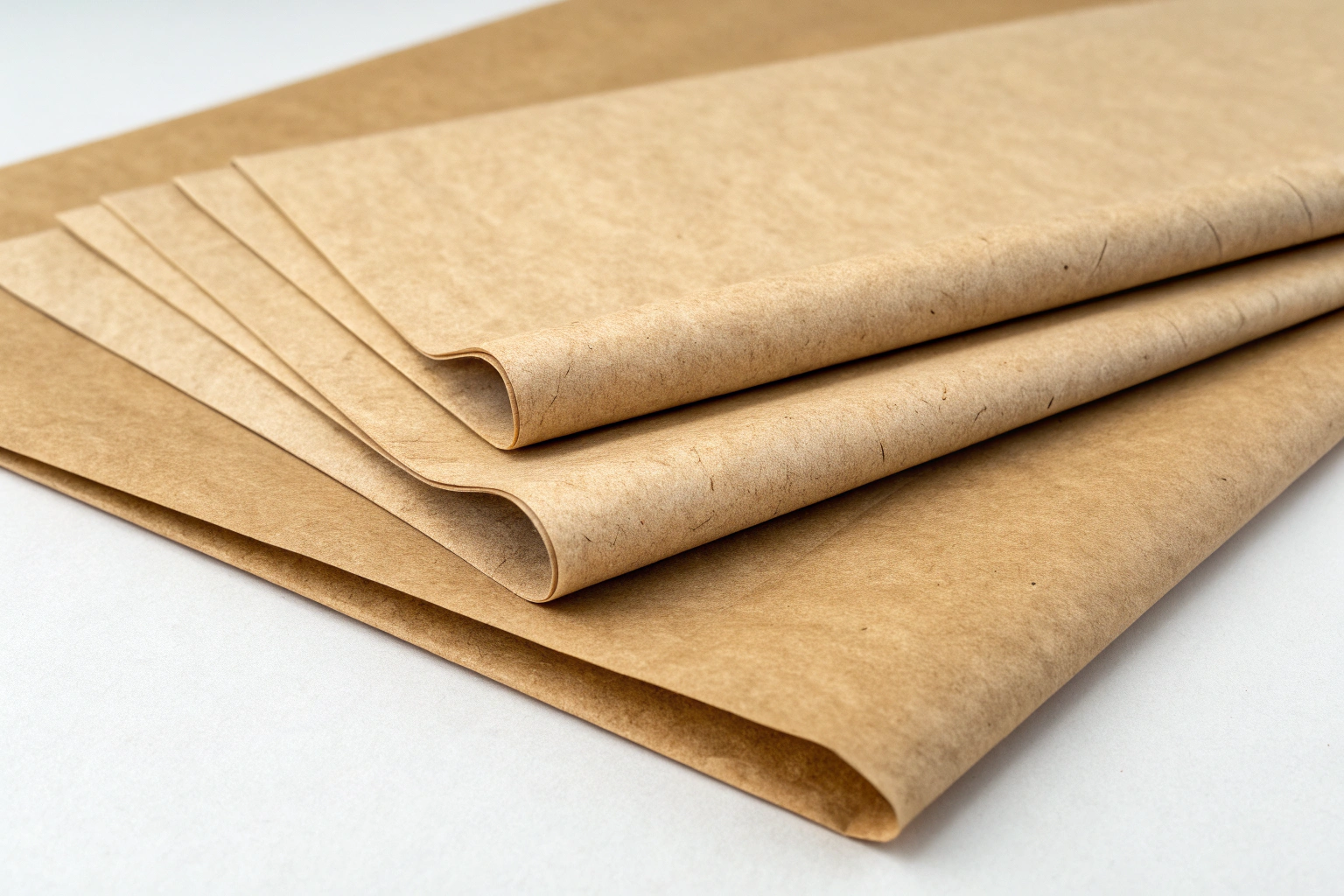
Kraft paper has a natural brown or off-white color with a visible fiber texture.
This appearance comes from unbleached or lightly bleached pulp. The surface feels organic and honest. It supports simple graphics and minimal printing.
In packaging production, this natural look is often associated with sustainability and authenticity. Many brands use kraft paper to communicate a practical and responsible image. From a manufacturing view, surface texture is controlled through calendering and pulp mix to balance appearance and strength.
Good Breathability and Moisture Response
Kraft paper interacts with air and moisture differently than coated papers.
Kraft paper is breathable and absorbs moisture more easily than coated or plastic-based materials.
This characteristic is useful for certain applications. Food packaging and industrial sacks benefit from controlled breathability. It reduces condensation and internal moisture buildup.
In factories, sizing agents are adjusted based on end use. More sizing improves water resistance. Less sizing keeps breathability. This balance is part of kraft paper grade design and cannot be separated from manufacturing control.
Stable Performance in Industrial Processing
Kraft paper is designed to run on high-speed machines.
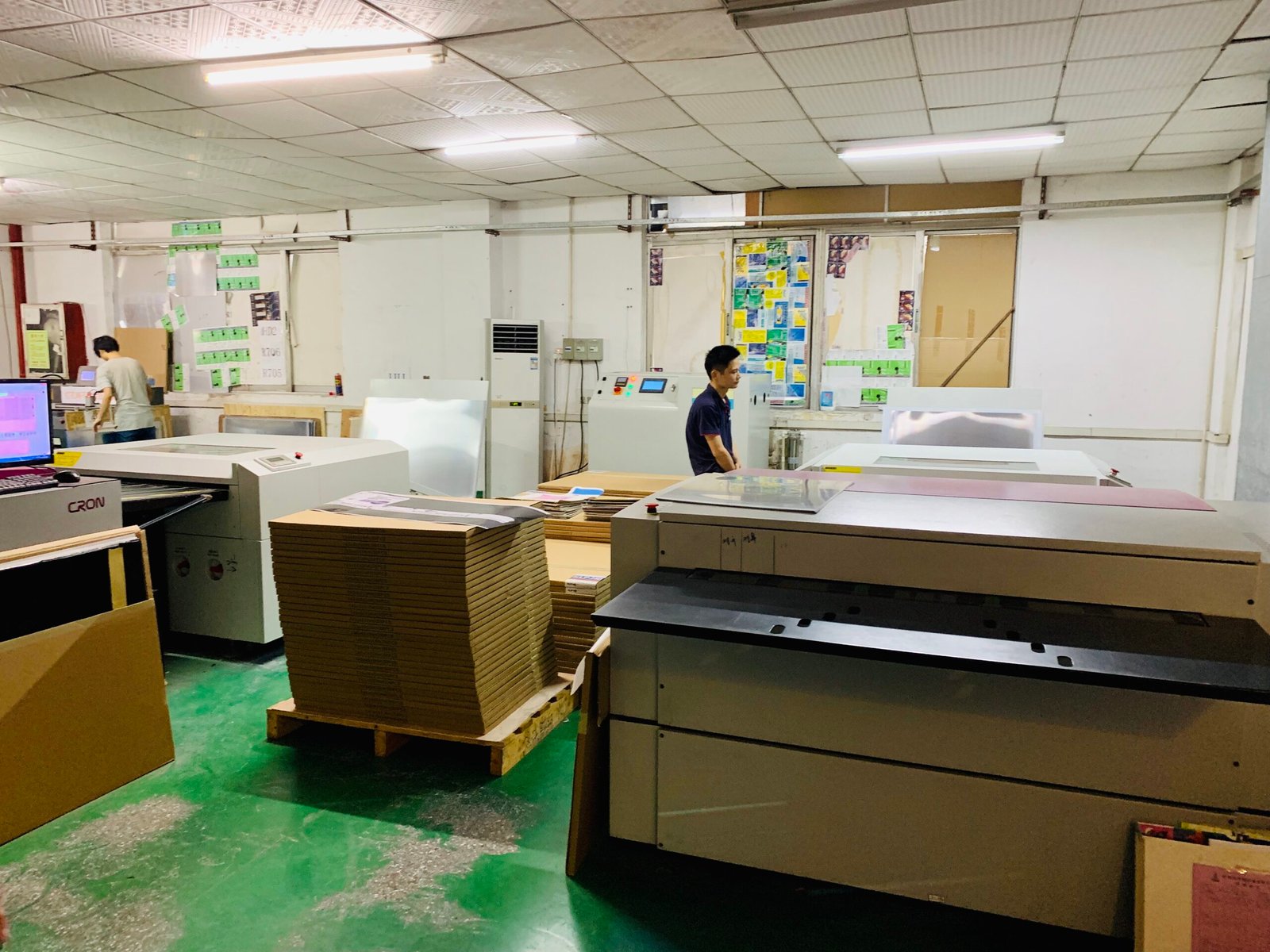
Kraft paper shows stable performance under tension, pressure, and heat during industrial processing.
In production lines, kraft paper resists tearing under tension. It feeds smoothly through rollers. It handles gluing and printing without excessive deformation.
This stability reduces downtime and waste. Factories rely on kraft paper for predictable behavior. Quality control focuses on grammage consistency, moisture stability, and strength uniformity across rolls.
Wide Range of Weights and Grades
Kraft paper is not a single product. It comes in many forms.
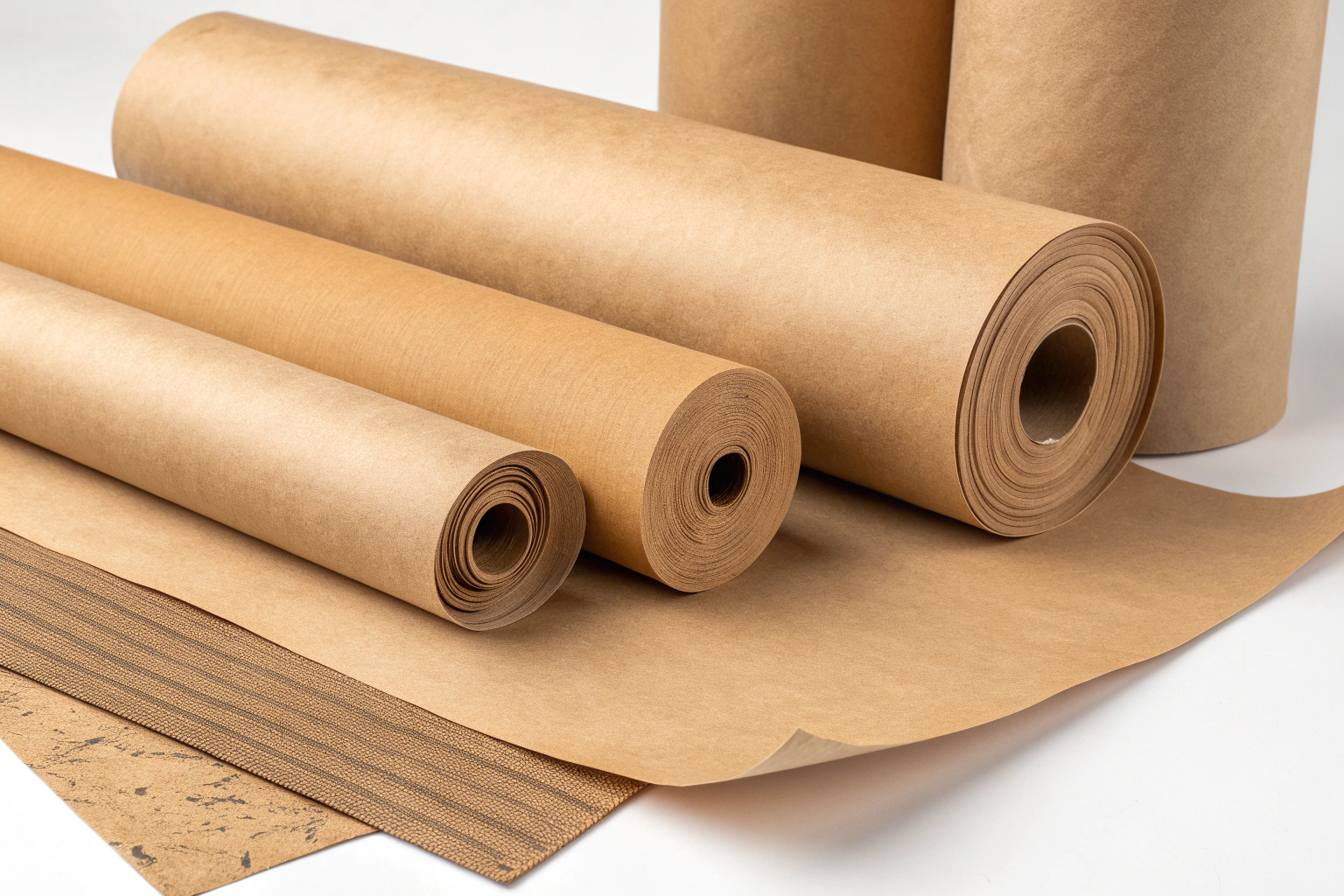
Kraft paper is available in a wide range of grammages, strengths, and surface treatments.
Lightweight kraft paper is used for wrapping and void fill. Medium-weight kraft paper is used for shopping bags and liners. Heavy-duty kraft paper is used for sacks and corrugated liners.
In manufacturing, each grade follows a defined pulp recipe and process setting. This allows kraft paper to serve many industries without changing its core characteristics.
Recyclability and Environmental Compatibility
Another key characteristic of kraft paper is its environmental performance.
Kraft paper is recyclable, biodegradable, and compatible with fiber-based recycling systems.
Made primarily from wood fibers, kraft paper breaks down naturally. It fits well into existing recycling streams. Recycled content can be added while maintaining acceptable strength for many uses.
Factories manage fiber sourcing, recycled ratios, and additive use to meet environmental requirements. This characteristic supports long-term packaging sustainability goals without sacrificing performance.
Conclusion
Kraft paper is characterized by high strength, good flexibility, natural appearance, breathability, stable industrial performance, and strong environmental compatibility. These features come from long wood fibers, chemical pulping, and disciplined factory production.
Its characteristics allow it to serve packaging, food, industrial, and logistics applications with reliability. When kraft paper is produced under proper material and process control, it delivers consistent performance from manufacturing to final use, making it one of the most dependable paper materials in packaging.