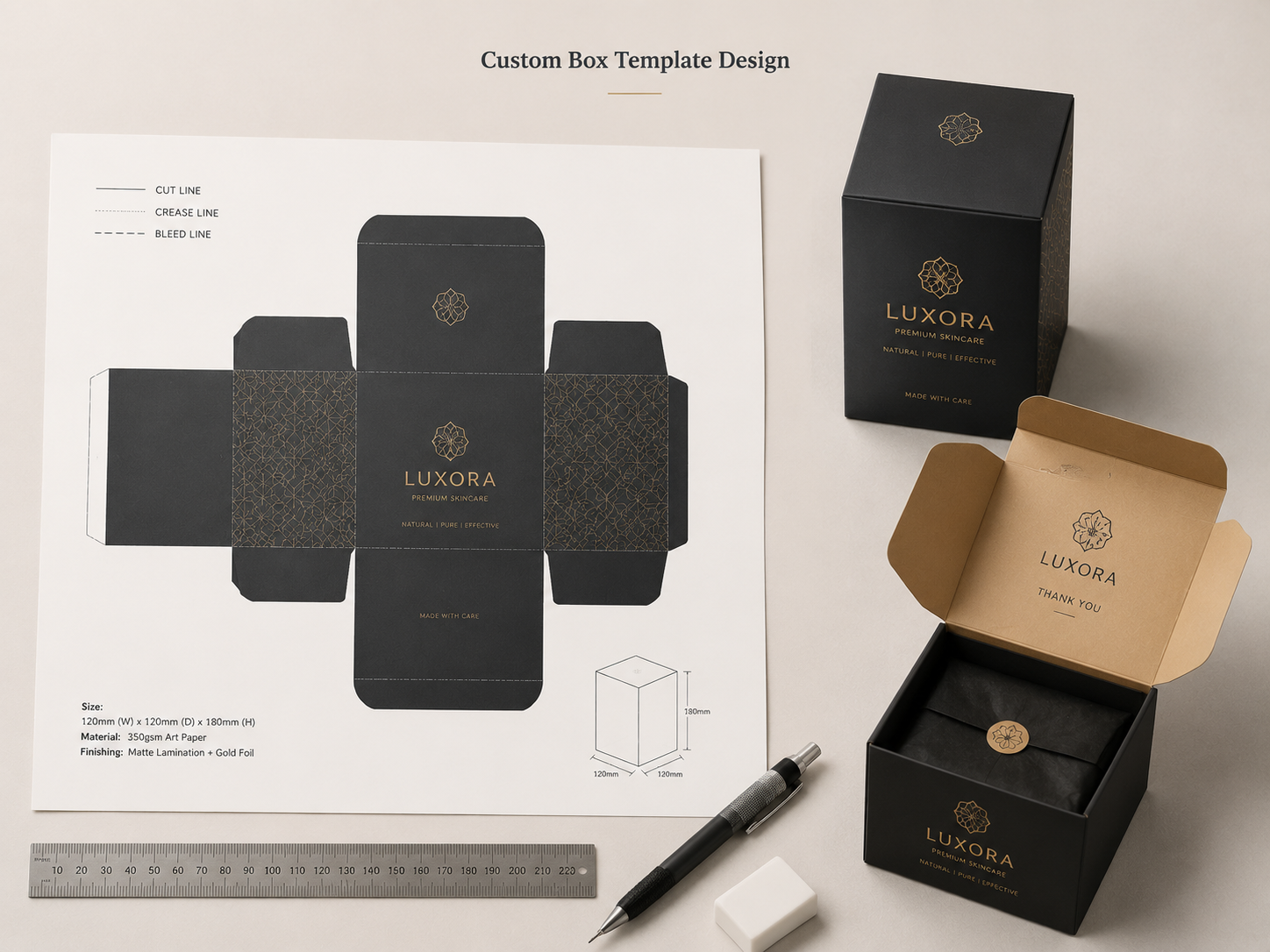
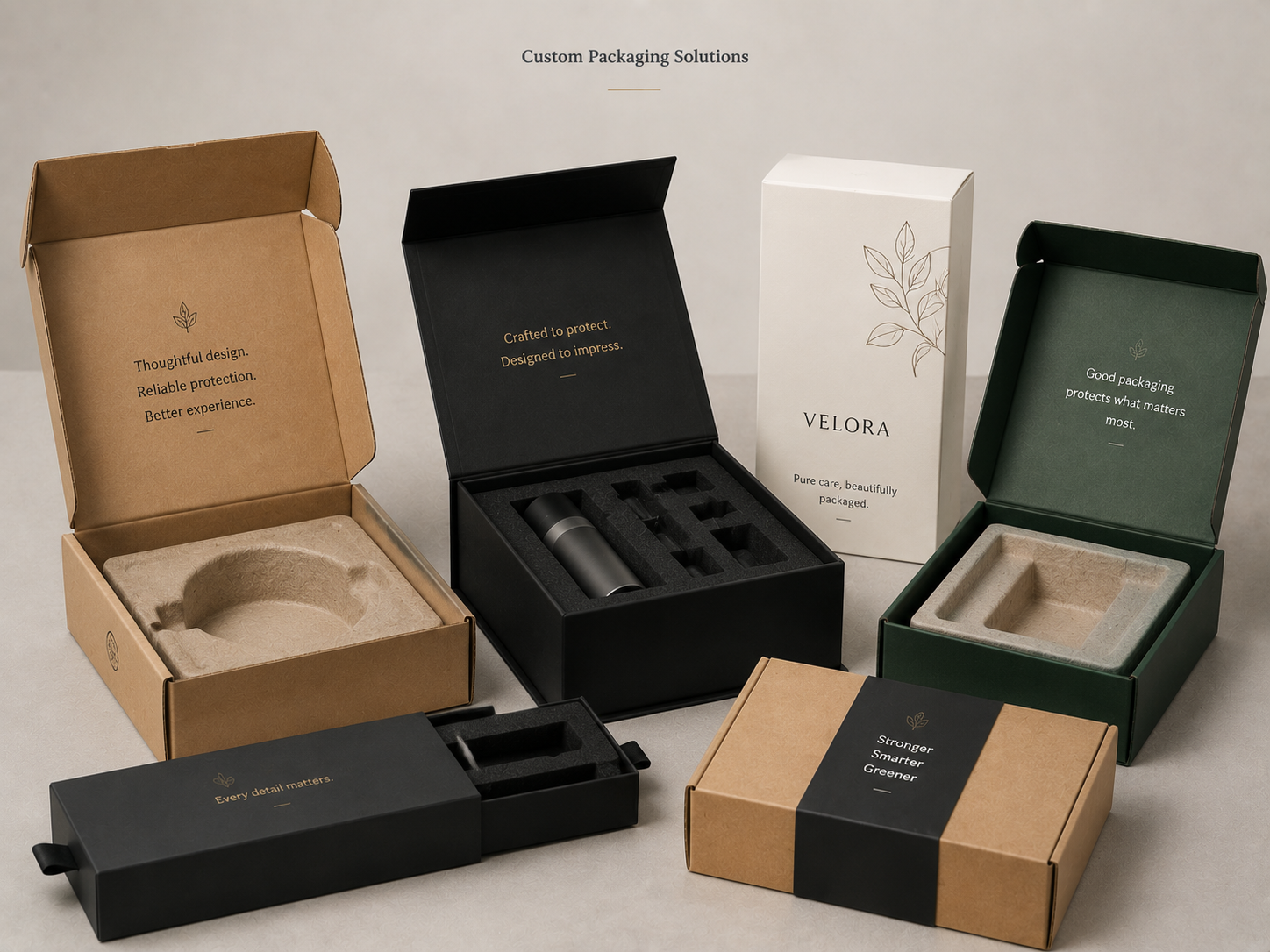
Many packaging failures come from choosing the wrong material at the start. Products get damaged, boxes collapse, or printing looks cheap. These problems often appear when kraft paper and cardboard are treated as the same material.
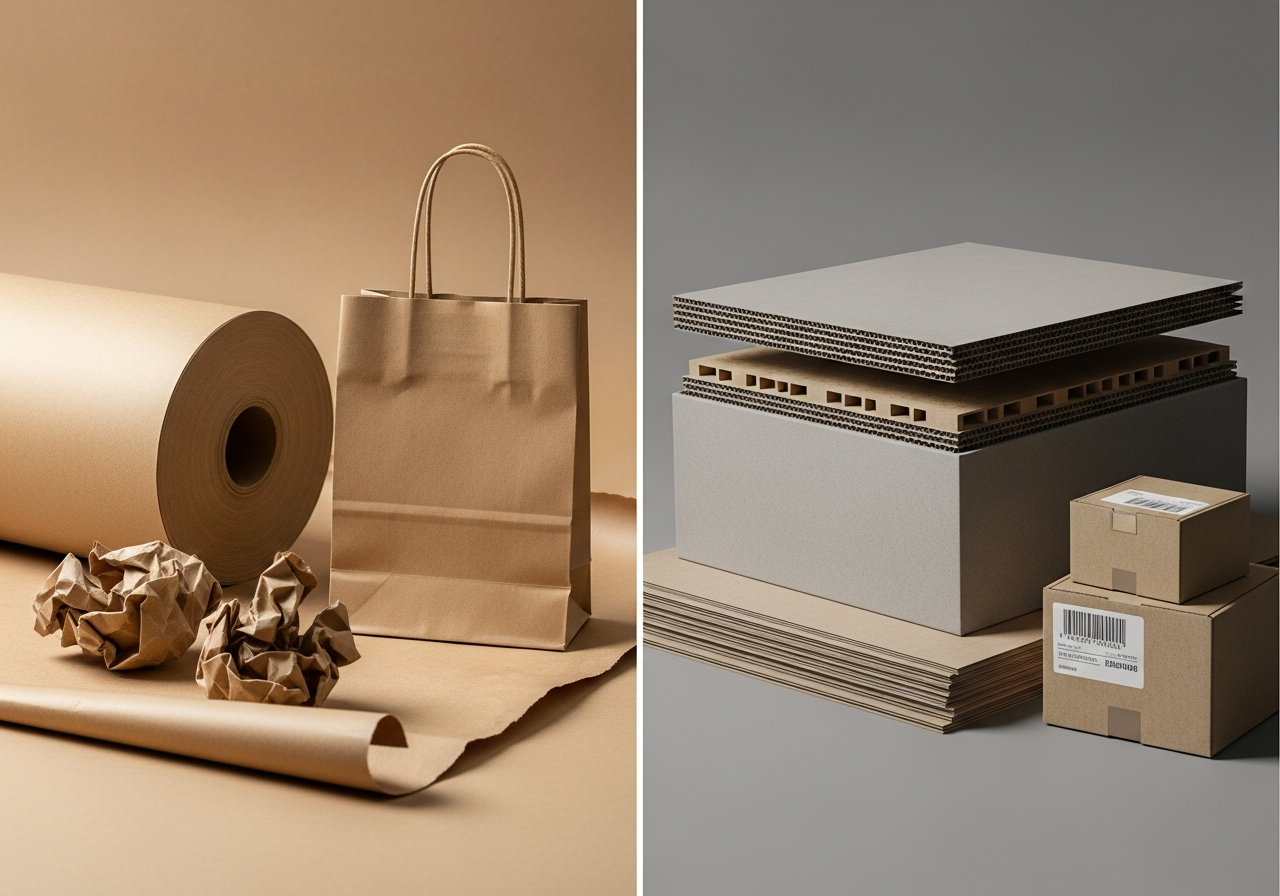
Kraft paper is a single-layer paper material made from strong wood pulp, while cardboard is a multi-layer board structure designed for rigidity and protection. Their structure, strength, and applications are fundamentally different.
Although both materials come from paper fibers, they serve very different roles in packaging manufacturing. Understanding the difference avoids structural risk and cost waste.
How Does Material Structure Separate Kraft Paper from Cardboard?
The core difference between kraft paper and cardboard is structure. Structure determines how the material performs under pressure.
Kraft paper is a flat sheet with no internal structure, while cardboard is built with multiple layers that may include a fluted core.

Kraft paper is produced as a continuous sheet. It relies on fiber bonding for strength. Thickness comes from paper weight, not internal design. Even heavy kraft paper remains flexible and foldable.
Cardboard, especially corrugated cardboard, is an engineered board. It uses liner papers bonded to inner layers. Corrugated cardboard includes a wave-shaped medium that creates vertical strength. Solid cardboard uses laminated sheets to add stiffness.
In factory workshops, this structural difference defines machine selection. Kraft paper runs on paper slitters and bag machines. Cardboard runs on corrugators, die cutters, and box folders. Mixing these materials causes processing issues.
How Do Strength and Load Performance Differ?
Strength is often misunderstood. Thicker does not always mean stronger.
Kraft paper offers high tensile and tear strength, while cardboard provides superior compression and stacking strength.
Kraft paper resists pulling and tearing. This makes it suitable for bags, wrapping, and liners. It performs well when force spreads across the surface. It does not perform well when vertical load is applied.
Cardboard is designed for load-bearing. Corrugated flutes act like columns. They absorb pressure and distribute weight. This allows boxes to stack during transport and storage.
In production testing, kraft paper passes tensile tests easily but fails compression tests. Cardboard passes compression tests but may tear if liners are weak. Each material is engineered for different stress types.
How Do Manufacturing Processes Create Different Results?
The production process shapes the final material behavior.
Kraft paper is made through pulp refining and sheet forming, while cardboard requires additional bonding and structural forming steps.
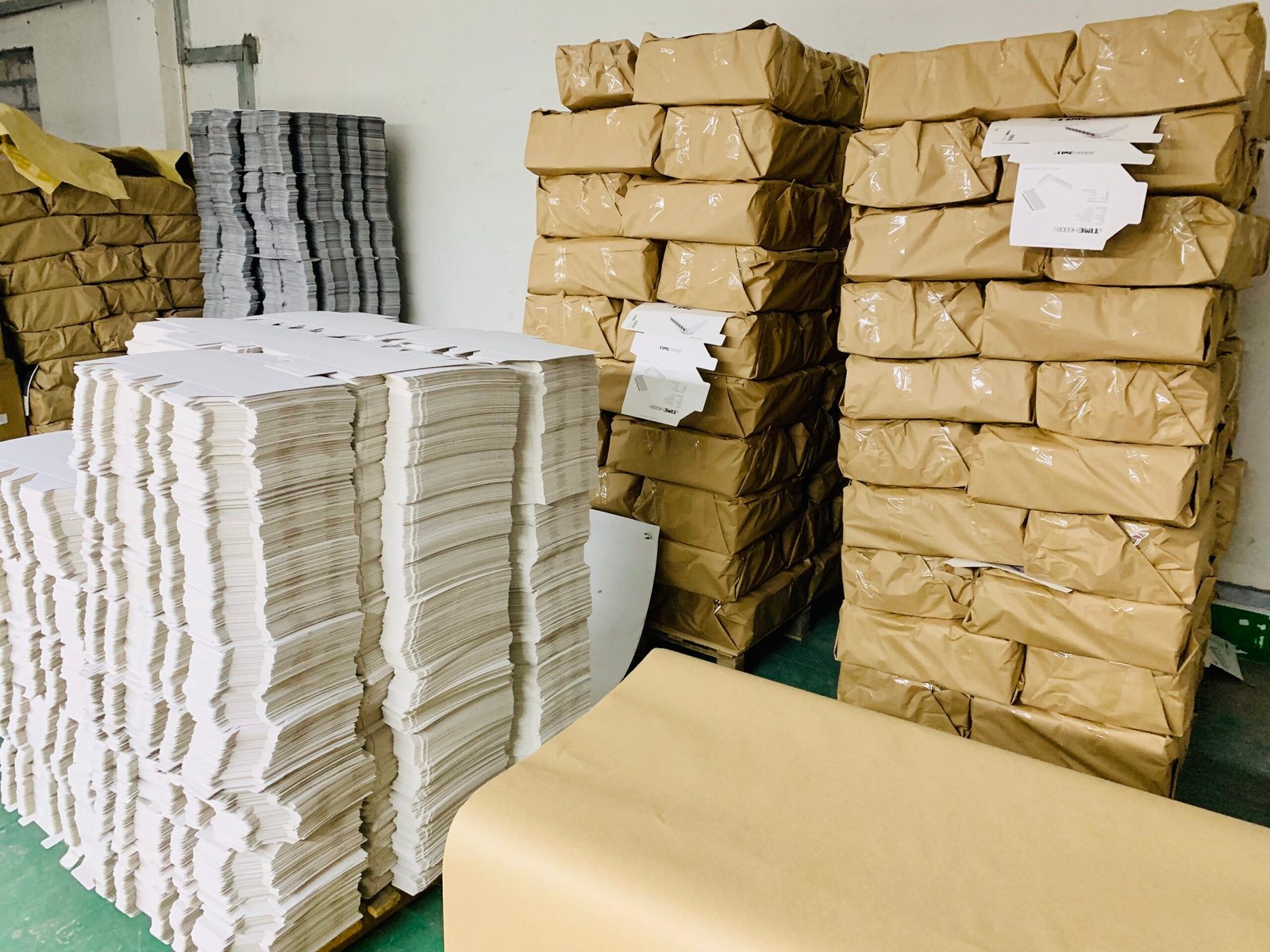
Kraft paper starts with wood pulp. Fibers are refined, formed, pressed, and dried. Strength comes from fiber quality and bonding control. Additives adjust water resistance and surface properties.
Cardboard production begins with liner paper and medium paper. These papers pass through a corrugator. Heat, pressure, and adhesive form flutes and bond layers. Moisture balance and temperature control are critical.
Inside manufacturing workshops, cardboard production requires more space, energy, and process control. This complexity explains why cardboard costs more but delivers higher structural performance.
How Does Surface and Printing Performance Compare?
Surface quality affects branding and printing results.
Kraft paper has a natural texture and absorbs ink, while cardboard surfaces vary based on liner quality and coatings.
Kraft paper has an open fiber surface. This gives a natural and eco appearance. Ink absorption is higher. Colors appear softer. Fine details are harder to control without coating.
Cardboard uses liner papers that can be kraft, white kraft, or coated paper. Coated liners provide smooth surfaces for high-resolution printing. This allows sharp graphics and consistent color.
In factory printing lines, kraft paper is often printed with simple designs. Cardboard supports flexo, offset, and digital printing depending on liner choice. Material selection directly affects brand presentation.
How Do Typical Applications Clearly Separate the Two?
Application is the final proof of difference.
Kraft paper is used for flexible packaging and inner protection, while cardboard is used for rigid packaging and transport protection.
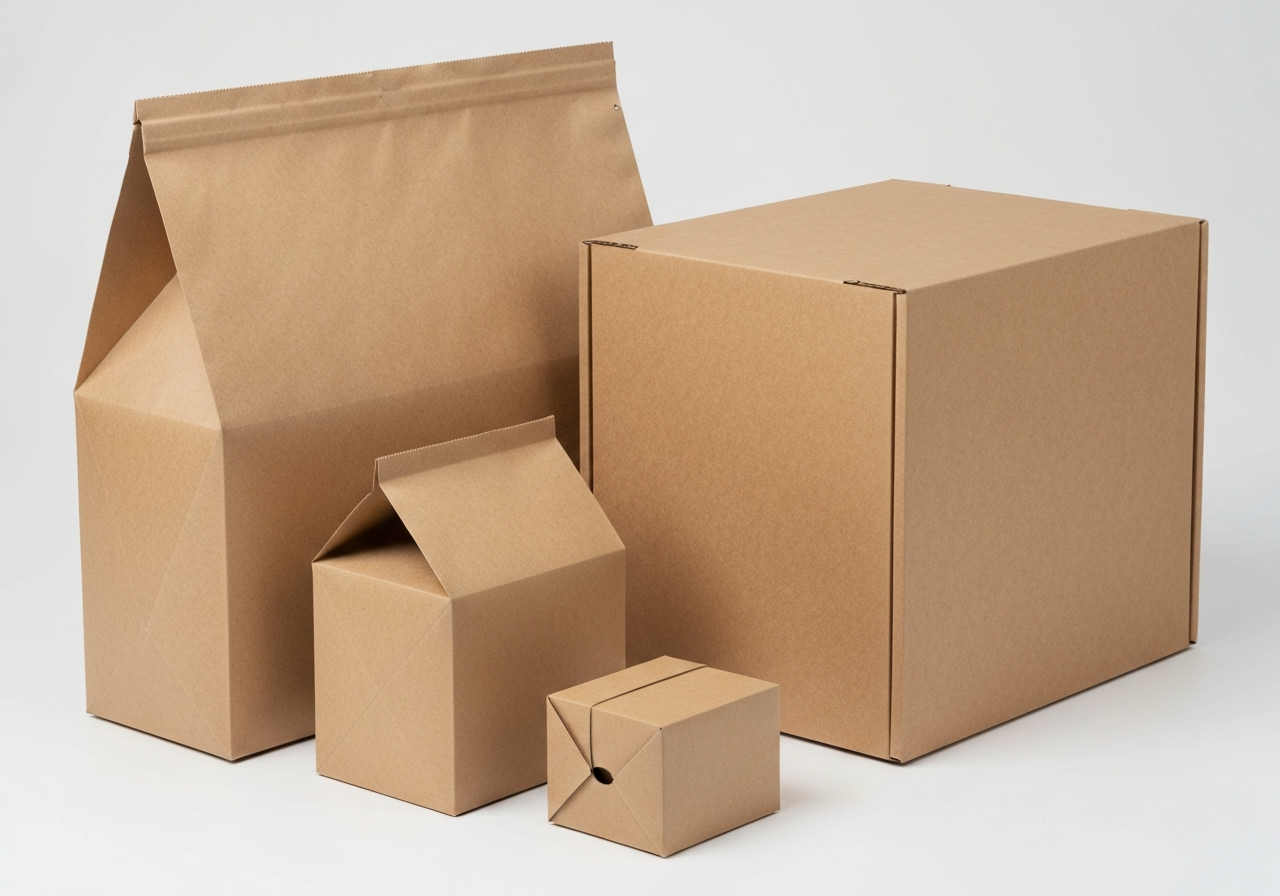
Kraft paper applications include shopping bags, wrapping paper, inner liners, envelopes, and protective sheets. These uses need flexibility and tear resistance.
Cardboard applications include shipping cartons, retail boxes, display units, and protective inserts. These uses need shape retention and stacking strength.
In manufacturing planning, material choice starts from product weight, transport distance, and storage conditions. Kraft paper cannot replace cardboard for shipping boxes. Cardboard is inefficient for simple wrapping.
How Do Sustainability and Material Control Differ?
Both materials support sustainability goals, but in different ways.
Kraft paper focuses on fiber purity and recyclability, while cardboard focuses on material efficiency through structure.
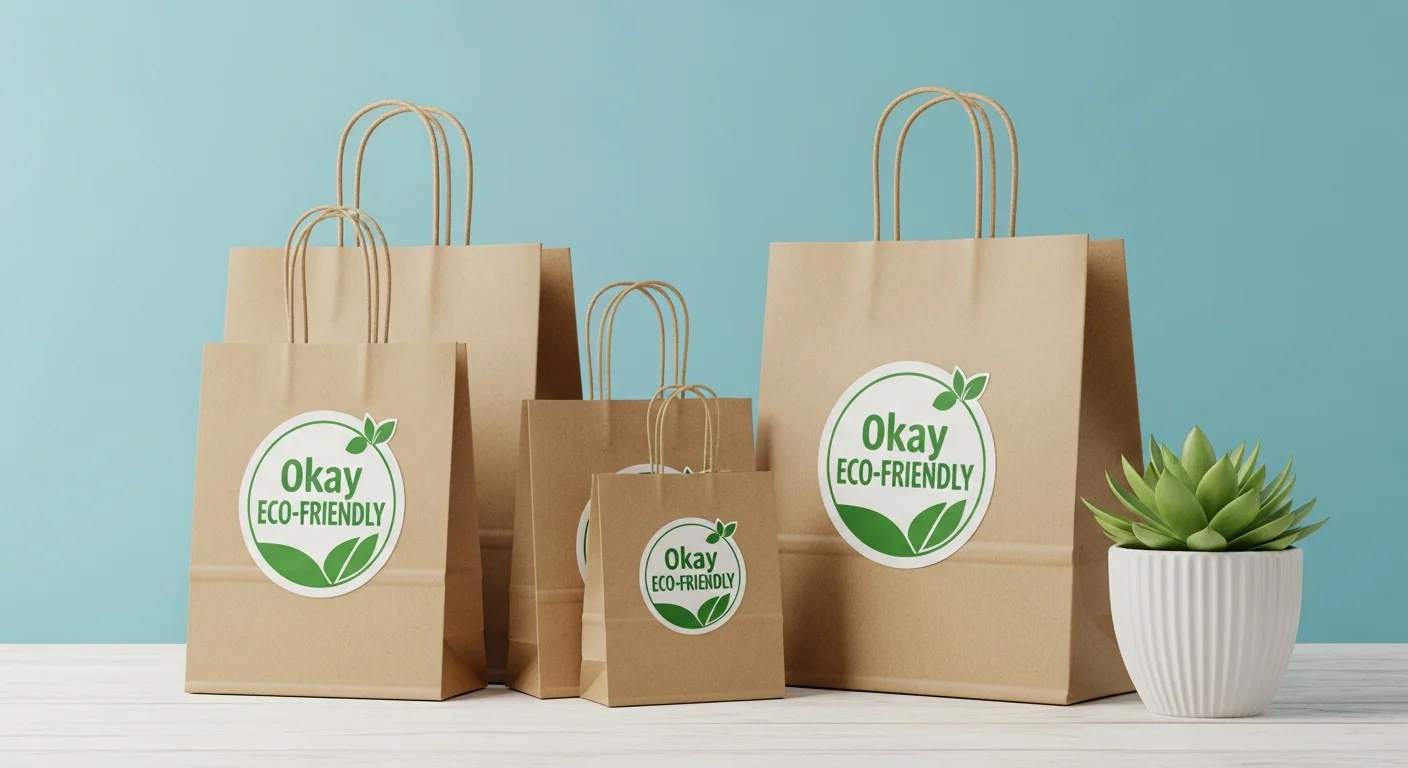
Kraft paper often uses high virgin fiber content. This improves recyclability and strength. It biodegrades easily and fits natural packaging trends.
Cardboard uses structure to reduce material usage. Corrugated flutes replace solid mass. This lowers fiber consumption per unit of strength. Cardboard is also widely recyclable.
In factories, sustainability control includes fiber sourcing, recycled content ratio, and process efficiency. Both materials meet environmental standards when produced under proper control systems.
Conclusion
Kraft paper and cardboard differ in structure, strength, production method, surface behavior, and application. Kraft paper is a flexible, fiber-based material designed for tearing resistance and wrapping use. Cardboard is a layered board engineered for compression strength and product protection.
Choosing between them is not about thickness or appearance. It is about understanding load conditions, transport needs, and manufacturing processes. When material selection matches real use conditions, packaging performs reliably, protects products, and supports consistent production quality from start to finish.