Many packaging problems start with unclear material choices. Boxes fail in transit. Costs rise without warning. Most issues trace back to misunderstanding corrugated box raw materials.
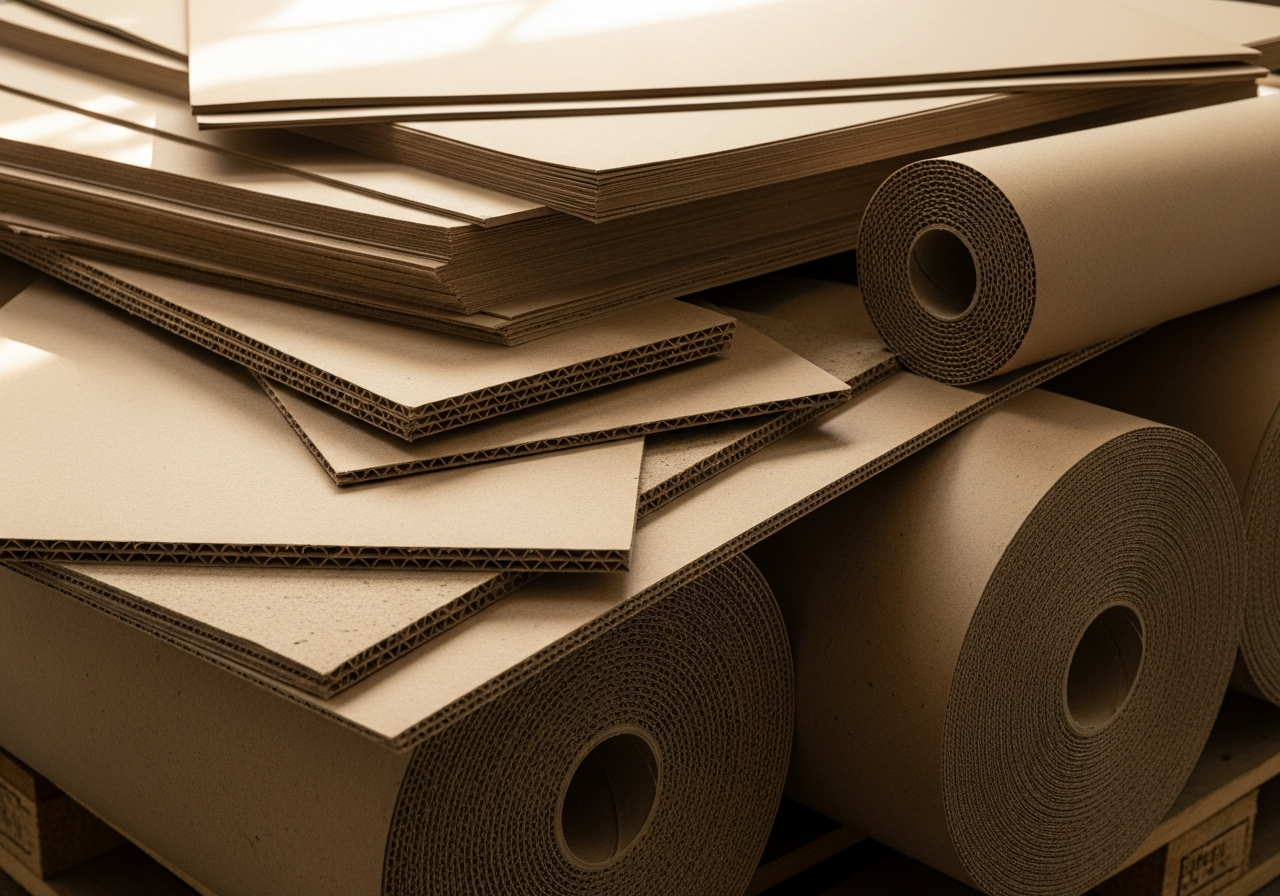
The main raw materials for corrugated boxes are paper-based materials, including linerboard, corrugating medium, starch-based adhesives, inks, and surface treatments, all selected to balance strength, cost, and sustainability.
Corrugated boxes look simple from the outside. Inside the factory, each material choice affects strength, appearance, cost, and production stability. Understanding these materials helps explain why two boxes that look similar perform very differently.
Is Paper the Core Raw Material of Corrugated Boxes?
Paper makes up most of the corrugated box by weight and cost. It also determines performance.
Corrugated boxes are mainly made from linerboard and corrugating medium, which together form the fluted board structure.
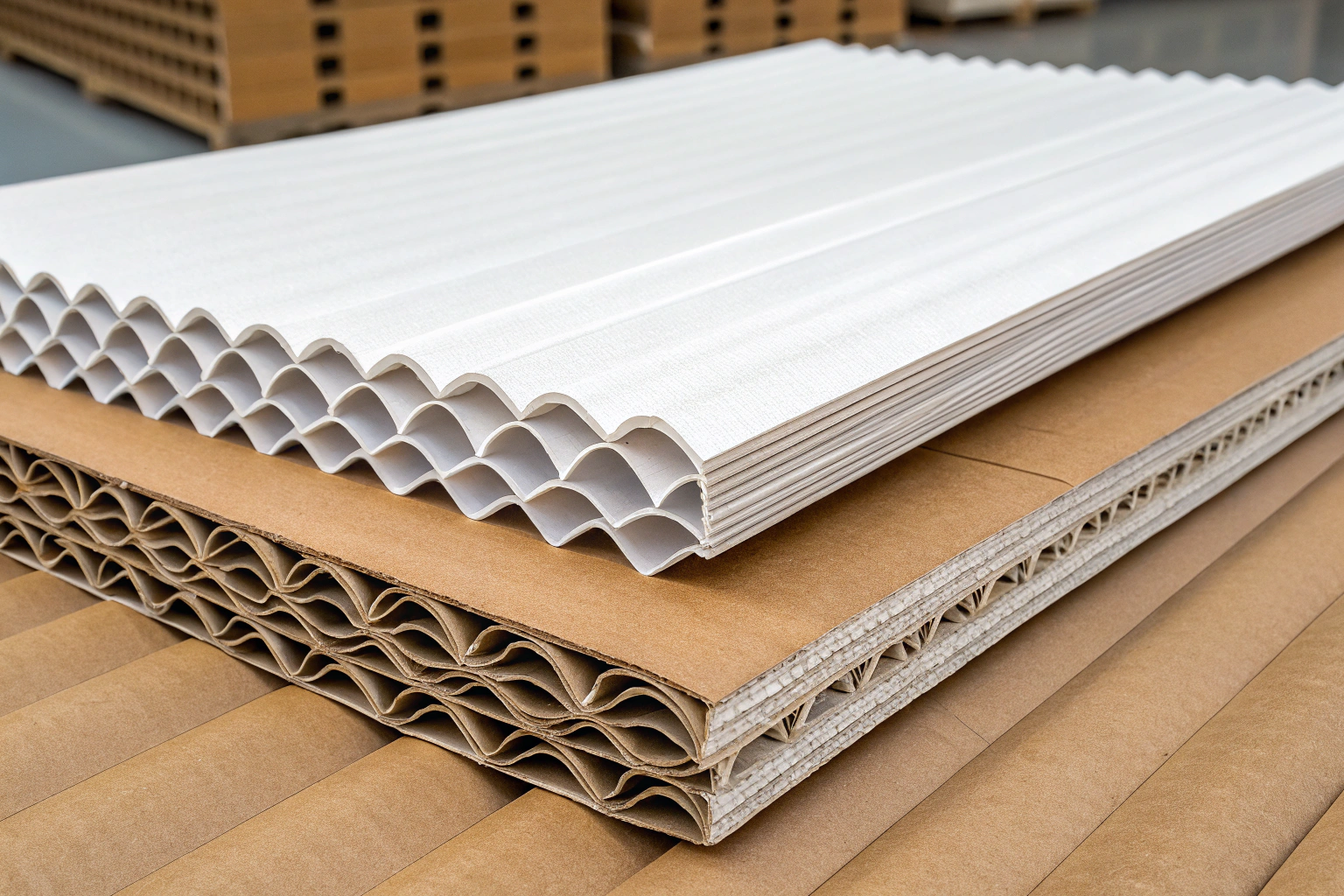
Linerboard forms the outer and inner surfaces of the box. It provides print quality, puncture resistance, and stacking strength. Corrugating medium forms the fluted wave inside the board. This wave structure absorbs impact and supports vertical load.
In manufacturing, linerboard and medium come in large paper rolls. These rolls vary by fiber type, strength, and moisture resistance. Virgin fiber paper uses fresh wood pulp. Recycled paper uses recovered fibers. Both are widely used, depending on performance needs.
Virgin linerboard offers higher tear resistance and better appearance. It works well for retail packaging and humid environments. Recycled linerboard reduces cost and supports sustainability goals. It performs well for transport packaging when properly engineered.
The medium paper focuses on stiffness and recovery. It must hold the flute shape after forming. Medium quality directly affects compression strength. Weak medium collapses under load, even if linerboard is strong.
Inside the workshop, paper quality is tested before use. Ring crush, burst strength, and moisture levels are checked. Stable paper quality keeps corrugator speed high and reduces waste.
What Role Does Flute Structure Play as a Raw Material Factor?
Flute type changes how paper performs. It also changes material usage.
Flute structure determines thickness, cushioning, and paper consumption in corrugated board.
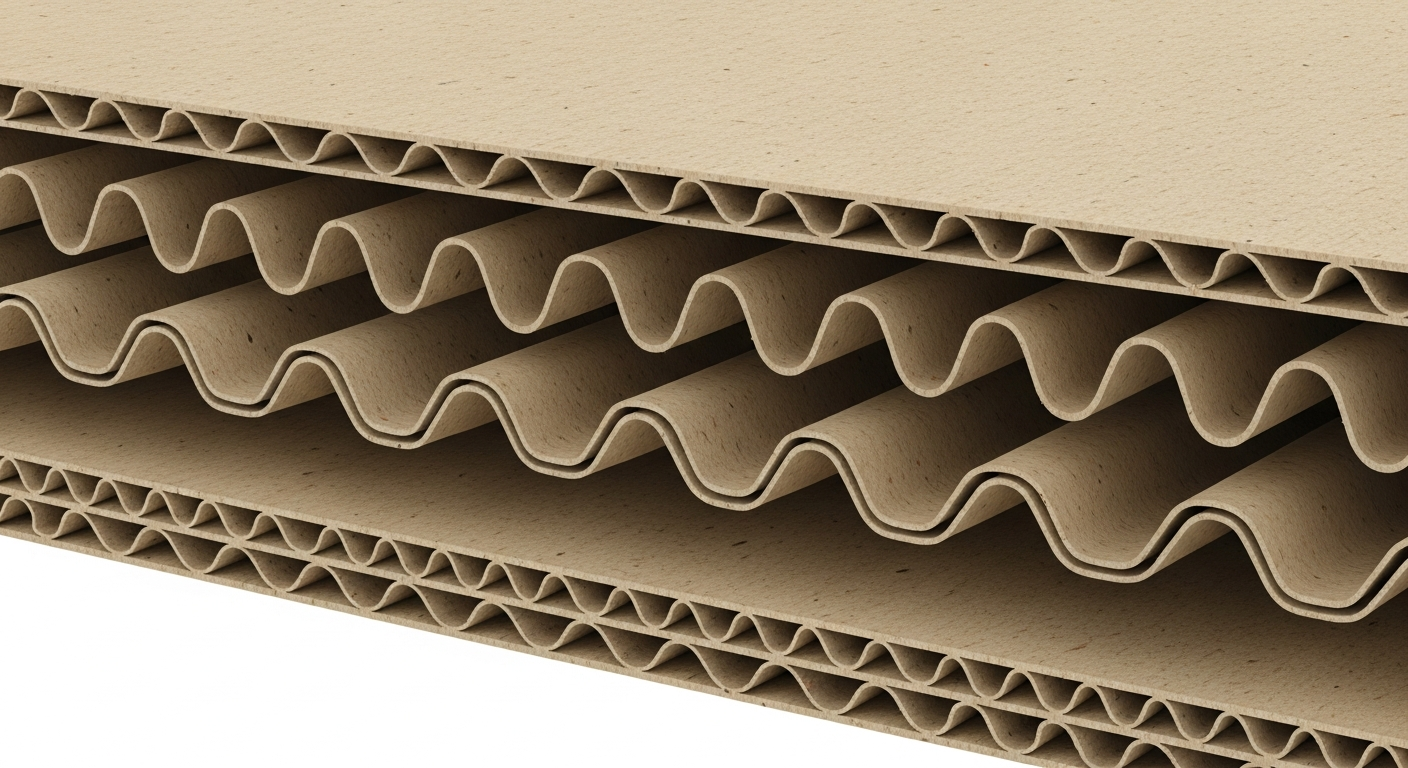
Flutes are formed by heating and shaping the medium paper. Common flute types include A, B, C, E, and F. Each flute has a different height and pitch.
A flute is thick and provides strong cushioning. It uses more paper. B flute is thinner and offers good stacking strength with less material. C flute balances cushioning and compression. E and F flutes are thin and used for small, high-graphic packaging.
From a manufacturing view, flute choice affects corrugator setup and adhesive consumption. Thicker flutes need more glue and slower speeds. Thinner flutes run faster and save material.
Flute choice also affects shipping efficiency. Thicker boxes take more space in containers. Optimized flute selection reduces freight cost without reducing protection.
Factories often test multiple flute options before finalizing a design. This ensures the lowest material use that still meets performance needs.
Are Adhesives Considered Raw Materials in Corrugated Boxes?
Adhesives are invisible but essential.
Starch-based adhesives bond linerboard and medium together, forming the corrugated structure.
Most corrugated boxes use starch-based adhesives made from corn, potato, or tapioca starch. These adhesives are water-based and recyclable.
In the factory, adhesive formulation is adjusted based on paper type, speed, and humidity. Too much glue increases cost and causes warping. Too little glue causes delamination.
Additives such as borax and enzymes improve bonding speed and strength. These additives are carefully controlled to keep costs stable and performance consistent.
Adhesive quality affects production efficiency. Fast-setting adhesives allow higher corrugator speeds. Stable bonding reduces board separation during die cutting and folding.
Although adhesives represent a small percentage of material cost, poor adhesive control leads to high scrap rates. This makes adhesive management a key part of cost and quality control.
What Printing Inks and Coatings Are Used as Raw Materials?
Printing materials affect appearance and process stability.
Water-based inks and surface coatings are key raw materials for printed corrugated boxes.
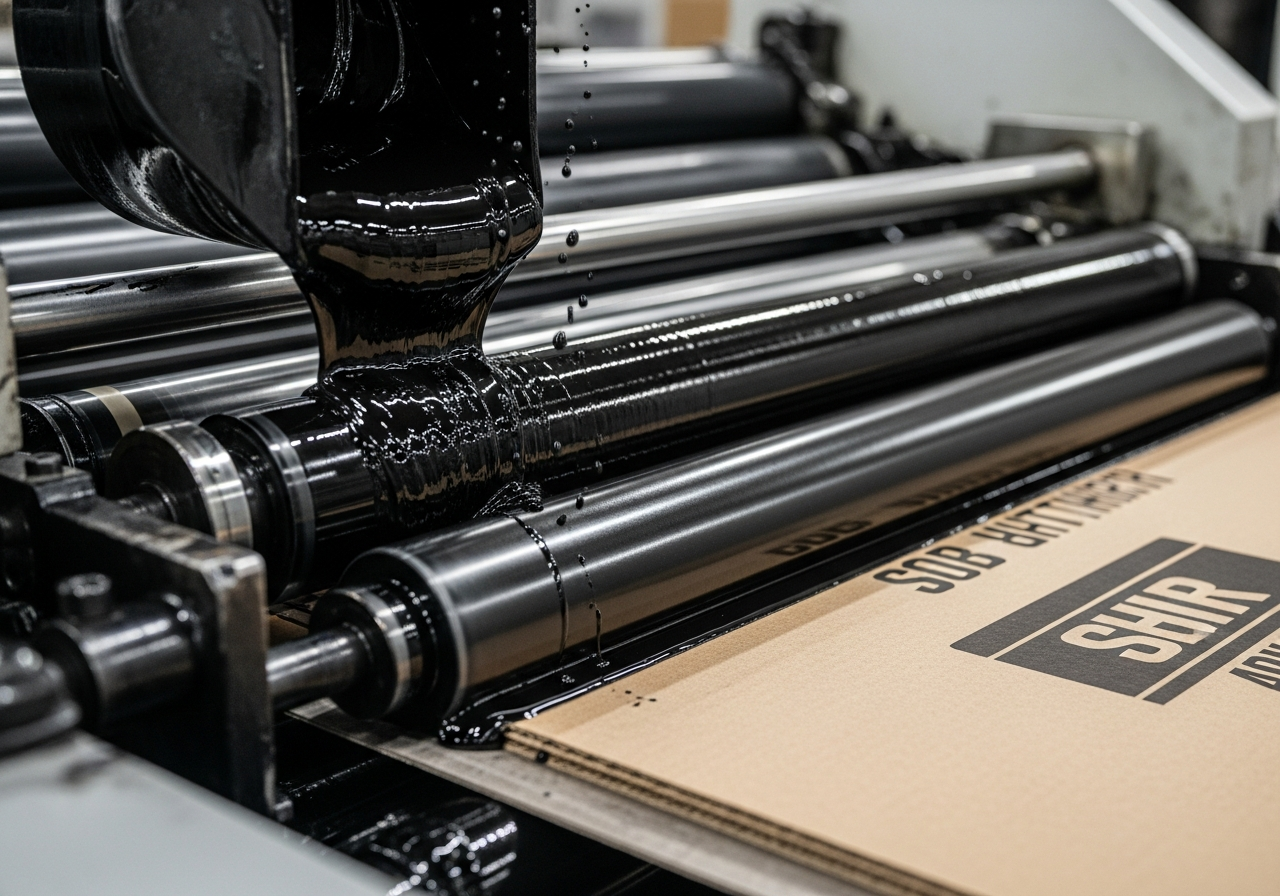
Corrugated boxes mainly use water-based flexographic inks. These inks dry quickly and work well on porous paper surfaces. They support high-speed printing and are environmentally friendly.
Ink quality affects color consistency and drying time. Low-quality inks cause smudging and uneven coverage. This slows production and increases rejects.
Some boxes use surface coatings such as varnish or water-based protective layers. These coatings improve scuff resistance and moisture tolerance. They also enhance print appearance.
In the workshop, ink viscosity and pH are monitored closely. Stable ink conditions keep print quality consistent across large volumes.
Printing materials may seem secondary, but they affect production speed and final appearance. Proper selection reduces rework and customer complaints.
How Does Recycling Shape Corrugated Box Raw Materials?
Recycling plays a major role in material sourcing.
Recovered paper fibers are a primary raw material source for corrugated boxes worldwide.
Old corrugated containers are collected, pulped, and cleaned to produce recycled paper. These fibers are reused multiple times before becoming too short.
Recycled paper reduces dependence on virgin pulp and lowers environmental impact. It also stabilizes material supply.
However, recycled fibers lose strength over time. Factories manage this by blending recycled and virgin fibers. This balance ensures performance while controlling cost.
Moisture control is critical with recycled paper. Excess moisture causes warping and weak bonding. In production, humidity and paper storage conditions are tightly managed.
Using recycled materials requires strong quality control. When managed well, recycled paper performs reliably for most transport packaging needs.
What Happens to Raw Materials Inside the Factory?
Raw materials only create value through controlled processes.
Corrugated box manufacturing transforms paper and additives into structured packaging through corrugating, printing, cutting, and folding.
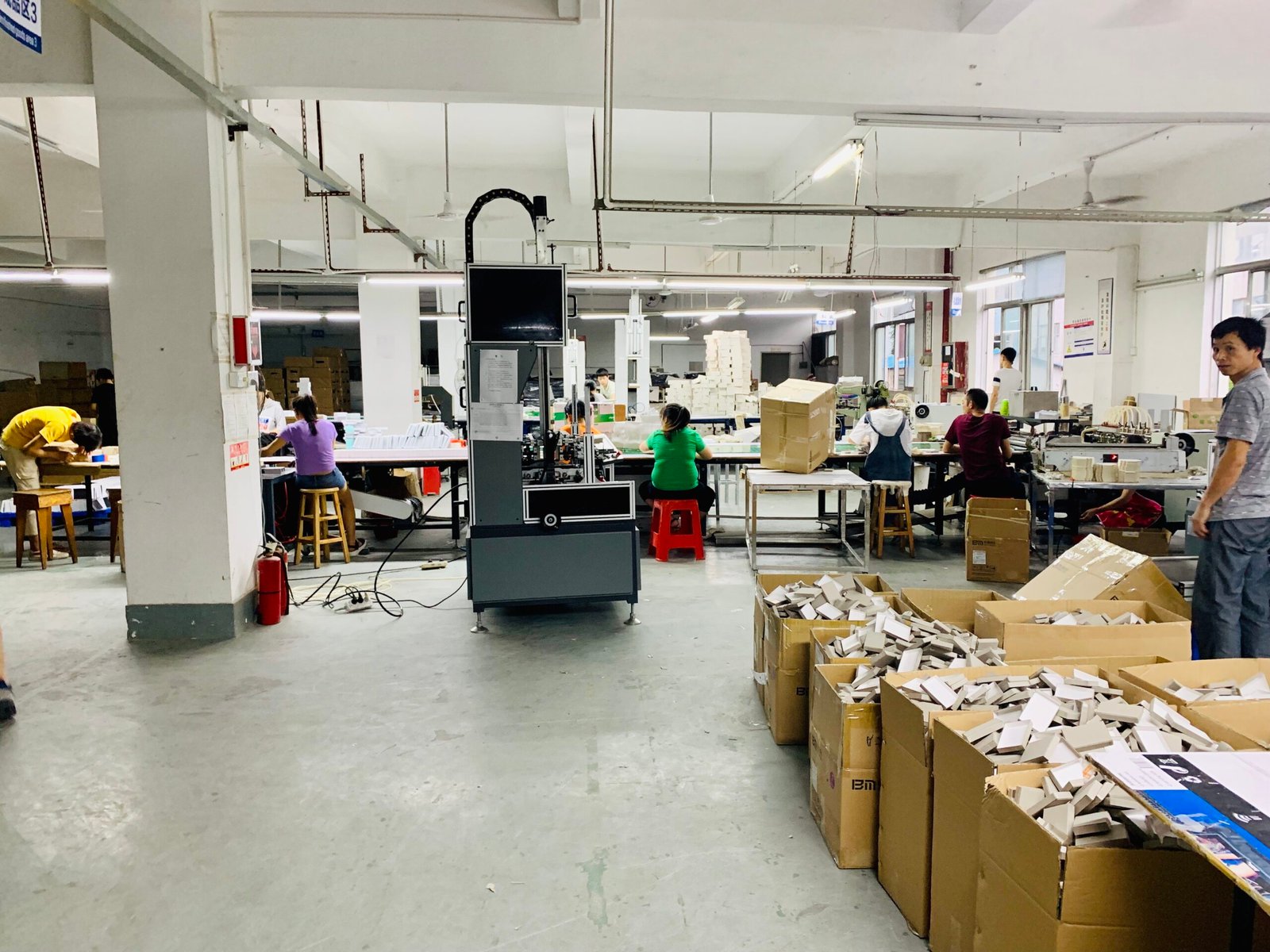
Paper rolls enter the corrugator, where heat and pressure form flutes. Adhesive bonds liners to the medium. The board is dried and cut to size.
Next, printing applies branding or handling marks. Die cutting shapes the box. Folding and gluing create the final structure.
Throughout the process, sensors monitor tension, temperature, and alignment. Operators adjust settings to keep output stable.
Waste paper from trimming is collected and recycled. This closed-loop system improves material efficiency.
Every step affects how raw materials perform in the final box. Skilled process control turns basic paper into reliable packaging.
Conclusion
Corrugated boxes are made from more than paper alone. Linerboard, medium, adhesives, inks, and recycled fibers work together inside controlled factory processes. Understanding these raw materials explains box strength, cost differences, and long-term performance, and shows why material choice and manufacturing control matter as much as design.