Many products get lost in stores because the display looks weak, generic, or easy to ignore. That means lower visibility, lower pickup rates, and a wasted promotion window.
A cardboard display stand is a retail display made from corrugated board or paperboard that helps products stand out at the point of sale. It works well because it combines strong visual branding, flexible structure, low cost, and fast setup for temporary promotions, seasonal launches, and high-traffic retail campaigns.
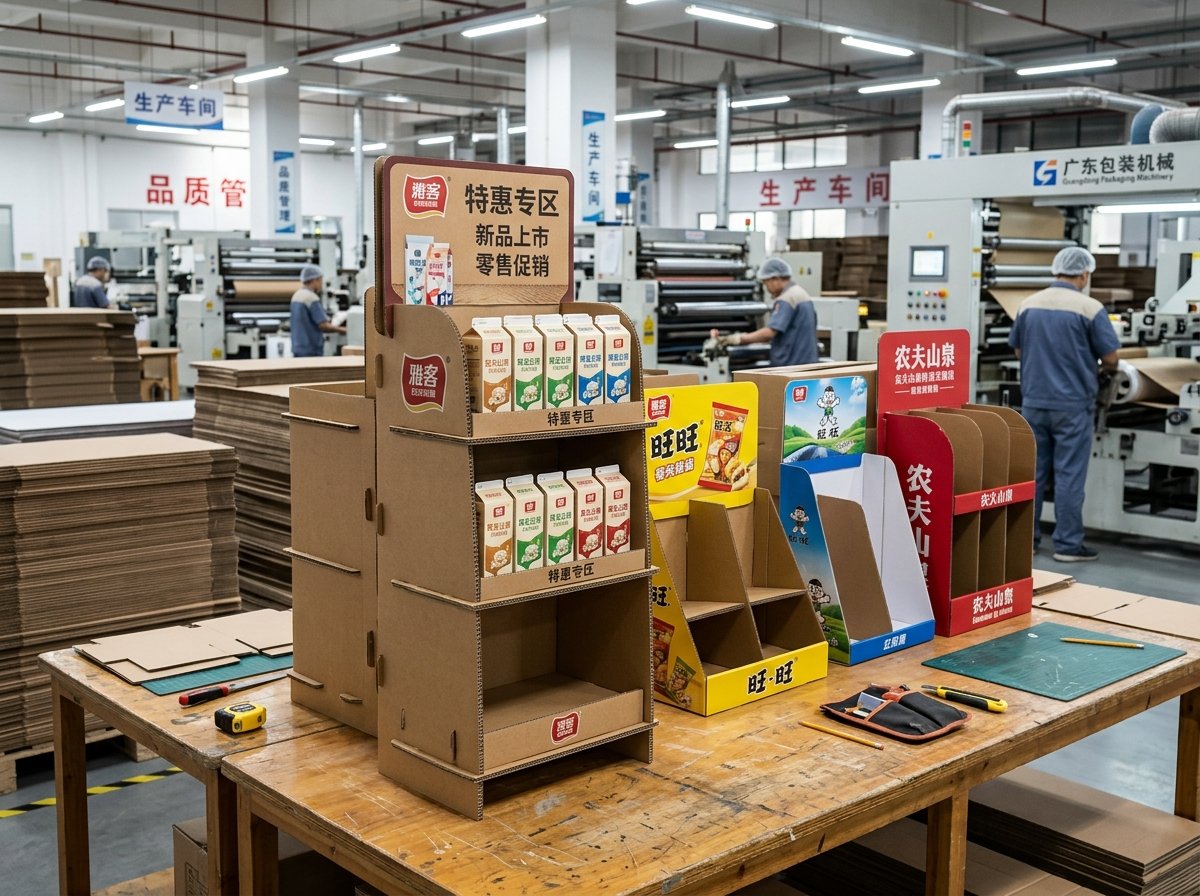
A cardboard display stand is more than a printed structure that holds products. In retail, it acts as a selling tool that helps products get seen faster, understood faster, and picked up more easily. This matters because in many stores, shoppers make decisions in seconds. If the display is weak, unstable, or too plain, the product may never get that chance. Public complaints and packaging insights across many categories show the same pattern: when packaging and display look flimsy, cheap, damaged, or badly matched to product value, customer trust drops fast. That same logic applies to retail displays. A strong cardboard display stand has to do three jobs at once. It has to hold product weight safely. It has to show the brand clearly. It has to survive handling during shipping, setup, and in-store use. When these three parts work together, a cardboard display stand becomes one of the most practical retail tools for short-term campaigns and in-store promotion.
What Is a Cardboard Display Stand and How Is It Used in Retail Marketing?
A cardboard display stand is a freestanding or countertop display unit made from corrugated board, paperboard, or a mix of both, designed to hold and present products in a retail environment.
It is used in retail marketing to increase product visibility, support promotions, and create stronger point-of-sale impact.
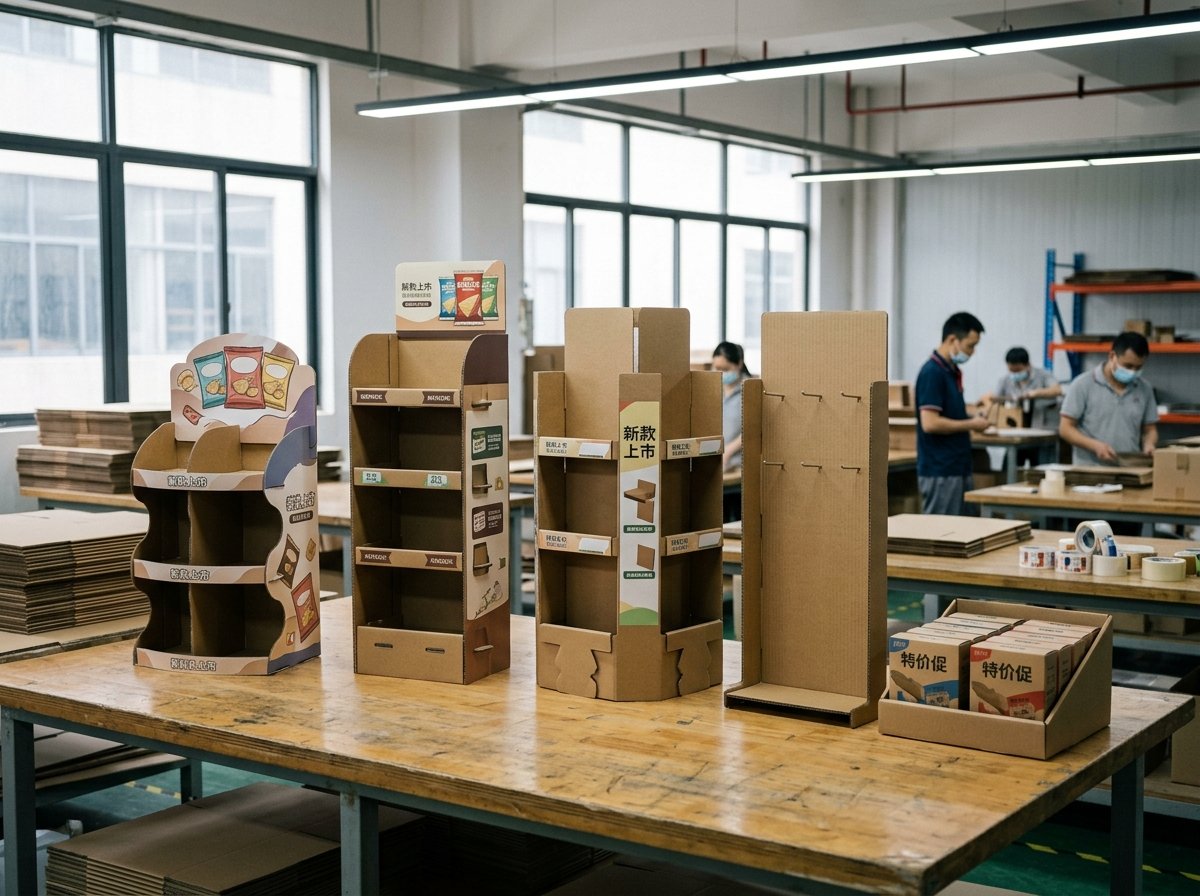
These stands are common in supermarkets, convenience stores, beauty retail, pharmacies, electronics shops, bookstores, and gift stores. They are often used for new product launches, discount campaigns, seasonal sales, limited editions, checkout promotions, and themed retail events. A cardboard display stand can be simple, such as a countertop tray display, or more complex, such as a multi-shelf floor stand with headers, side panels, and printed branding. In many cases, it works as a temporary display solution, but that does not mean it should feel temporary in quality. If the structure is too weak, the shelves bend, the header leans, or the stand starts to look worn too quickly. That creates the same problem seen in weak packaging: the product feels lower in value because the presentation feels careless.
| Display Type | Main Use | Common Retail Setting |
|---|---|---|
| Countertop display | Small items, impulse buys | Checkout counters, beauty counters |
| Floor display stand | Multi-SKU or larger volume display | Supermarkets, chain stores, promo areas |
| Pallet display | Bulk promotion and high-volume retail | Club stores, warehouse retail |
| Dump bin display | Fast-access promotional selling | Seasonal zones, discount areas |
| Sidekick display | Shelf-side promotional add-on | Grocery aisles, convenience stores |
Why Does a Cardboard Display Stand Work So Well in Retail?
A retail display only works when shoppers notice it and retailers can use it easily. Cardboard display stands do both when they are designed correctly.
They work well because they combine visibility, flexibility, speed, and low setup cost in one practical retail format.
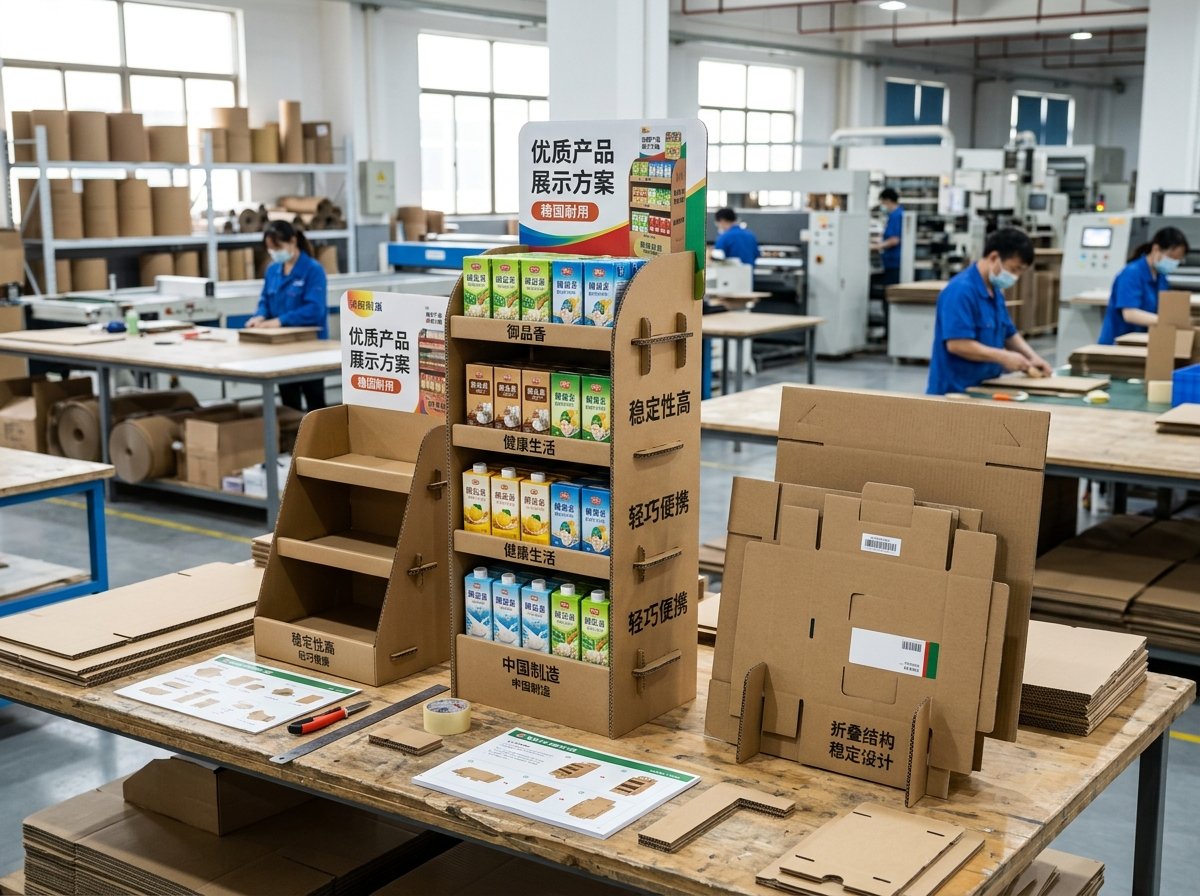
A good display stand helps separate a product from shelf clutter. It gives the product its own branded space. That alone can improve product attention in a busy store. Another reason it works so well is flexibility. Cardboard can be die-cut into many shapes, sizes, and shelf arrangements. This makes it easier to build displays around product type, promotional message, and store format. A display stand can be made for cosmetics, snacks, boxed accessories, supplements, or electronics without using the same exact structure every time. It also supports fast rollout. Retail campaigns often run on tight timing. Cardboard display stands can be packed flat, shipped efficiently, assembled fast, and replaced more easily than permanent fixtures. Still, for this to work, the stand must be engineered properly. A poor structure creates the same complaints seen in packaging: flimsy material, poor fit, collapse under weight, weak edges, and a cheap feel.
Key Benefits of Cardboard Display Stands for In-Store Promotion and Product Visibility?
A display stand has to justify the floor space it uses. Cardboard display stands do this well because they improve product exposure without requiring heavy or expensive store fixtures.
Their biggest benefits are visibility, branding space, campaign flexibility, and practical retail efficiency.
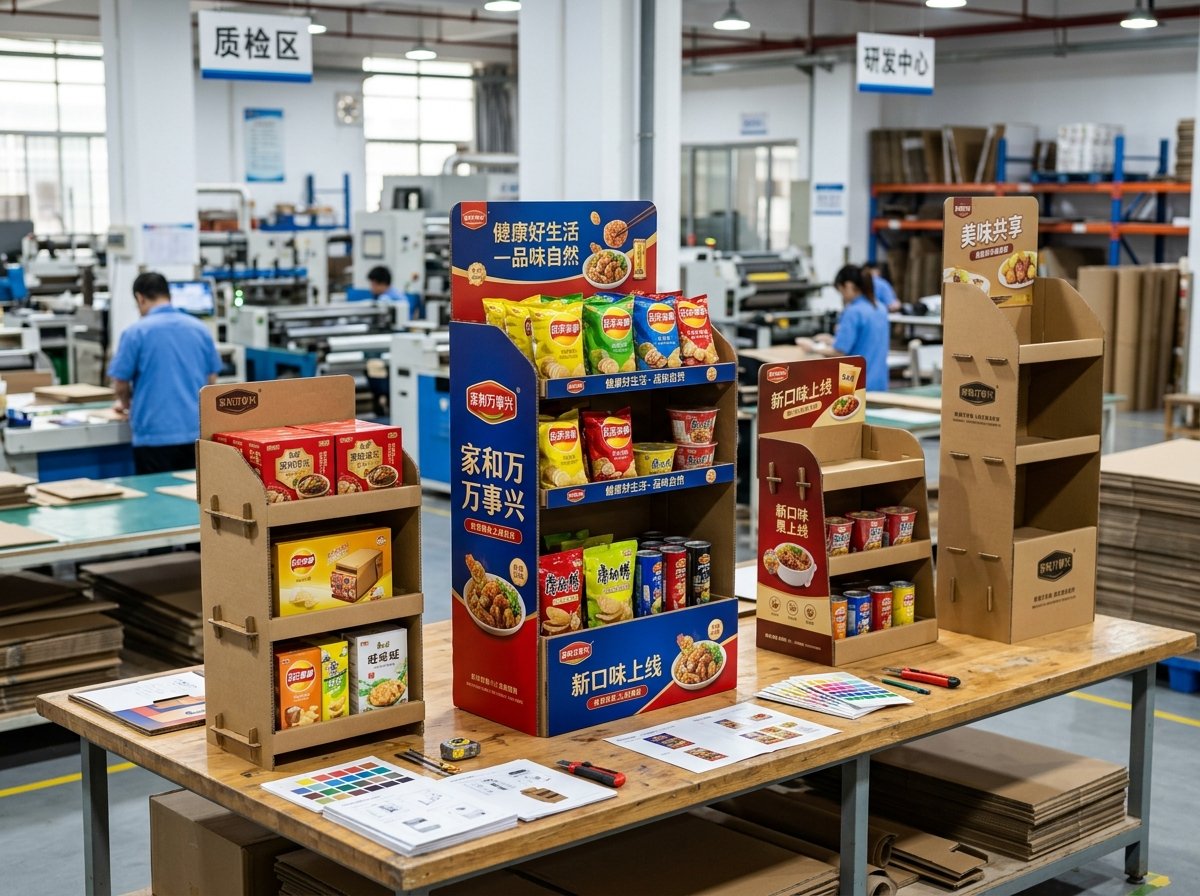
The first benefit is product visibility. A freestanding or countertop display helps products move out of the shelf line and into a more active shopping zone. The second benefit is brand communication. Printed side panels, shelf strips, top headers, and tray fronts give more space for messaging than standard shelf placement. The third benefit is speed. Temporary campaigns often need displays that can be produced, packed, shipped, and set up quickly. The fourth benefit is flexibility in quantity and structure. A display can be built for one SKU or a mixed product set. It can support lightweight trial products or boxed retail packs, depending on the board grade and shelf design. Another benefit is cost control. Compared with metal or plastic retail fixtures, cardboard display stands are often more economical for short-term programs. This matters in campaigns where timing and turnover are more important than long-term fixture life.
| Benefit | Why It Matters in Retail |
|---|---|
| Better visibility | Helps products stand out from crowded shelves |
| More branding area | Supports promotions, product education, and campaigns |
| Fast campaign rollout | Good for seasonal and short-term promotions |
| Flat-pack efficiency | Saves space in shipping and storage |
| Flexible design | Works across different product types and retail layouts |
| Lower fixture cost | Practical for temporary promotions and launches |
What Materials Are Used in Cardboard Display Stands?
Not every cardboard display stand is made the same way. Material choice affects strength, print quality, setup ease, and how the display looks after days or weeks in store.
Most cardboard display stands use corrugated board, paperboard laminates, or reinforced combinations depending on product load and campaign needs.
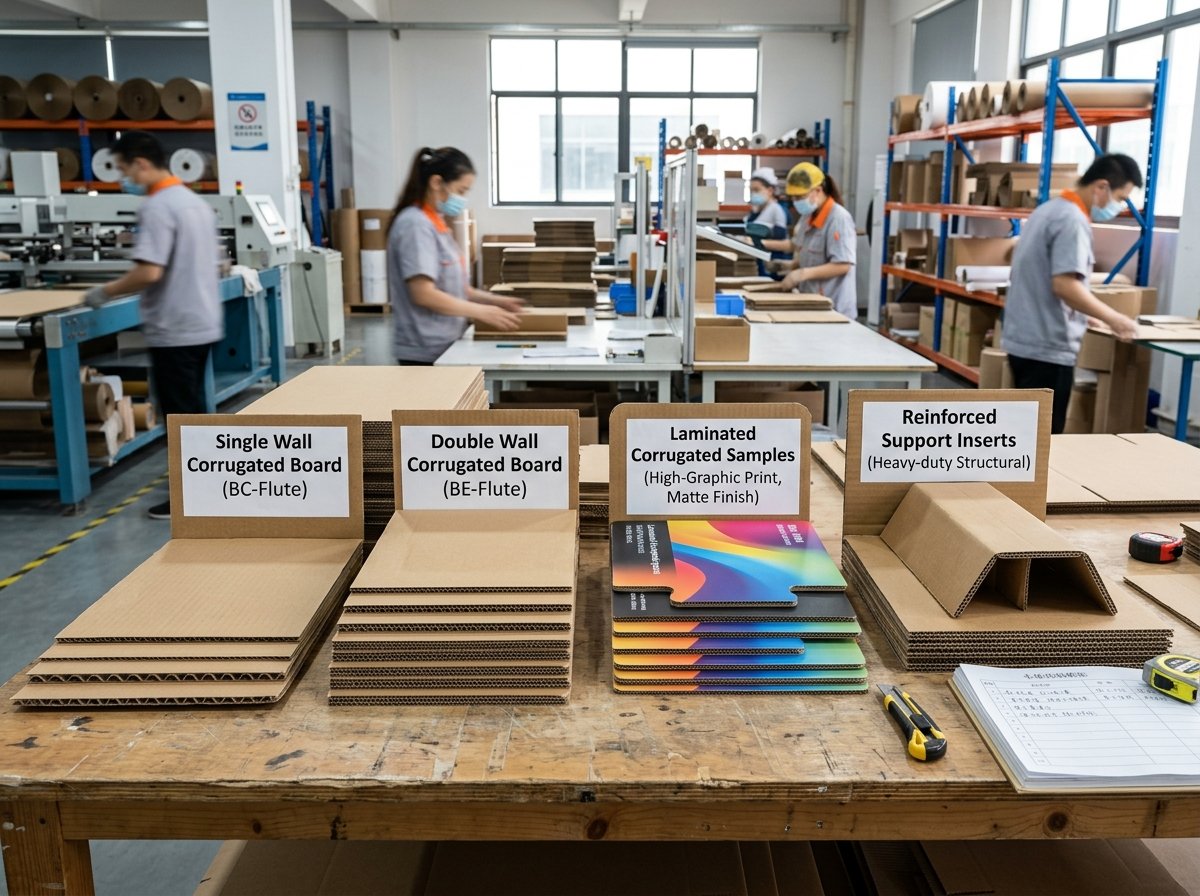
Corrugated board is the most common material because it offers a good balance between strength and lightweight handling. Single wall corrugated may work for lighter countertop displays or low-load promotional trays. Double wall corrugated is often better for floor displays, heavier product loads, and multi-shelf units. In some premium retail applications, printed paperboard may be laminated onto corrugated board to improve graphics while keeping structural strength. This matters because public complaints in packaging often mention the same failures: boxes too flimsy, surfaces too weak, corners too easy to crush, and structures not matched to product weight. Display stands fail for the same reasons. If the board grade is too weak, shelves bow, base panels deform, and the whole display loses credibility. Good display production starts with matching the material to real product weight, store handling, and expected campaign duration.
| Material Option | Main Strength | Best Fit |
|---|---|---|
| Single wall corrugated | Lighter and cost-effective | Counter displays, light products |
| Double wall corrugated | Higher load strength | Floor stands, heavier boxed goods |
| Laminated corrugated | Better print plus structure | Branded retail campaigns |
| Reinforced inserts or supports | Better shelf stability | Multi-tier displays, higher weight loads |
How Are Cardboard Display Stands Designed for Real Retail Use?
A display stand may look attractive in a mockup, but retail success depends on how it performs after shipping, setup, stocking, and customer interaction.
Real retail design means the structure, graphics, and product-loading logic all need to work together.
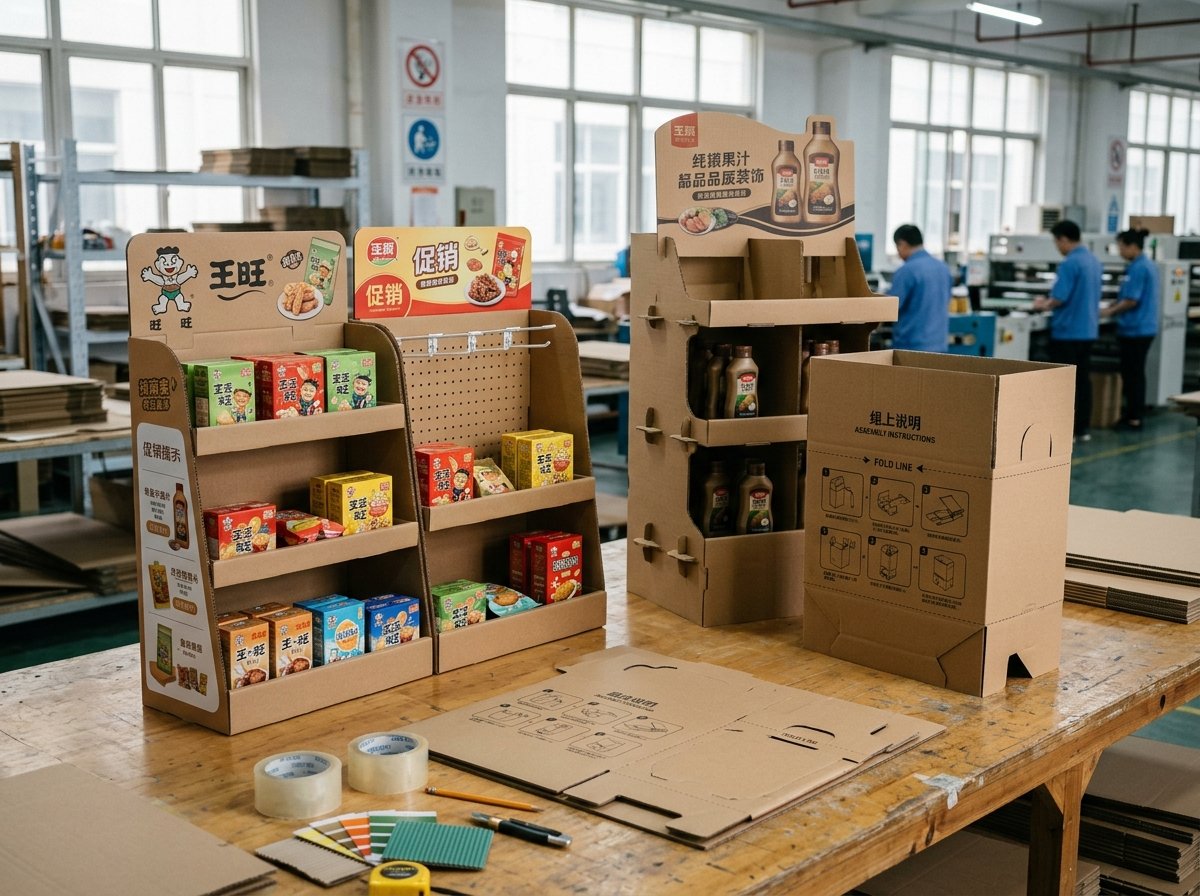
A strong display design starts with the product itself. Weight, dimensions, pack shape, and SKU count all affect the shelf depth, support panels, tray lip height, and overall base strength. The display also needs to fit the retail environment. A narrow aisle may need a slim floor stand. A checkout area may need a compact countertop display. A campaign for gift products may need a larger brand header and cleaner presentation. Another critical point is stock movement. Retailers do not want displays that are hard to refill or unstable once some products are removed. The structure should also consider transport. Many damage problems happen before the stand even reaches the store. If the display is packed poorly, creased badly, or shipped with too little protection, it may arrive crushed or bent. This creates the same negative effect seen in damaged packaging: the product loses value before the customer touches it.
Why Retailers and Brands Choose Corrugated Display Stands for Temporary Campaigns?
Temporary campaigns need speed, visibility, and flexibility. Corrugated display stands fit that need better than many permanent materials.
Retailers and brands choose corrugated display stands because they are practical for short-term promotion, easier to customize, and more efficient to ship and replace.
corrugated display stands for temporary campaigns
A temporary campaign may last a few weeks or a few months. In that time, the display has to look good, carry product safely, and support the brand message without driving fixture costs too high. Corrugated display stands work well here because they can be produced quickly, printed in full color, packed flat, and assembled in stores with limited effort. They are also easier to adjust for different store formats. One campaign may need a floor unit for large retail chains, a countertop version for smaller stores, and a pallet display for club retail. Corrugated structures make this easier to scale. Another reason is replacement logic. Temporary retail campaigns are high-speed by nature. If a display gets damaged, it is easier to replace a corrugated unit than a more expensive permanent display fixture. Still, corrugated does not mean weak. The stand still needs proper board grade, shelf reinforcement, and transport planning to avoid sagging, tearing, or collapse.
What Common Problems Make Display Stands Fail in Stores?
A display stand can fail visually, structurally, or both. In most cases, the reason is not that cardboard is a poor material. The reason is poor planning.
The most common failures come from weak board choice, bad structural matching, overloaded shelves, poor print finish, and weak transport protection.
common cardboard display stand problems
One common problem is flimsy material. When the board grade is too low, the stand looks tired very quickly. Another common problem is weak shelf support. This happens when the shelf depth or product weight was not tested properly. Poor sizing is another issue. If the tray opening or shelf width does not match the product pack, the display looks messy and products fall or tilt. Surface quality matters too. If the print scratches easily or corners mark too fast, the display loses impact before the campaign ends. Shipping damage is another hidden issue. A display stand may leave production in good shape, then arrive bent because the outer packing did not protect it properly. These are the same root problems seen across packaging complaints: too thin, too weak, poor fit, no support, and bad matching between design and real-world use.
| Common Problem | What It Causes | Better Direction |
|---|---|---|
| Weak board grade | Sagging shelves and unstable stand | Match board strength to load |
| Poor structural design | Leaning header or collapsing panels | Test real stocking condition |
| Bad product fit | Messy display and poor presentation | Build around actual SKU dimensions |
| Weak print surface | Early wear and cheap look | Improve finish and rub resistance |
| Poor shipping protection | Bent or damaged displays on arrival | Use protective outer packing |
How Do Cardboard Display Stands Support Brand Value in Retail?
A display stand is often the first branded structure a shopper notices outside the product pack itself. That means it can raise product value or weaken it.
A well-made cardboard display stand supports brand value by making the product look organized, visible, and promotion-ready at the point of sale.
cardboard display stands and brand value
Products that sit in a clean, well-printed, structurally sound display usually look more intentional and more trustworthy. This matters even more for cosmetics, gift items, boxed accessories, and seasonal retail goods where visual presentation strongly affects buying decisions. In contrast, a weak or damaged stand can make even a good product look discounted, leftover, or low-grade. That is why display quality should not be treated as a minor part of retail packaging. It is part of the selling environment. Strong branding panels, sharp printing, stable shelves, and good color control all help the display do its job. In practical retail use, a good cardboard display stand supports both visibility and confidence at the same time.
Conclusion
A cardboard display stand works well in retail because it gives products stronger visibility, better brand space, and faster promotional impact without the cost and rigidity of permanent fixtures.
Its real value comes from getting the basics right: the right corrugated structure, the right board strength, the right product fit, and the right print quality for the campaign. When these parts are handled well, a cardboard display stand becomes more than a temporary holder. It becomes a retail tool that helps products get noticed, understood, and sold more effectively in the store.