Retail displays often fail before the product gets a real chance to sell. Weak structure, poor visibility, and hard assembly can turn a promising promotion into wasted floor space and lost attention.
A corrugated retail POP display is a printed paper-based display unit used to present products in stores, improve visibility, support promotions, and drive impulse purchases. The best POP displays balance strength, shelf impact, easy assembly, and practical cost control.
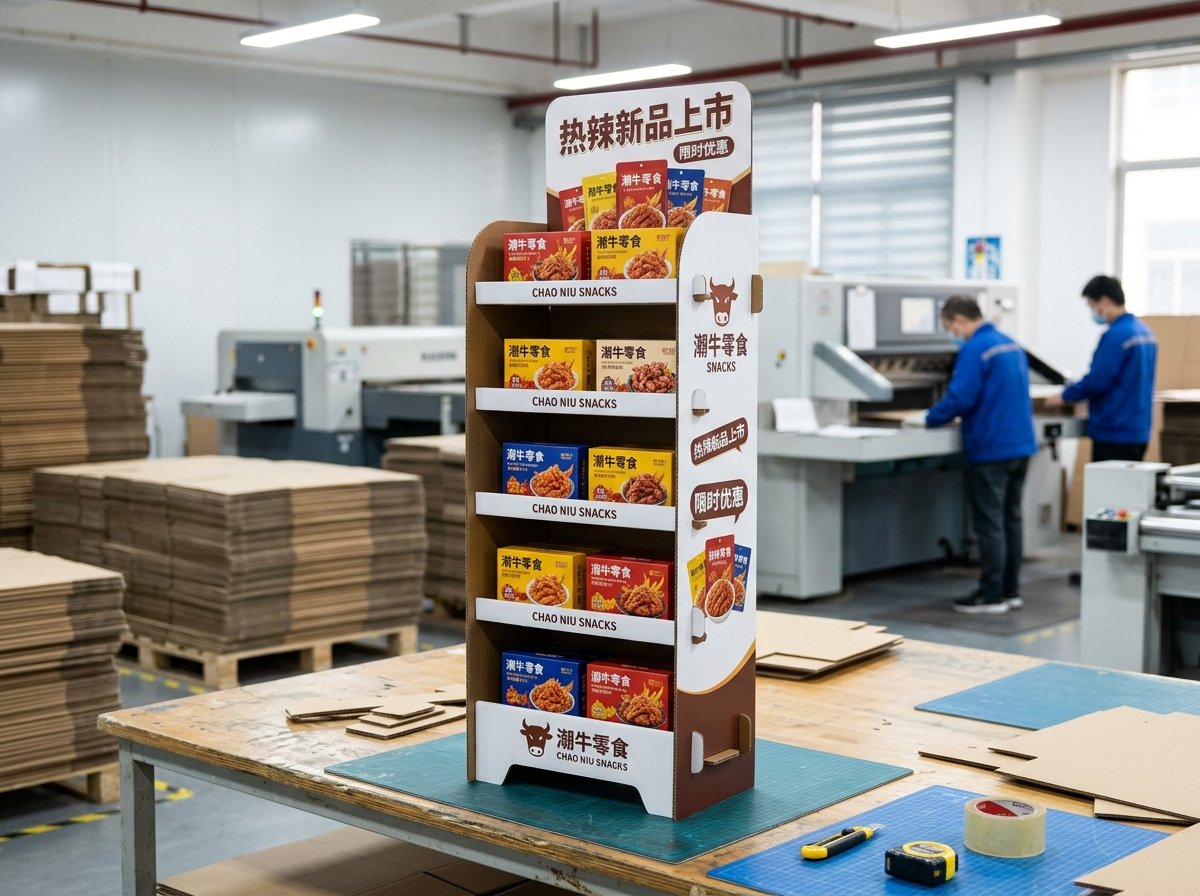
Corrugated retail POP displays are used because they do more than hold products. They help products stand out in crowded retail environments, support temporary campaigns, and make product information easier to see at the moment of purchase. Still, many display projects underperform for very predictable reasons. The structure is too weak. The display is too large or too small for the product. The graphics look generic. The shelves sag under weight. The unit arrives damaged or takes too long to set up in store. These are the same kinds of packaging failures seen across many public complaints about boxes and retail packs: materials are too flimsy, dimensions are not matched well, protection is not enough, and execution is inconsistent. A good POP display avoids those problems from the beginning.
What Is a Corrugated Retail POP Display?
A corrugated retail POP display is a floor display, counter display, pallet display, dump bin, or sidekick unit made mainly from corrugated board and designed to present products at the point of purchase. It is often used for promotions, launches, seasonal programs, and high-visibility store placement.
Corrugated POP displays matter because they combine product presentation, brand communication, and retail function in one structure. They help products attract attention, organize merchandise clearly, and support faster buying decisions inside the store.
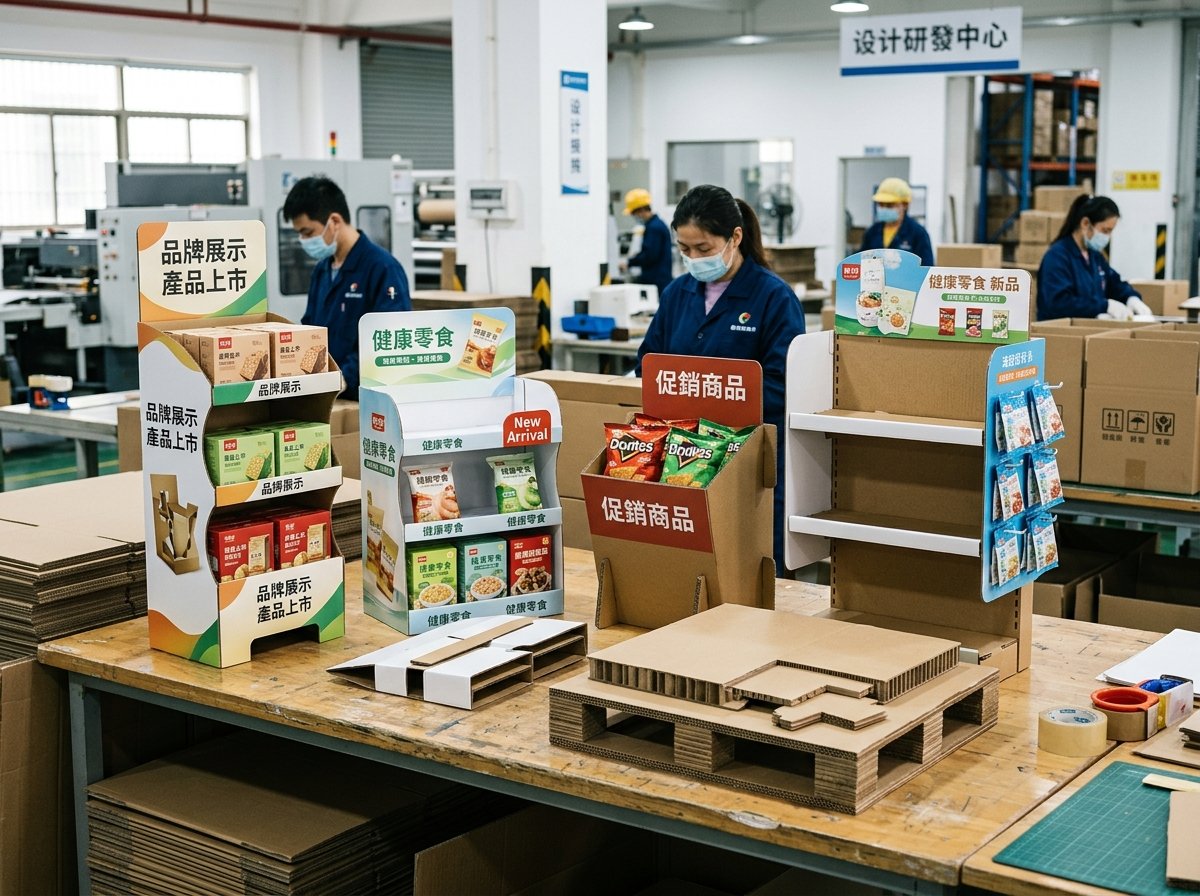
These displays are especially useful for cosmetics, daily-use items, gift products, snacks, health products, electronics accessories, and promotional bundles. In these categories, shelf competition is high, and the display itself often shapes whether the product gets noticed. A plain shelf-ready carton may hold product, but it rarely creates the same visual impact as a well-designed POP unit.
At the same time, POP displays must still behave like engineered packaging structures. They need to survive transport, arrive flat or semi-assembled in good condition, hold product weight, and remain stable during store use. If the display looks cheap, leans, tears, or collapses, it hurts both product performance and brand image.
Types of Corrugated Retail POP Displays and Their Best Use Cases
Different retail goals need different POP display types. The right structure depends on store space, product size, display duration, and the level of traffic the unit will face.
The main types of corrugated retail POP displays include floor displays, countertop displays, pallet displays, dump bins, and sidekick displays. Each type suits a different product category, store location, and promotional purpose.
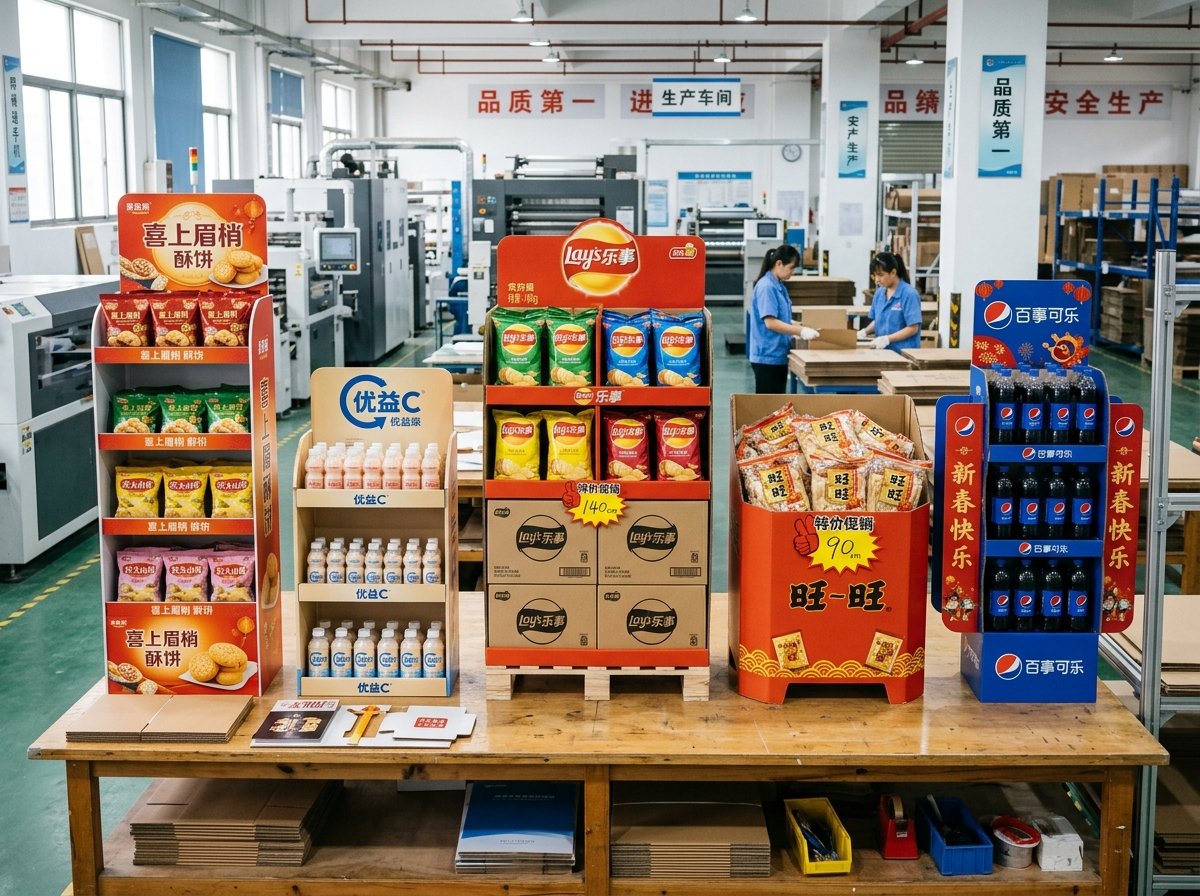
Floor displays are one of the most common types. They work well for multi-SKU promotions, heavier product loading, and strong aisle visibility. They are often used for cosmetics, household items, consumer accessories, and seasonal programs.
Countertop displays are smaller and sit near checkout areas or on small retail counters. They are useful for impulse products, trial sizes, gift items, beauty products, and small electronics accessories. Their main strength is that they place products close to the buying moment.
Pallet displays are better for warehouse clubs, supermarkets, and bulk retail programs. They need stronger load-bearing performance and easier replenishment. Dump bins are often used for lightweight, fast-pick products such as promotional packs, toys, snacks, or mixed small items. Sidekick displays attach to existing shelves and help use narrow retail spaces more efficiently.
| Display type | Best use case | Main advantage |
|---|---|---|
| Floor display | Multi-SKU promotions, aisle programs | Strong visibility and larger product capacity |
| Countertop display | Small impulse items, checkout zones | Close to purchase decision point |
| Pallet display | Bulk retail, supermarkets, warehouse stores | High load capacity and easy restocking |
| Dump bin | Lightweight fast-pick products | Simple access and promotional flexibility |
| Sidekick display | Narrow spaces, shelf-side programs | Better use of vertical retail space |
Why Are Corrugated POP Displays So Popular in Retail?
Corrugated POP displays remain popular because they combine flexibility, print impact, and practical production efficiency. They are easier to customize than many permanent materials and often give a better balance between cost and visual return.
Corrugated POP displays are popular because they are lightweight, printable, cost-efficient, easy to customize, and suitable for temporary or seasonal retail programs. They offer strong visual presence without the higher cost and lead time of more permanent display materials.
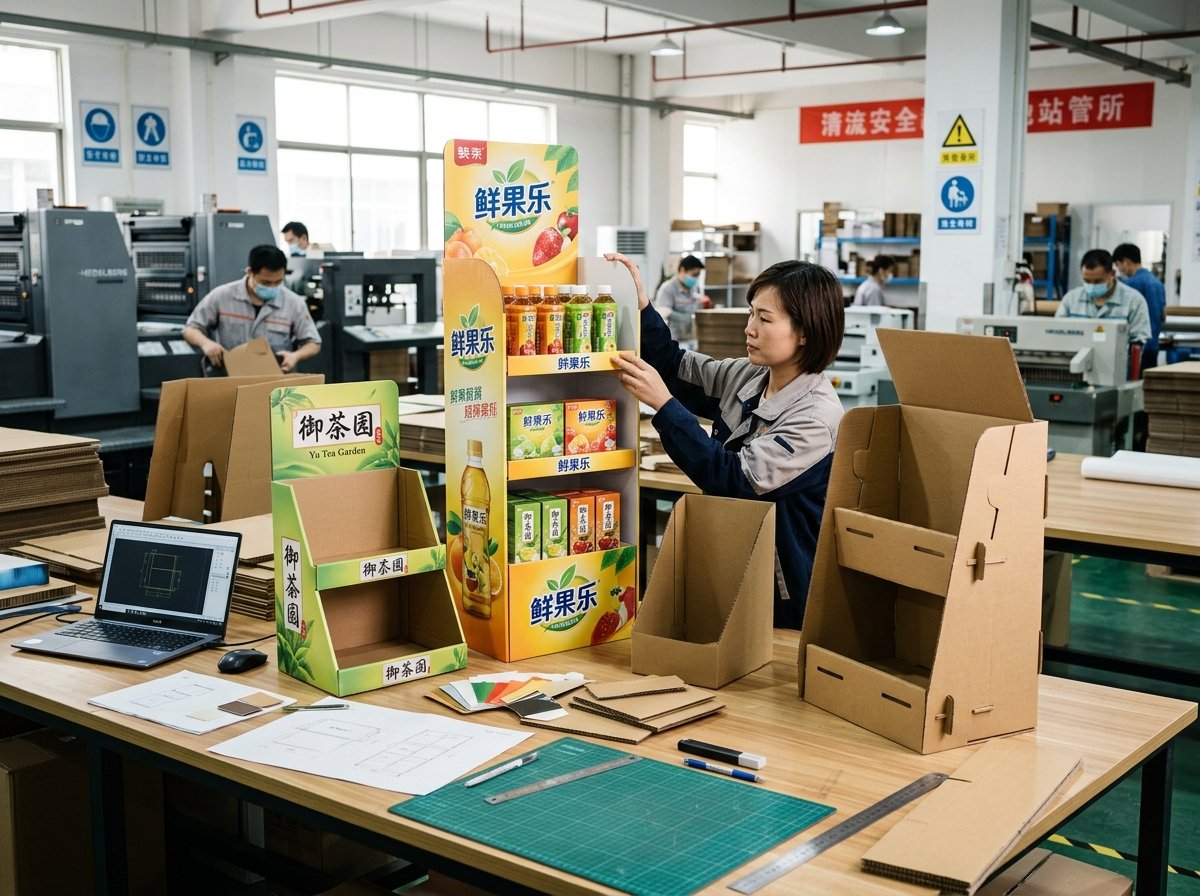
This popularity also comes from how quickly corrugated displays can adapt to product changes. One structure can often be adjusted for several campaigns. Graphics can be updated more easily than with metal or plastic displays. This helps retailers and brands respond to seasonal selling windows, product launches, or short-term promotions.
Corrugated also supports sustainability goals better than many heavier display materials. This matters for brands that want retail displays to align with paper-based packaging systems and more responsible material choices. Still, the display only creates value when it performs well. A cheap-looking or unstable unit creates the same frustration that weak packaging creates in delivery complaints. If the board is too thin or the shelves deform under product weight, the display becomes part of the problem instead of part of the selling strategy.
How to Design Corrugated POP Displays for Strength, Visibility, and Easy Assembly
A strong POP display starts with structure, not graphics. The artwork can attract attention, but the display still has to carry weight, stay stable, and be easy for store staff to set up correctly.
The best corrugated POP display design balances structural strength, product visibility, and easy assembly by matching board grade to product weight, controlling shelf spans, improving header visibility, and simplifying locking and folding points.
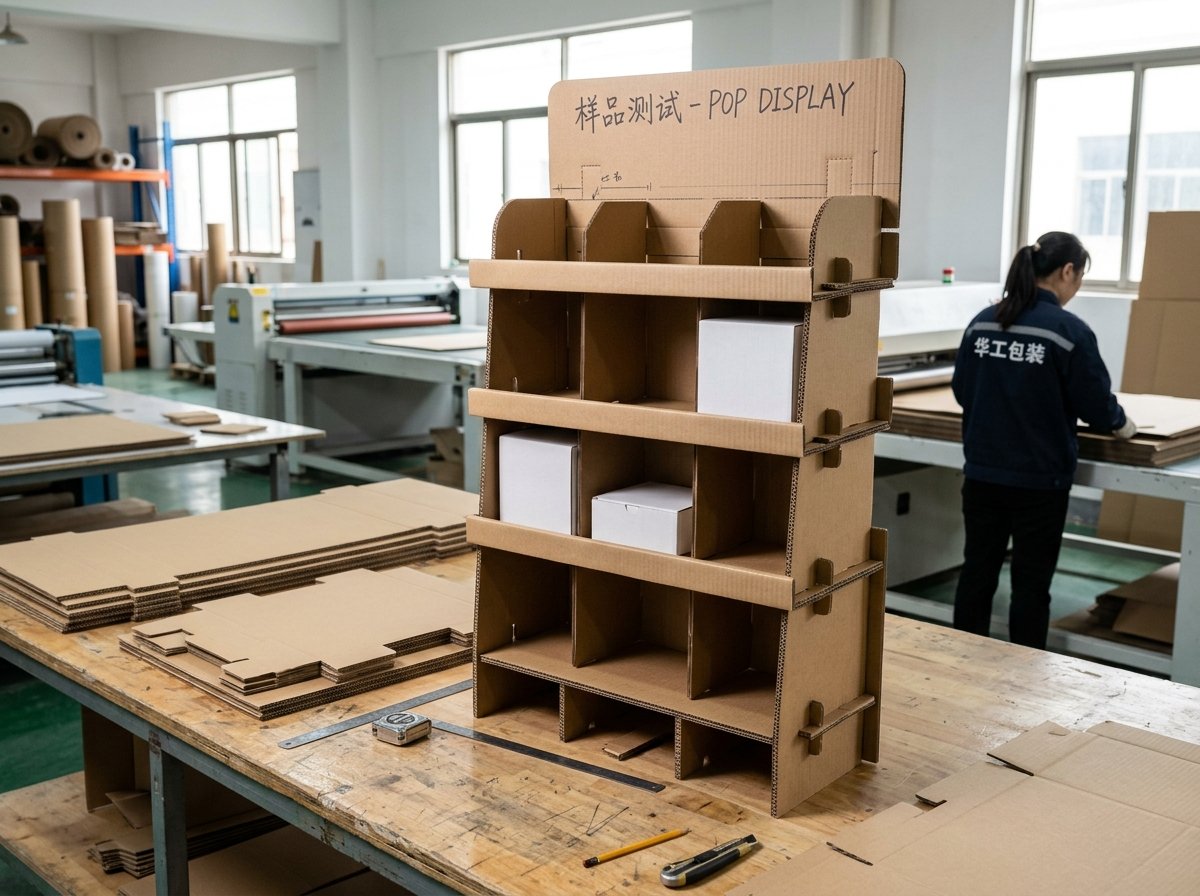
Strength begins with load planning. Shelves must be designed around the actual weight of the product, not the estimated weight of an empty sample. Many packaging complaints in related formats come from weak materials and poor structural matching. The same rule applies here. If the product is dense or the display is tall, the shelves and base need reinforcement. Shelf lips, locking tabs, back supports, and internal braces often matter more than adding random thickness.
Visibility comes next. The display should frame the product, not hide it. The header card should be easy to read from the expected distance. The front lip should secure the products without covering too much of the packaging. Brand colors and key claims should sit where the shopper sees them first.
Assembly should also stay simple. Store teams do not want confusing structures, unclear folds, or missing parts. Displays that are frustrating to assemble often end up looking sloppy on the floor. Simpler lock systems, clear fold lines, and fewer separate components usually perform better in real stores.
| Design goal | What to focus on | Better result |
|---|---|---|
| Strength | Shelf support, base stability, board grade | Less sagging and fewer collapses |
| Visibility | Header size, product angle, front lip height | Stronger shelf impact |
| Assembly | Clear folds, fewer parts, simple locks | Faster setup and cleaner final look |
| Refill ease | Open access and stable shelf spacing | Better in-store maintenance |
What Structural Problems Make POP Displays Fail?
Many POP display failures come from the same core errors seen in packaging complaints across boxes, gift packs, and shipping cartons. The material is too weak, the size is wrong, or the product movement and load were not tested properly.
POP displays usually fail because of weak board selection, oversized shelf spans, poor load distribution, unstable bases, unclear assembly design, or poor fit between product size and display openings. These problems reduce both retail performance and display life.
Weak board causes shelves to bow and edges to crush. Oversized openings make products lean or fall forward. Narrow bases make tall displays unstable in store traffic. Poor assembly design leads to misfolding, which changes how the whole display carries weight. In some cases, the display looks good in a rendering but fails when actual products are loaded for several days.
There is also a common mismatch between retail design and shipping reality. A display may be visually strong but arrive damaged because the shipping carton was too weak or because the unit was not packed with enough protection. This mirrors the common complaint of retail boxes being treated like shipping boxes. A POP display needs both retail function and transit planning.
Common Materials, Printing Options, and Cost Factors in POP Display Production
Corrugated POP displays may look simple from the outside, but their cost and performance depend on a combination of material choice, print method, structural complexity, and packing method.
POP display production cost depends mainly on corrugated board grade, flute type, display size, printing method, finishing, structural complexity, packing style, and order quantity. Material and production choices should match the product weight, retail duration, and desired visual impact.
Corrugated board is the core material, and flute choice affects both strength and print appearance. E flute is often chosen when smoother print and cleaner retail appearance matter. B flute and stronger combinations are more suitable when higher load capacity is needed. For heavier products or larger floor displays, double-wall or reinforced structures may be necessary.
Printing options usually include direct flexo printing or litho-laminated printing. Direct printing is more cost-efficient, especially for simpler retail programs. Litho lamination gives sharper graphics, stronger color presentation, and a more premium look. That is often preferred for cosmetics, electronics accessories, and branded gift products where visual quality matters more.
Finishing can include gloss or matte coating, spot UV, special cut shapes, and header enhancements. These details add impact, but they also add cost. The most effective displays usually invest first in structure and graphic clarity before adding decorative extras.
| Production factor | Effect on cost | Effect on performance |
|---|---|---|
| Board grade and flute | Higher grade raises cost | Better strength and stability |
| Display size | Larger size raises material use | More visibility, but more risk if weak |
| Print method | Litho costs more than direct print | Better graphic quality |
| Structural complexity | More parts and locks raise cost | Can improve function if used well |
| Packing method | Better transit packing costs more | Fewer damaged displays on arrival |
What Buyers Should Check Before Approving a POP Display Project?
A POP display should not be approved only from artwork or a flat sample. Real approval should include structure, product fit, and retail practicality.
Before approving a corrugated POP display, buyers should check load capacity, board grade, product fit, header visibility, assembly steps, shipping protection, print quality, and consistency between sample and production specification.
The first check should be product loading. The display should be tested with the actual packed product, not with placeholders. The second check is assembly. If the setup takes too long or creates confusion, store execution will suffer. The third check is print positioning. Brand logos, product claims, and pricing zones should land in the right place after folding, not only on the flat artwork.
Shipping protection should also be confirmed early. Many display failures start before store delivery because the transit pack is not strong enough. Flat-packed displays still need proper outer cartons, corner protection where needed, and correct palletization if shipped in larger quantities.
Consistency matters too. A display that looks strong in one hand sample but weak in the production run creates the same kind of frustration seen in many packaging complaints about sample-to-bulk mismatch. Good factory control should keep board grade, print result, die-cut accuracy, and folding quality stable across the full order.
How Can Corrugated POP Displays Support Both Retail Impact and Cost Control?
The best POP display programs do not spend blindly on graphics or cut too deeply on structure. They balance retail effect with reliable function.
Corrugated POP displays support both retail impact and cost control when the structure is matched to product load, the graphics are focused and visible, and the production design avoids unnecessary material waste or assembly complexity.
A practical display strategy often starts with one clear question: what does the display need to do in the store? If the goal is fast seasonal promotion, the structure can stay simpler as long as it remains stable. If the goal is a premium launch, higher print quality and cleaner shaping may matter more. The strongest cost control usually comes from smart structure, not from using weaker material.
That means reducing oversized areas that add little selling value, controlling shelf width so reinforcement is more efficient, and using print space where shoppers actually look. It also means designing the display to ship and assemble well. A display that arrives damaged or takes too long to set up wastes more money than a slightly stronger structure ever would.
Conclusion
Corrugated retail POP displays remain one of the most effective tools for in-store product visibility because they combine branding, product organization, and promotional flexibility in one paper-based structure. When designed well, they help products stand out, support impulse buying, and make better use of retail space.
The most successful POP displays are not only attractive. They are strong enough for the product load, clear enough for fast shopper understanding, and simple enough for store teams to assemble correctly. That is why structure, material, printing, and shipping protection all matter together.
For brands planning retail display programs, the right corrugated POP display is not simply the one with the brightest graphics or the lowest price. It is the one that stays stable, looks right on the retail floor, and keeps delivering value from factory production to final in-store execution.