Plain paper bags often do the job of carrying a product, but they do very little to improve shelf appeal, takeaway experience, or brand memory. A weak or generic bag can also make the whole purchase feel cheaper.
A custom SOS bag is a self-opening square paper bag designed for fast packing, easy storage, and flexible branding. It is widely used for food service, retail, bakery, grocery, and takeaway packaging because it balances practicality, printability, and cost control.
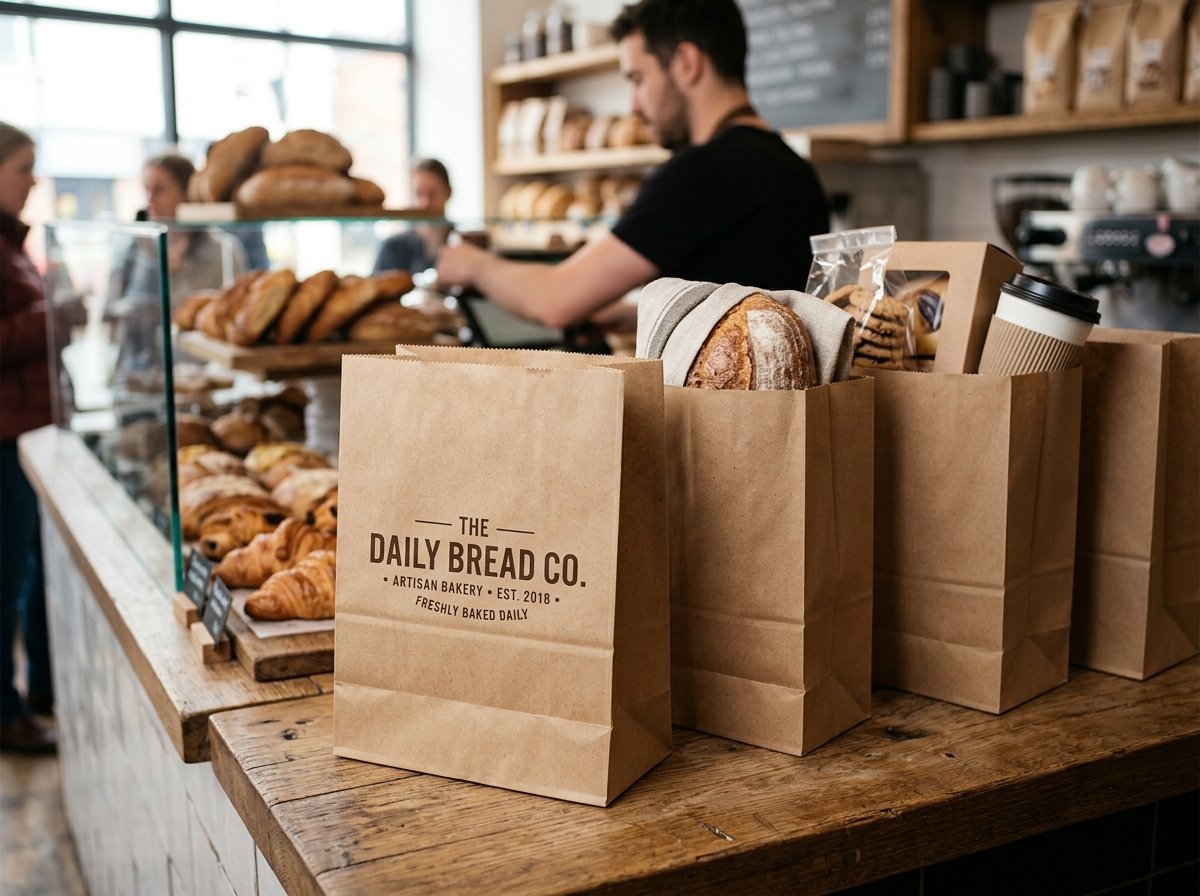
SOS bags look simple, but they are one of the most useful paper packaging formats in daily business use. They open fast, stand better than many flat paper bags, and work across many product categories. At the same time, not every SOS bag performs well. Public complaints about packaging often show the same basic failures across paper packaging and boxes: materials that feel too thin, wrong size choices, weak bottom support, printing that looks poor, and packaging that feels generic instead of intentional. A well-made custom SOS bag solves these problems by matching structure, paper weight, print design, and end use from the beginning.
What Is an SOS Paper Bag and When Should Businesses Use It?
An SOS paper bag is a self-opening square paper bag with a flat bottom and side gussets. It is designed to open quickly and stand more easily during packing. This makes it practical for fast service environments and simple retail packaging.
An SOS paper bag is best used when businesses need a paper bag that opens quickly, holds shape better than flat bags, stores efficiently, and supports light to medium product loads. It is especially useful for bakery items, takeaway food, snacks, groceries, pharmacy goods, and retail accessories.
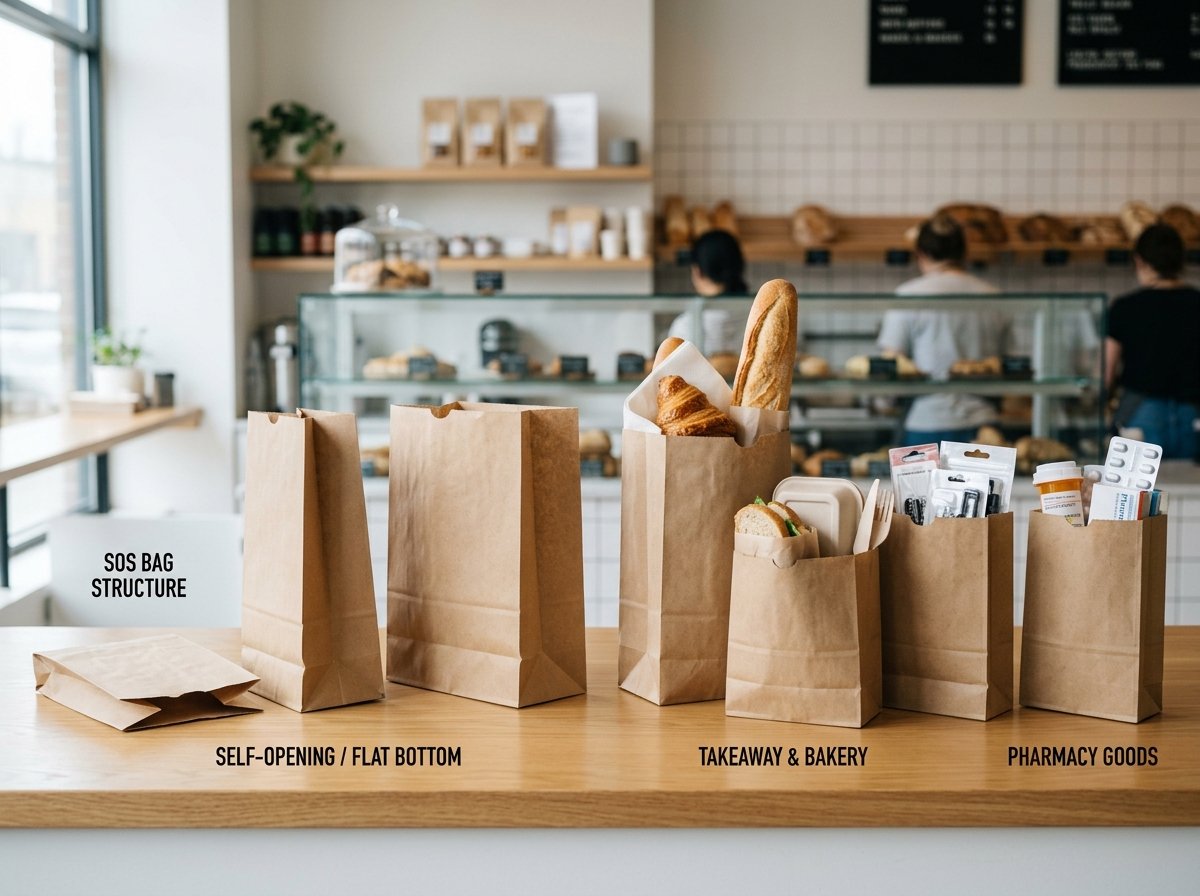
This bag style is popular because it supports speed and consistency. In food service, staff can fill the bag quickly during busy hours. In retail, the bag provides a clean and simple way to pack smaller products without using a box for every order. In takeaway, it gives enough structure for food containers, bread, pastries, sandwiches, and simple meal packs.
It is also useful when packaging needs to feel practical instead of overbuilt. Many buyers now dislike packaging that feels wasteful, excessive, or too expensive for the item inside. An SOS bag often gives a better balance. It looks cleaner and more intentional than a thin generic bag, but it stays lighter and simpler than a carton or rigid pack.
Still, businesses should not use SOS bags for every product. Very heavy products, oily products without barrier treatment, or premium gift items that need stronger presentation may require another packaging format or an upgraded version of the bag.
| Use case | Why SOS bags work well |
|---|---|
| Bakery and bread | Fast packing and good daily-use appearance |
| Takeaway food | Easy opening and practical shape |
| Grocery and snacks | Efficient for light to medium loads |
| Retail accessories | Simple branded packaging without a box |
| Pharmacy and daily goods | Clean look and easy handling |
Why Are SOS Bags So Popular in Packaging?
SOS bags remain popular because they solve real packing problems without making the packaging system too complex. They are efficient, stack well, and adapt to many product categories.
SOS bags are popular because they are easy to open, easy to store, suitable for automated or semi-fast packing, and simple to customize with printing, paper options, and different sizes. They give businesses a reliable paper packaging format with broad daily use.
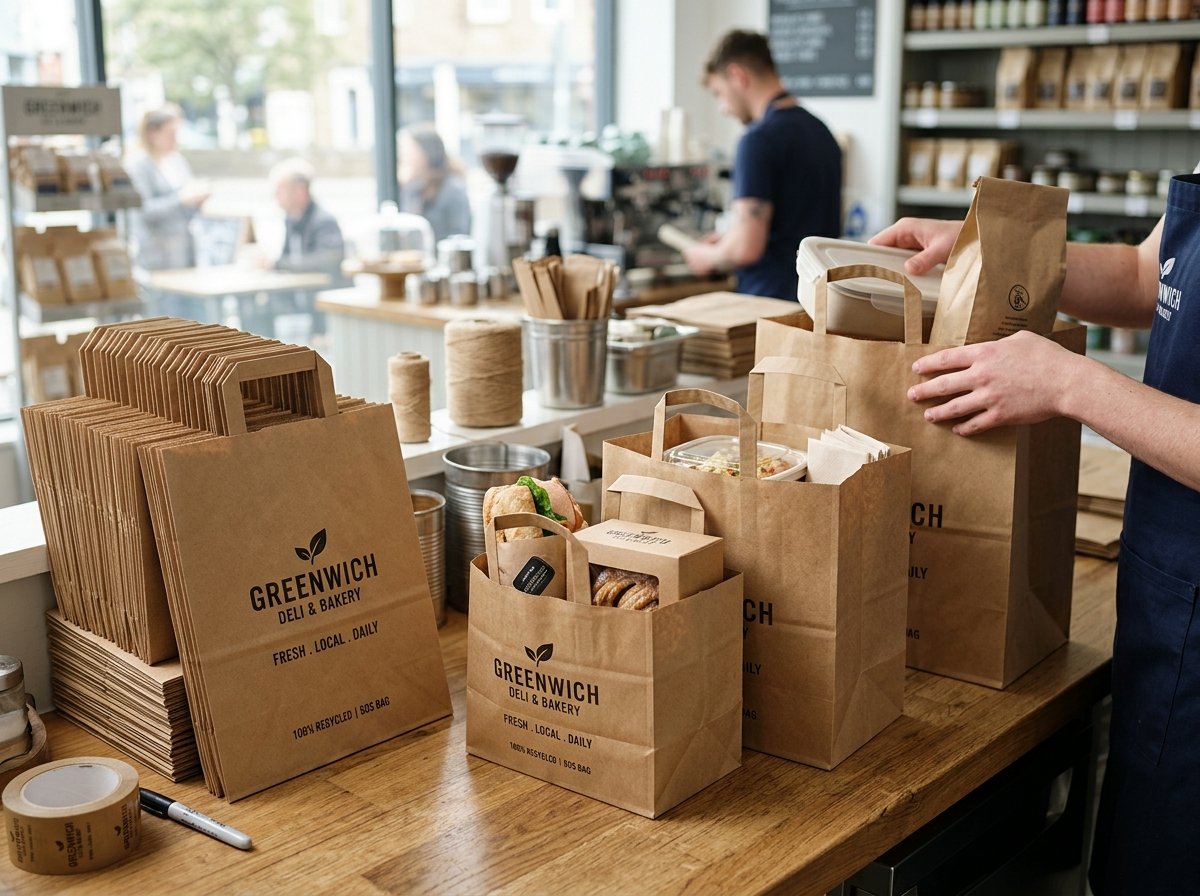
One major reason is packing speed. Unlike some flat paper bags that are slower to shape by hand, SOS bags open more naturally because of their square construction. This matters in food counters, cafés, takeaway stations, and stores with high order volume.
Another reason is cost logic. SOS bags often cost less than many rigid or box-based packaging options while still giving a better presentation than plain unbranded bags. They also help keep storage efficient because they ship and store flat.
There is also a branding reason. Public complaints about packaging often include words like generic, cheap-looking, or poor-quality. Even a simple paper bag can avoid that impression when the paper feels right, the printing is clean, and the size matches the product well. A custom SOS bag can turn a basic carry-out package into a more recognizable and more professional brand touchpoint.
How to Customize SOS Bags for Food Service, Retail, and Takeaway Packaging
Customization should begin with actual usage. A bag for hot baked goods should not be designed in the same way as a bag for boutique retail items or takeaway meal packaging.
Custom SOS bags should be designed around product type, loading method, grease or moisture exposure, carry needs, and brand presentation. Food service bags need practicality and material safety, retail bags need cleaner branding, and takeaway bags need the right balance of size, strength, and ease of handling.
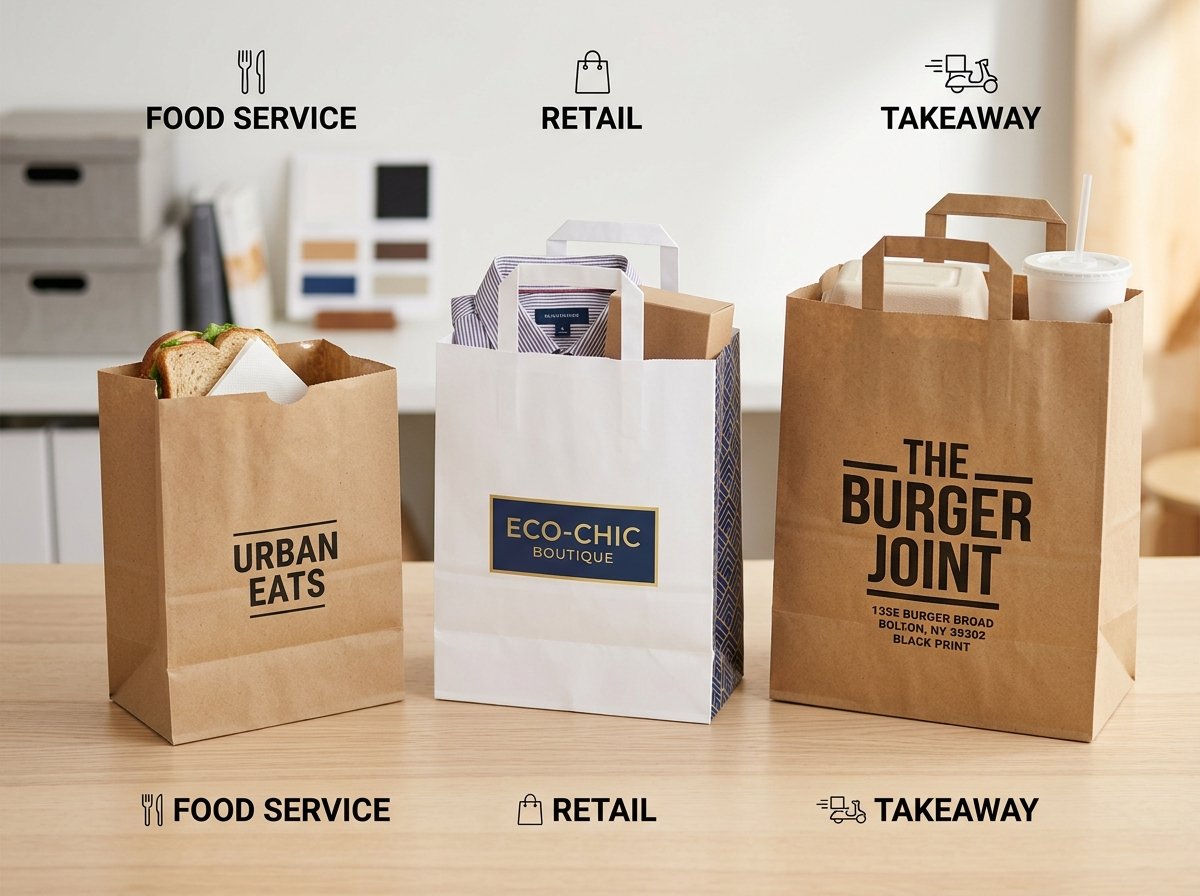
For food service, the first concern is function. The bag should open fast, hold the product neatly, and use food-safe paper and ink systems. If the contents include bakery items, bread, cookies, or dry snacks, standard kraft or white paper may be enough. If the contents include oily or moist food, grease-resistant or barrier-treated paper is often the better choice.
For retail use, brand appearance matters more. The paper bag becomes part of the shopping experience, especially for cosmetics, small gifts, accessories, stationery, and daily-use consumer products. Here, clean logo placement, better print quality, and stronger paper feel can raise the value of a very simple structure.
For takeaway packaging, the key is fit and handling. A bag that is too narrow may crush containers. A bag that is too wide creates movement and makes the order feel careless. If the takeaway order includes multiple items, the bottom strength and side gusset performance matter much more.
| Application | Custom focus | Better result |
|---|---|---|
| Food service | Food-safe paper, speed, grease resistance | Cleaner and faster operation |
| Retail | Logo visibility, neat finish, better paper feel | Stronger brand impression |
| Takeaway | Right fit, bottom strength, practical handling | Better carrying performance |
What Material Choices Work Best for Custom SOS Bags?
Material choice is one of the most important parts of SOS bag performance. A bag may look acceptable on screen but feel weak or fail under weight if the paper choice is wrong.
The best material for a custom SOS bag depends on product weight, grease exposure, print expectations, and brand look. Brown kraft paper, white kraft paper, greaseproof paper, and coated or treated paper all serve different packaging needs.
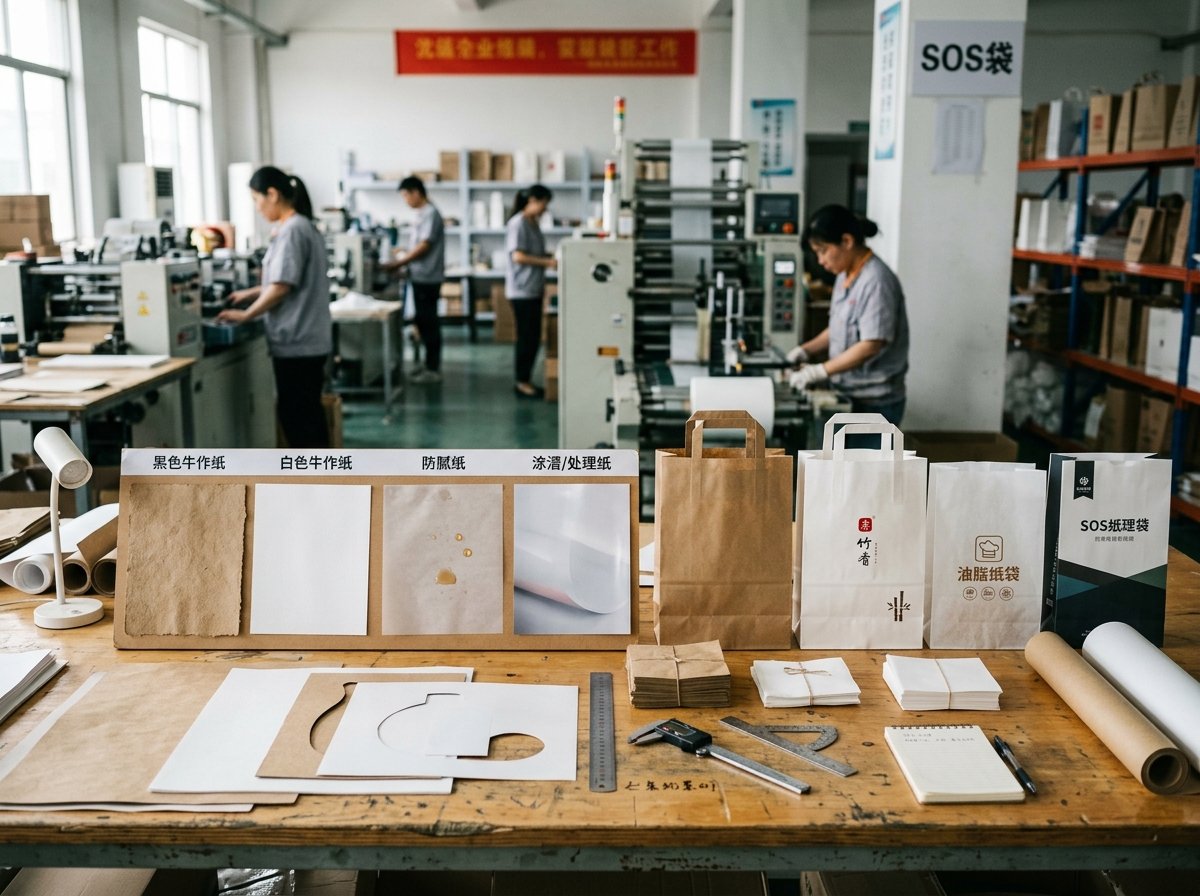
Brown kraft paper is one of the most common choices because it offers a natural look, useful strength, and broad appeal for bakery, takeaway, grocery, and sustainability-led retail packaging. White kraft paper gives a cleaner surface for brighter printing and a slightly more polished retail look. Greaseproof or barrier-treated paper is more suitable for food items that may release oil or moisture.
Material weight should also match the product load. One common problem in packaging complaints is flimsy packaging that feels too weak for the item inside. A paper bag has the same risk. If the paper is too light, the bottom softens, the bag wrinkles too easily, or the whole package feels low-value. If the paper is too heavy for the application, cost rises without much gain.
For brands focused on environmental positioning, kraft paper and FSC paper options often help communicate a more responsible packaging direction. Still, sustainability should not mean underbuilt packaging. The material still has to do the job reliably.
Material, Size, and Printing Considerations for Custom SOS Bag Orders
A successful SOS bag order depends on three linked decisions: paper, dimensions, and print approach. Problems usually appear when one of these is chosen without considering the others.
Before placing a custom SOS bag order, buyers should confirm material weight, bag width, gusset depth, height, bottom strength, print coverage, and whether the printing method matches the desired visual result and order quantity.
material size and printing for custom SOS bag orders
Size selection is critical. A bag that is too small makes packing difficult and can damage the product. A bag that is too large feels loose, wastes material, and creates the same problem seen in oversized shipping boxes: too much empty space and weaker presentation. For takeaway and food service, the bag should fit actual food boxes, cups, trays, or wrapped items. For retail, the bag should support the product comfortably without making it disappear inside an oversized pack.
Printing should be chosen according to brand style and practical use. Simple one-color or two-color flexographic printing is often cost-efficient for large runs. It works well for logos, patterns, and straightforward messaging. More detailed or premium artwork may need higher print control depending on the paper surface and design goal.
Heavy ink coverage on kraft paper should be planned carefully. Some brands want the natural paper tone to remain visible because it supports the brand image better than a fully saturated print surface. Others want stronger contrast and cleaner white or dark logo areas. The right decision depends on the product category and the desired look.
| Order factor | What to check |
|---|---|
| Material weight | Enough strength for actual product load |
| Bag size | Good fit for product and easier packing |
| Gusset depth | Stable bottom opening and usable internal space |
| Print method | Correct balance between cost and visual quality |
| Ink coverage | Matches kraft or white paper appearance |
| Food contact need | Right paper and safety requirements |
What Printing and Design Details Make SOS Bags Look Better?
A simple paper bag can still look cheap if the design is careless. Better results usually come from clean decisions, not from adding too much.
SOS bags look better when the layout is clear, logo placement is balanced, print coverage is controlled, and the bag design matches the product category. Simple design with strong positioning often performs better than crowded graphics on a small paper surface.
SOS bag printing and design tips
For food service, large readable branding and a clean front panel often work best. For retail, controlled typography, simple color use, and a more considered visual rhythm can improve the perceived value. For takeaway, the design should remain neat even when the bag is folded, filled, and handled quickly.
Surface and paper tone also matter. Brown kraft gives a more natural and grounded look. White paper gives a brighter and cleaner result. A business should not force one design style onto both materials without adjustment. Public complaints about packaging often reflect this mismatch. The packaging looks ordinary, inconsistent, or not aligned with the product. Good bag design avoids that by respecting the material.
What Should Buyers Check Before Finalizing a Custom SOS Bag Order?
An SOS bag may be a simple packaging format, but poor execution still creates obvious problems in use. The bag must carry, open, print, and present well in actual daily handling.
Before finalizing a custom SOS bag order, buyers should check material strength, bottom construction, size fit, print clarity, grease resistance if needed, sample consistency, and whether the bag matches the real packing and transport environment.
what to check before ordering custom SOS bags
The first check should be sample testing with actual products. A flat sample alone is not enough. The bag should be filled, carried, and reviewed in the same conditions expected in real use. The second check is print performance. Logos, lines, and registration should remain clean on the chosen paper. The third check is bottom strength, especially for food service and takeaway use where the bag may carry warm or slightly heavy contents.
For food-related projects, grease performance and food-contact suitability should also be confirmed early. For retail projects, appearance after handling matters more than many expect. A bag that wrinkles too fast or loses shape badly can weaken the whole purchase experience.
Conclusion
A custom SOS bag is one of the most practical paper packaging options because it combines fast use, good storage efficiency, and flexible branding in one simple structure. When designed well, it works across food service, takeaway, grocery, and light retail packaging without making the packaging system too heavy or too expensive.
The best SOS bag results come from matching paper, size, and printing to the real product and the real service environment. Strong material choices, correct dimensions, clean printing, and practical construction all matter. A bag that opens well, carries reliably, and looks right in the customer’s hand does more than hold a product. It improves daily packaging efficiency, supports brand image, and gives businesses a smarter paper packaging solution for repeat use.
For brands planning custom paper bag projects, the most useful question is not only how the bag should look. The better question is how the bag should perform in real filling, carrying, and customer use. That is where a good custom SOS bag becomes a strong packaging tool instead of just a basic paper bag.