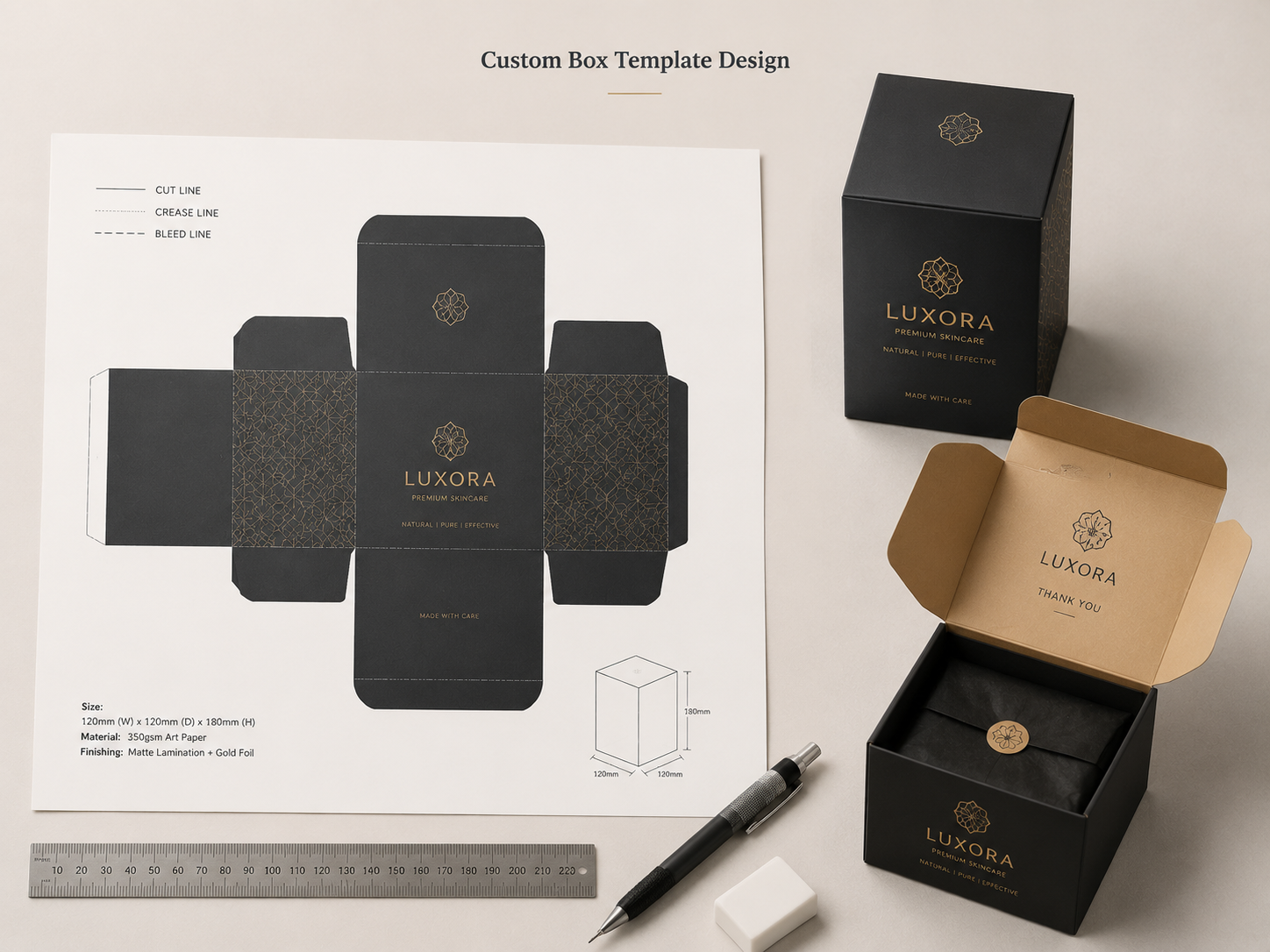
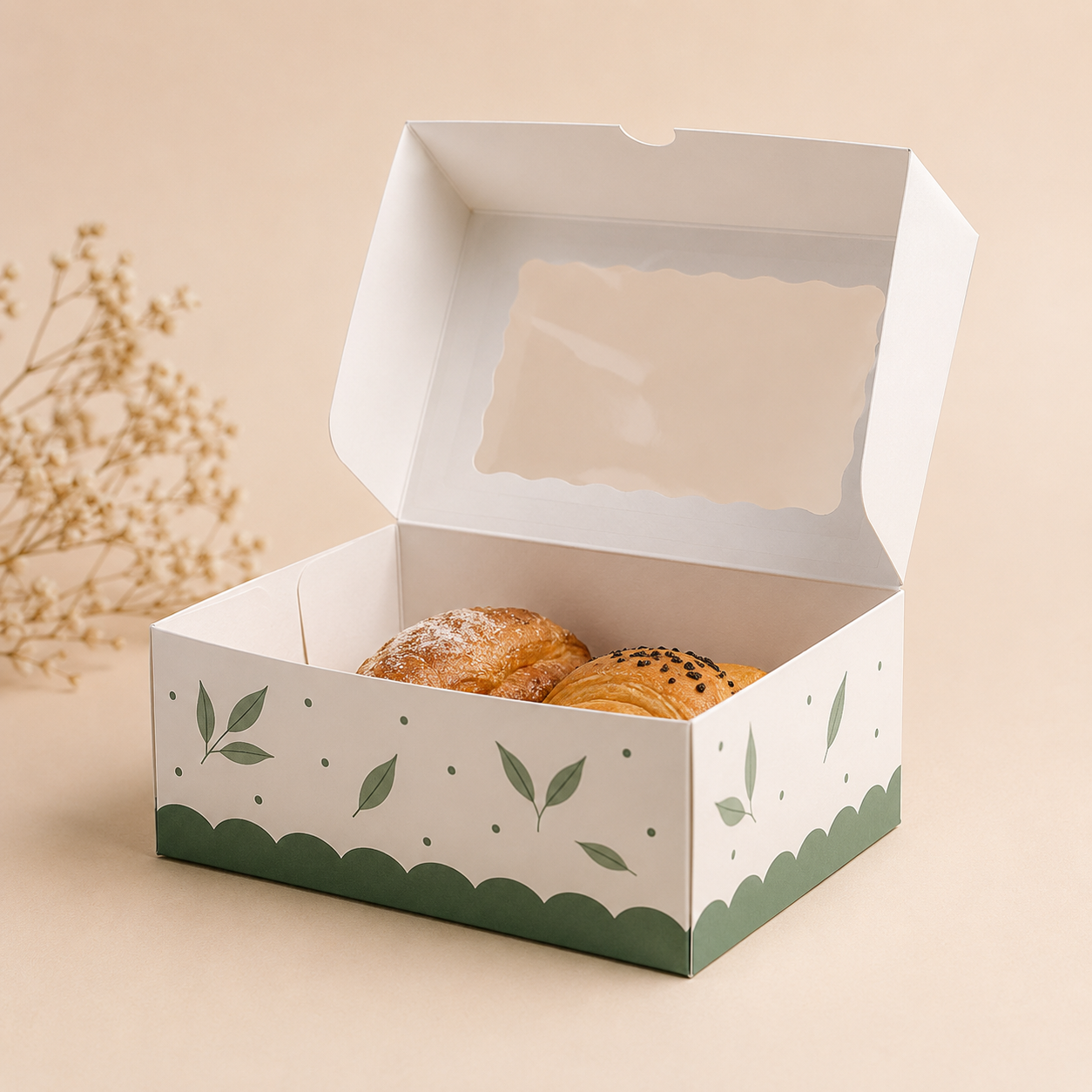
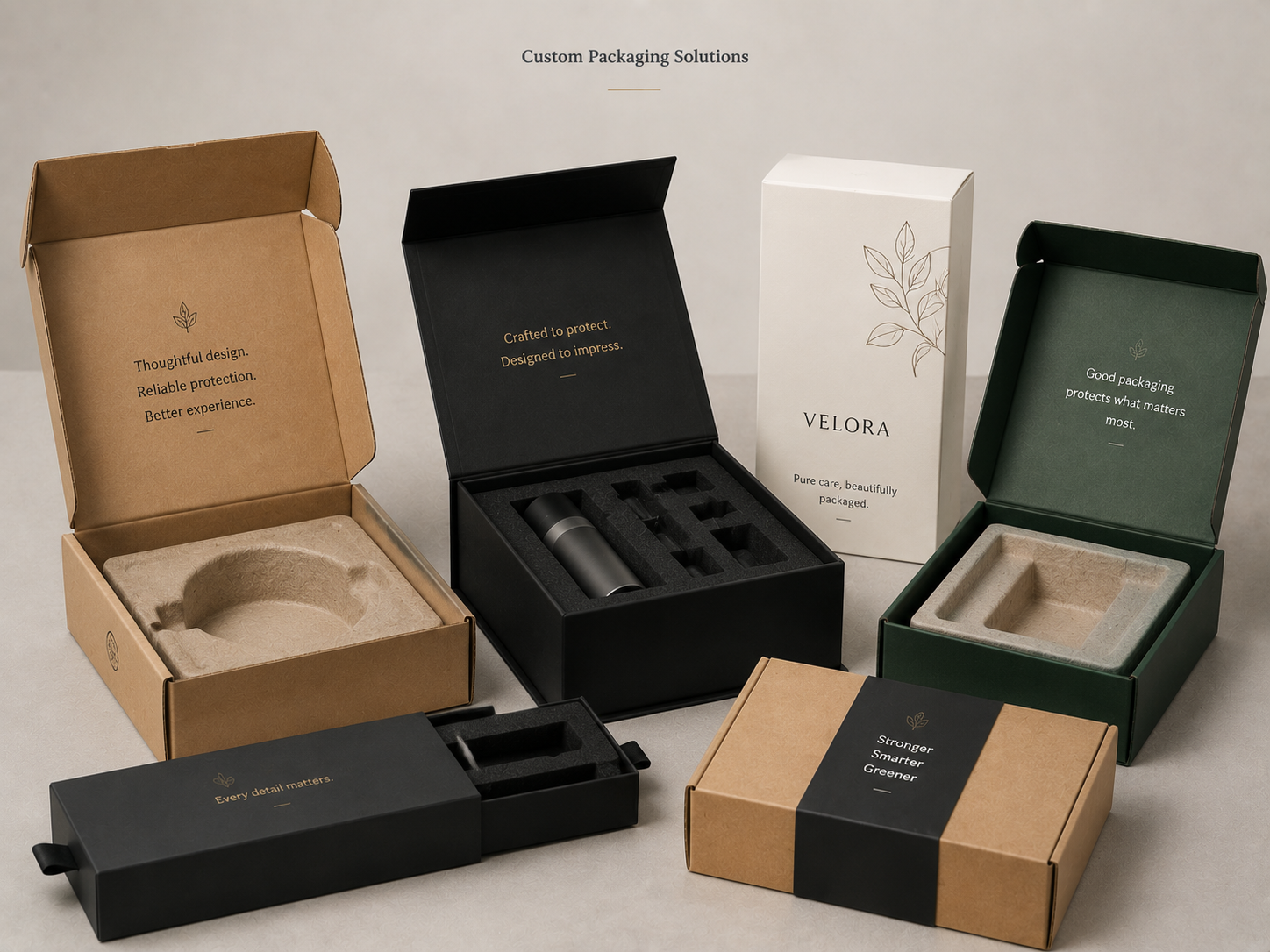
Many brands want unique packaging designs but often struggle with the first step: creating the right box structure. Poor box templates can cause production problems, material waste, and packaging that does not fit the product properly.
Box templates provide the foundation for custom packaging by defining the structure, dimensions, folding lines, and production details needed to create functional and attractive boxes.
Custom boxes are widely used in industries such as consumer electronics, cosmetics, jewelry, gifts, retail products, and luxury goods. Before a box can be produced, a proper template is required to guide the entire manufacturing process. A well-developed box template helps brands achieve accurate sizing, better material usage, smoother production, and consistent packaging quality. A professional packaging factory uses box templates to transform creative ideas into practical packaging solutions.
What Is a Box Template and Why Is It Important?
A box template, also called a packaging dieline, is a flat design layout that shows how a box will be cut, folded, and assembled. It includes important production information such as cutting lines, folding lines, glue areas, and printing positions.
Before a custom box becomes a finished product, the template acts as a blueprint for the entire manufacturing process.
A good box template connects design creativity with production requirements. It helps designers understand how artwork will appear after folding and allows manufacturers to produce accurate packaging.
What Information Does a Box Template Include?
| Template Element | Purpose |
|---|---|
| Cutting lines | Shows where materials are cut |
| Folding lines | Defines where the box bends |
| Glue areas | Indicates assembly points |
| Printing areas | Guides artwork placement |
| Safety margins | Prevents design errors |
Without a proper template, packaging designs may look correct on a computer screen but fail during production.
For example, logos may appear in the wrong position after folding, product dimensions may not fit correctly, or structural problems may appear during assembly.
A professional packaging manufacturer develops and tests templates before mass production to ensure the final packaging meets expectations.
How Are Box Templates Created for Custom Packaging?
Creating a box template requires both design knowledge and manufacturing experience. The process starts with understanding the product requirements and selecting the appropriate packaging structure.
The designer needs to consider product size, material thickness, opening style, printing method, and production requirements.
Main Steps of Creating a Box Template
| Step | Purpose |
|---|---|
| Product measurement | Determines accurate box dimensions |
| Structure selection | Chooses suitable box style |
| Template drawing | Creates cutting and folding layout |
| Sample production | Tests the physical box |
| Final adjustment | Improves production accuracy |
The first step is measuring the product. Accurate dimensions are important because even small mistakes can affect the final packaging fit.
The next step is selecting the right structure. Different products require different box styles. A jewelry box needs a different template compared with a shipping carton or retail display box.
After creating the first template, a physical sample is usually produced. This allows brands and manufacturers to check the structure, appearance, and usability before moving to mass production.
What Are the Most Common Types of Box Templates?
Different industries use different box structures depending on product requirements. Each structure has unique advantages in appearance, protection, and production efficiency.
Common Custom Box Structures
| Box Type | Suitable Applications |
|---|---|
| Folding carton | Retail products, cosmetics, small electronics |
| Rigid box | Luxury products, jewelry, gifts |
| Drawer box | Premium products and special collections |
| Magnetic box | High-end packaging experiences |
| Display box | Retail shelf presentation |
| Corrugated box | Shipping and transportation |
Folding carton templates are commonly used for lightweight products because they are cost-efficient and easy to manufacture.
Rigid box templates are designed for premium products that require stronger structures and luxury presentation. They often include wrapping areas, insert designs, and precise assembly details.
Display box templates focus on product visibility and retail presentation. They need to balance structure strength with easy customer access.
Choosing the correct template type is the first step toward successful custom packaging development.
How Does a Box Template Affect Packaging Quality?
A box template directly influences the final packaging quality. A well-designed template improves accuracy, while poor templates can create structural problems.
Packaging quality depends on many details, including dimensions, folding positions, material thickness, and printing layout.
Quality Factors Related to Box Templates
| Factor | Impact |
|---|---|
| Accurate measurements | Ensures proper product fitting |
| Correct folding lines | Improves assembly |
| Proper artwork placement | Maintains brand appearance |
| Efficient material layout | Reduces waste |
| Production testing | Prevents manufacturing problems |
For premium packaging, template accuracy is especially important. Luxury rigid boxes often require precise alignment between different parts.
For example, a perfume box may need the bottle to sit perfectly inside the insert. A jewelry box may require exact positioning of velvet compartments.
A professional packaging factory reviews every detail of the template before production to avoid quality issues.
Why Is Box Template Design Important for Printing?
Box templates are not only about structure. They also guide artwork placement and printing accuracy.
When a flat template is created, designers need to understand how the artwork will appear after the box is folded.
Printing Considerations in Box Templates
| Consideration | Purpose |
|---|---|
| Artwork direction | Ensures correct visual position |
| Bleed area | Prevents white edges |
| Folding position | Avoids design distortion |
| Logo placement | Maintains brand visibility |
Incorrect artwork placement can create problems such as upside-down logos, missing graphics, or designs appearing across folding areas.
For brands, packaging printing quality directly affects customer perception. A professional-looking package requires accurate cooperation between design and manufacturing.
A packaging factory usually provides template guidance to help designers prepare production-ready artwork.
How Do Box Templates Support Sustainable Packaging?
Sustainability has become an important consideration in packaging development. Box templates help improve material efficiency by optimizing cutting layouts and reducing waste.
A well-designed template allows manufacturers to use materials more effectively.
Sustainable Benefits of Proper Box Templates
| Method | Environmental Benefit |
|---|---|
| Efficient layout design | Reduces material waste |
| Accurate sizing | Prevents unnecessary material use |
| Suitable structure | Improves production efficiency |
| FSC certified materials | Supports responsible sourcing |
For brands using FSC certified paper or recycled materials, efficient template design helps maximize sustainability benefits.
Sustainable packaging is not only about choosing eco-friendly materials. It also requires smart structural planning.
A professional packaging manufacturer considers both environmental goals and production efficiency when developing box templates.
What Should Brands Prepare Before Creating Custom Box Templates?
Before developing a custom box template, brands need to provide important information about their products and packaging expectations.
Clear communication helps manufacturers create more accurate solutions.
Important Information for Box Template Development
| Information | Purpose |
|---|---|
| Product dimensions | Determines box size |
| Product weight | Influences structure strength |
| Brand style | Guides design direction |
| Material preference | Supports material selection |
| Printing requirements | Determines production method |
Brands should also consider how the packaging will be used. A retail product may require a display-friendly structure, while an online product may need stronger transportation protection.
Early planning reduces design changes and improves production efficiency.
A professional packaging factory can help brands evaluate different structures and recommend suitable templates based on experience.
How Do Manufacturers Test Box Templates Before Production?
Testing is an important step before mass production. A digital template may look correct, but a physical sample reveals real performance.
Sample testing helps identify structural problems and allows improvements before production begins.
Common Box Template Testing Steps
| Testing Stage | Purpose |
|---|---|
| Digital review | Checks initial design |
| Prototype sample | Tests physical structure |
| Product fitting test | Confirms size accuracy |
| Assembly test | Checks usability |
| Final approval | Confirms production readiness |
For premium packaging, sample testing is especially important because customers expect high-quality results.
A professional packaging factory produces samples to confirm structure, material performance, printing effects, and finishing details.
This process helps brands reduce production risks and achieve consistent final products.
How Should Brands Choose a Packaging Partner for Custom Box Templates?
Creating custom box templates requires technical knowledge and manufacturing experience. Choosing the right packaging partner can improve the entire development process.
A reliable supplier should understand packaging structures, materials, printing, and production requirements.
Important Supplier Evaluation Factors
| Factor | Importance |
|---|---|
| Structural design ability | Creates practical templates |
| Production experience | Reduces manufacturing risks |
| Sample development | Confirms final results |
| Material knowledge | Supports better choices |
| Quality control | Maintains consistency |
Brands should look for packaging manufacturers that can provide complete solutions, not only production services.
A professional factory can support the entire process from template creation and material selection to sample testing and mass production.
Conclusion
Box templates are the foundation of successful custom packaging. They connect creative design ideas with real manufacturing processes and ensure that packaging looks attractive, functions correctly, and performs well during production.
For brands developing custom boxes, a well-designed template helps improve product protection, printing accuracy, material efficiency, and overall packaging quality. The right structure can create better customer experiences while reducing production risks.
A professional packaging factory with strong structural design ability, advanced manufacturing equipment, material expertise, and quality control systems can help brands develop custom boxes that meet their market needs. From luxury rigid boxes to retail cartons and display packaging, accurate box templates provide the starting point for packaging solutions that strengthen brand value and improve product presentation.