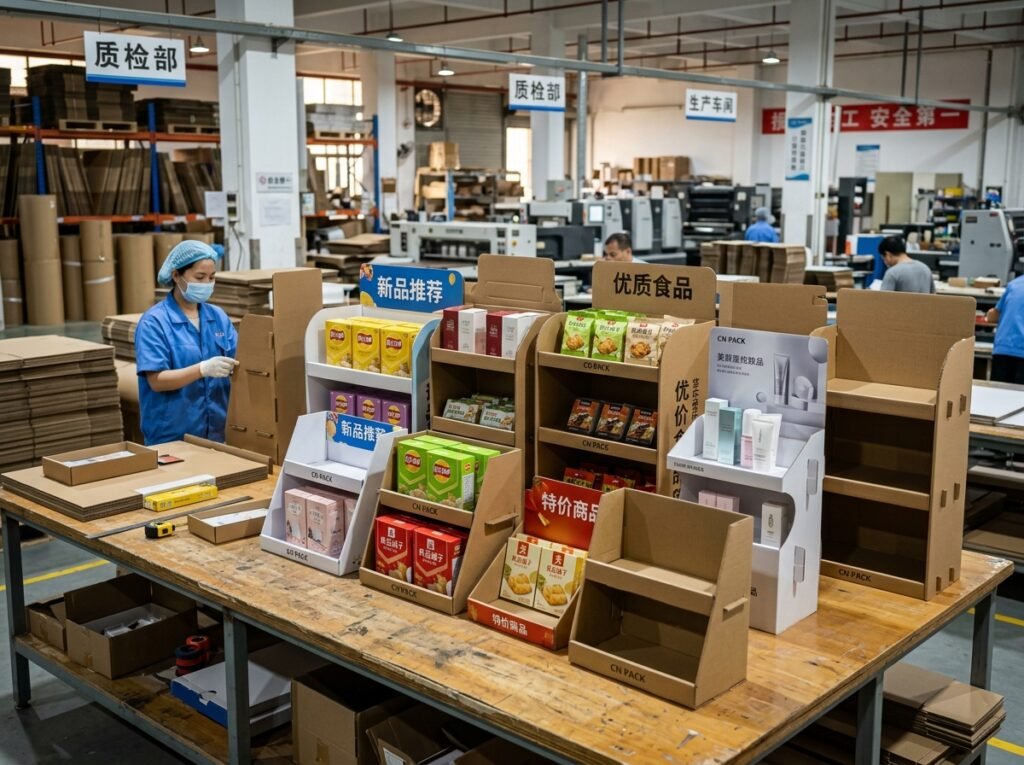
A weak shelf display does more than look bad. It can hide products, collapse under weight, waste retail space, and reduce the chance of a sale before the product even gets noticed.
Cardboard shelf displays are retail-ready paperboard or corrugated structures designed to hold products neatly, improve visibility, support promotions, and make better use of shelf space. The right display depends on product size, weight, retail environment, print needs, and how long the display must stay strong in store.
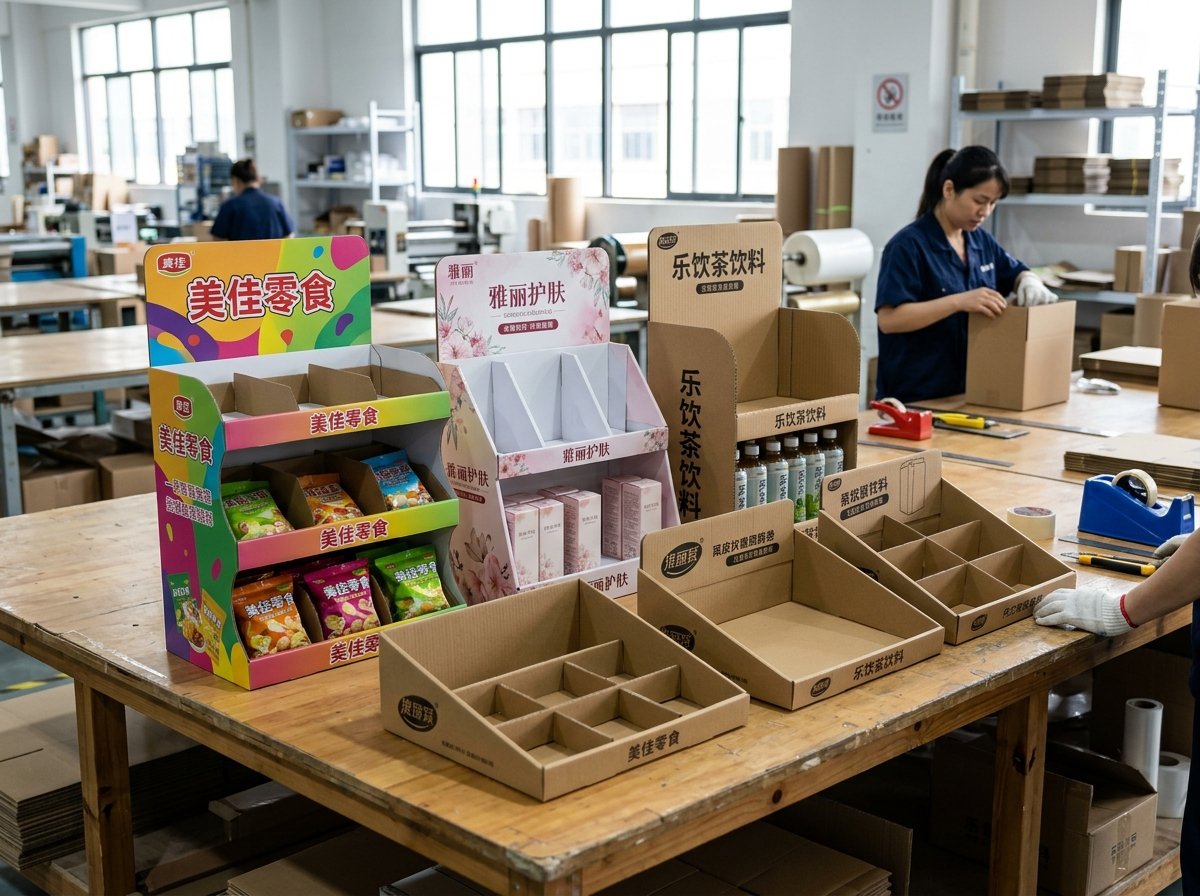
Shelf displays are often treated as simple paper structures. In real retail use, they are closer to a small selling system. They need to carry product weight, present branding clearly, fit shelf dimensions, survive store handling, and still look clean after repeated customer contact. That is why serious buyers do not judge a shelf display only by shape or price. They judge it by fit, load performance, print result, and retail efficiency.
What Are Cardboard Shelf Displays and Why Do They Matter in Retail?
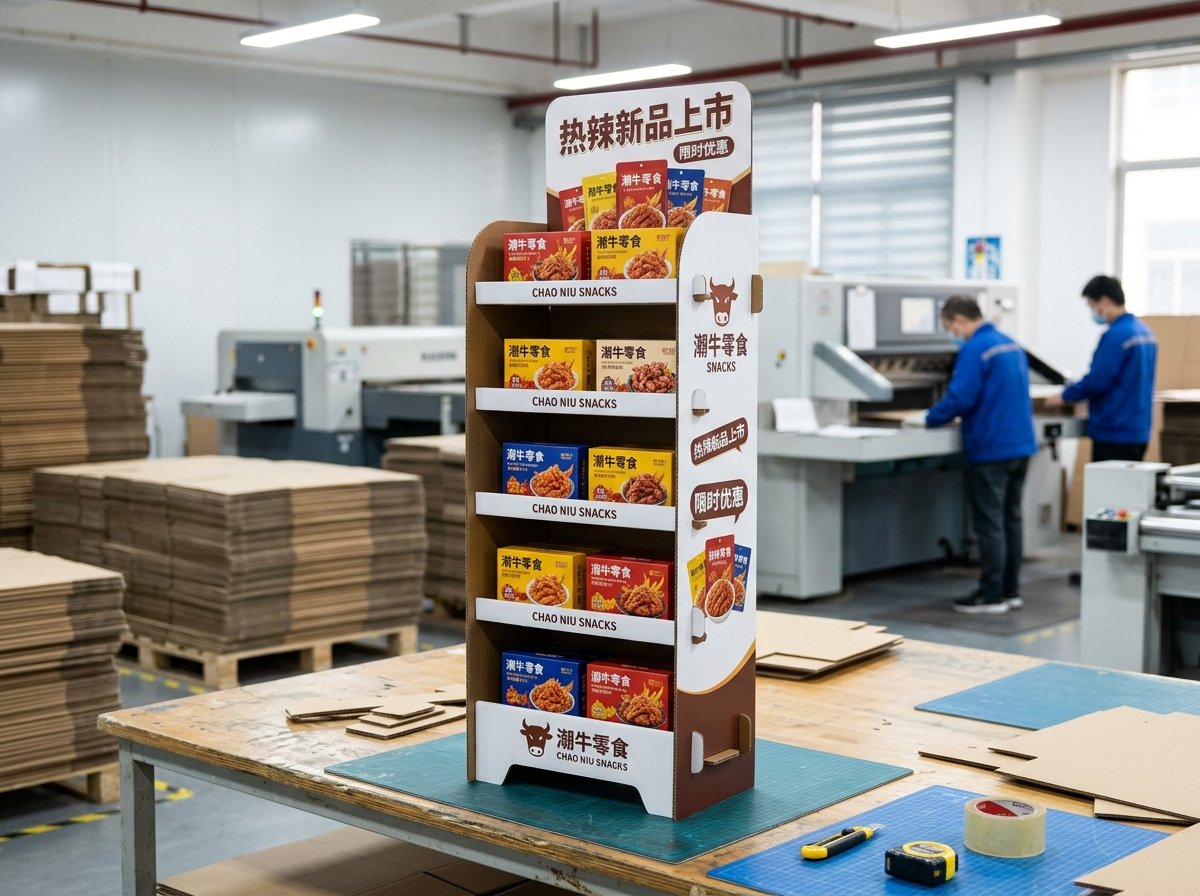
Shelf displays are product presentation units made from cardboard, paperboard, or corrugated board that sit on retail shelves, counters, or display racks. They are used to group products, improve front-facing visibility, support new launches, drive seasonal promotions, and make it easier for shoppers to pick up items.
A good cardboard shelf display helps products sell faster by improving presentation, keeping units organized, and making the brand more visible in limited retail space.
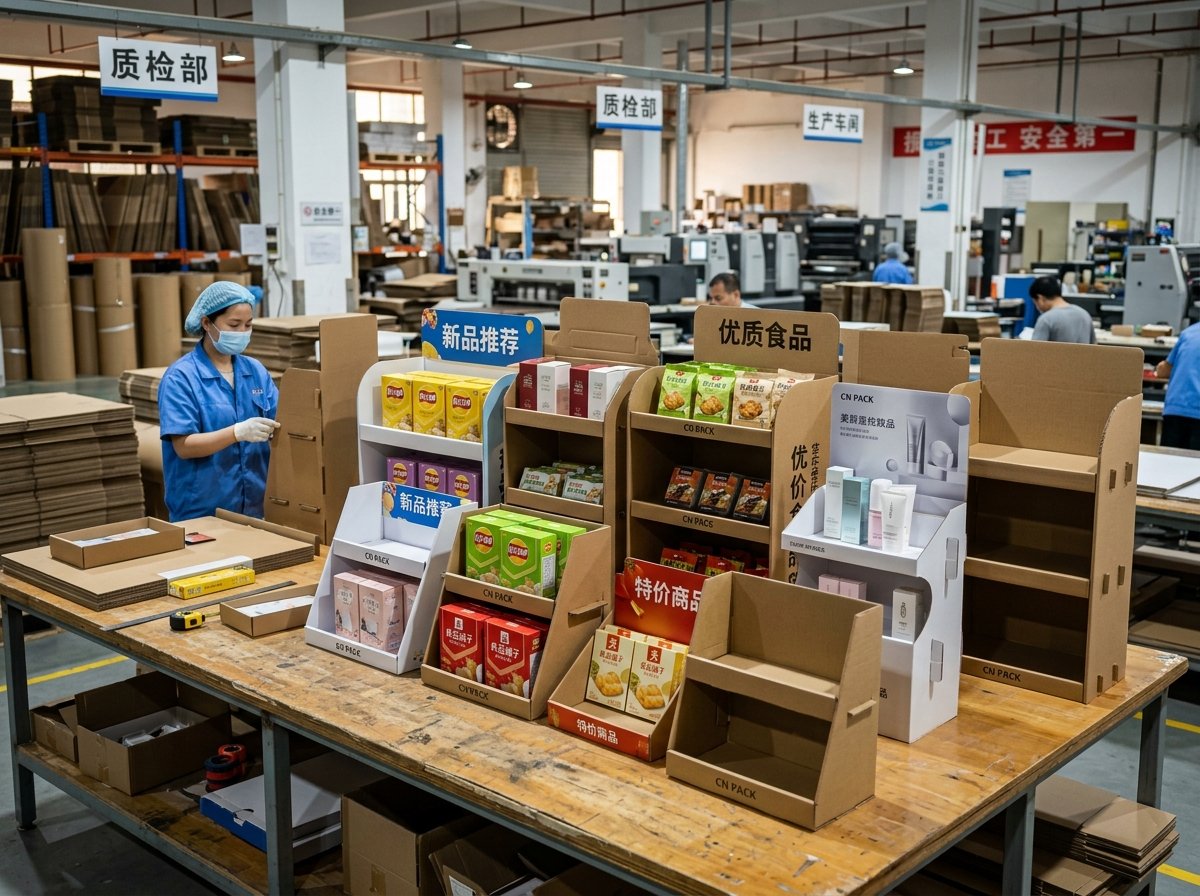
This matters because poor packaging and poor display often create the same result: the product looks weaker than it really is. Many negative comments in packaging markets focus on weak material, crushed corners, poor print quality, bad fit, and low perceived value. Those same problems show up in shelf displays when the structure is too soft, the board grade is too light, the print scratches easily, or the product sits loosely and untidily.
A shelf display should do four jobs at once. It should hold the product safely. It should show the product clearly. It should support the brand image. It should make in-store restocking easy. If one of these parts fails, the whole display underperforms.
| Display function | Why it matters |
|---|---|
| Product holding | Prevents falling, bending, or disorder |
| Visibility | Helps shoppers notice the item quickly |
| Branding | Supports recognition and premium feel |
| Efficiency | Makes retail placement and refill easier |
What Are the Common Types of Cardboard Shelf Displays for Retail and Promotional Use?
There is no single shelf display style that fits every product. Different display types are made for different shelf depths, product weights, pack sizes, and sales goals. The right style depends on whether the product is light or heavy, single-SKU or mixed-SKU, fast-moving or promotional.
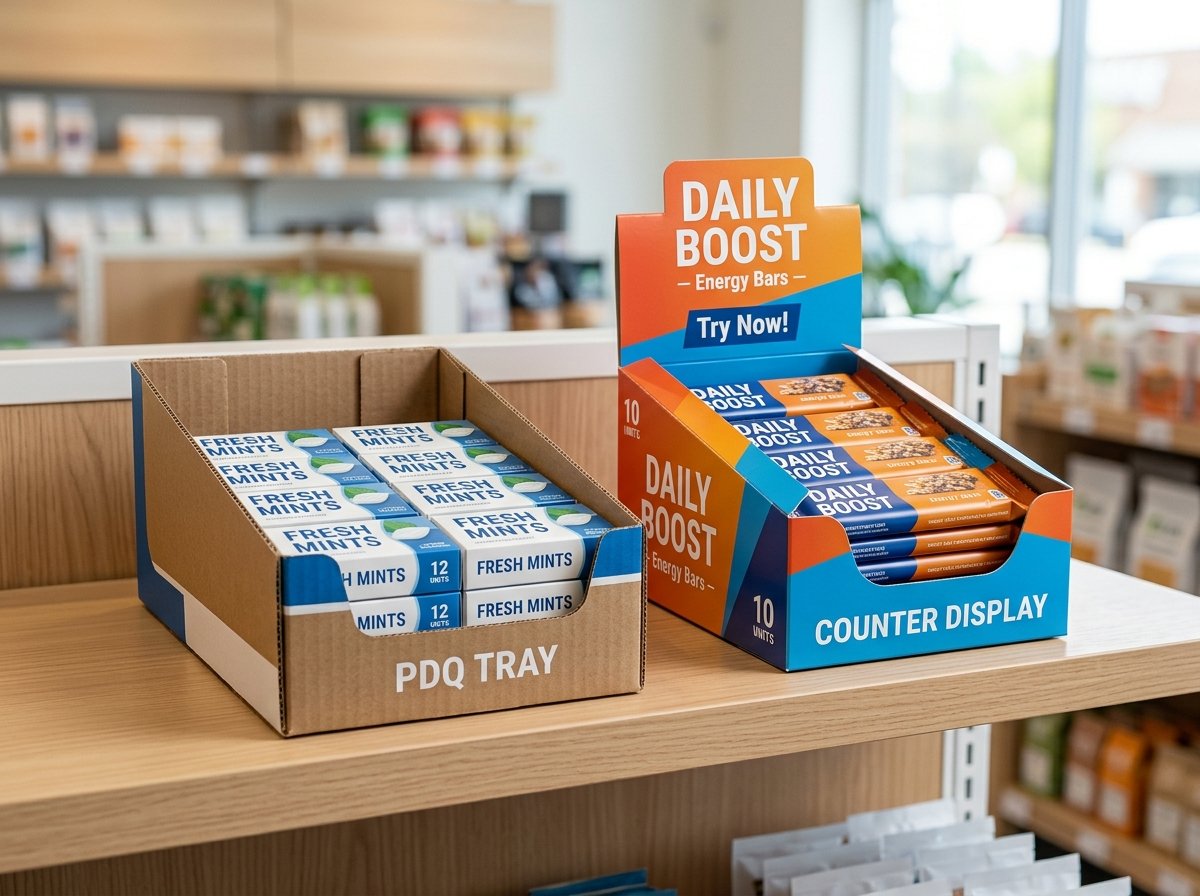
Common cardboard shelf display types include tray displays, shelf-ready boxes, counter displays, stepped displays, gravity-feed displays, and divider-based displays. Each type solves a different retail need.
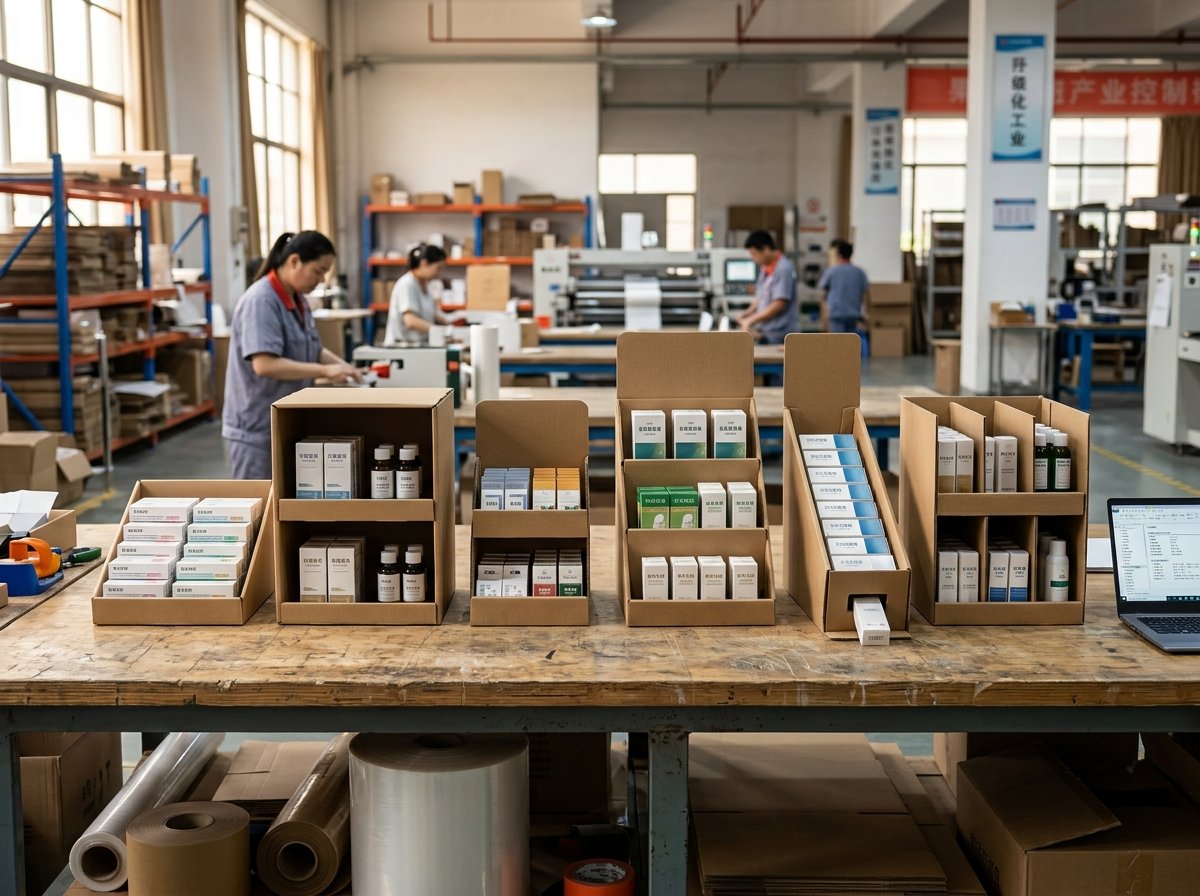
Tray displays are simple and effective. They work well for snacks, cosmetics, personal care items, and small accessories. Shelf-ready boxes are popular because they move from shipping carton to display with less handling. Counter displays are useful for small impulse products near checkout. Stepped displays improve visibility when several product units need to be seen at once. Gravity-feed displays help keep products pushed to the front. Divider displays work well for multiple flavors, colors, or variants.
Buyers often make mistakes when they choose a display only for appearance. A nice shape can still fail if the load is wrong, the front lip is too low, the angle is poor, or the refill method is awkward. Product movement, leaning, and collapse usually come from design that looked fine on paper but was not matched to real use.
| Display type | Best for | Main benefit |
|---|---|---|
| Tray display | Small packs, cosmetics, snacks | Easy access and low cost |
| Shelf-ready display box | Retail chains, fast refill | Better stocking efficiency |
| Counter display | Impulse products | High visibility in small space |
| Stepped display | Multiple SKUs, hero products | Better front view |
| Gravity-feed display | Small boxed items | Keeps stock facing forward |
| Divider display | Product variations | Better organization |
How Should Shelf Displays Be Designed for Product Fit, Visibility, and Retail Efficiency?
Shelf display design starts with the product, not with the artwork. Product size, product weight, pack count, shelf depth, refill speed, and shopper handling all affect the final structure. A display that fits badly creates the same kind of problems often seen in weak packaging: too much empty space, loose movement, crushed edges, awkward handling, and wasted material.
The best shelf displays are designed around product dimensions, shelf space, load balance, front visibility, and fast retail handling. Good design improves both presentation and selling efficiency.
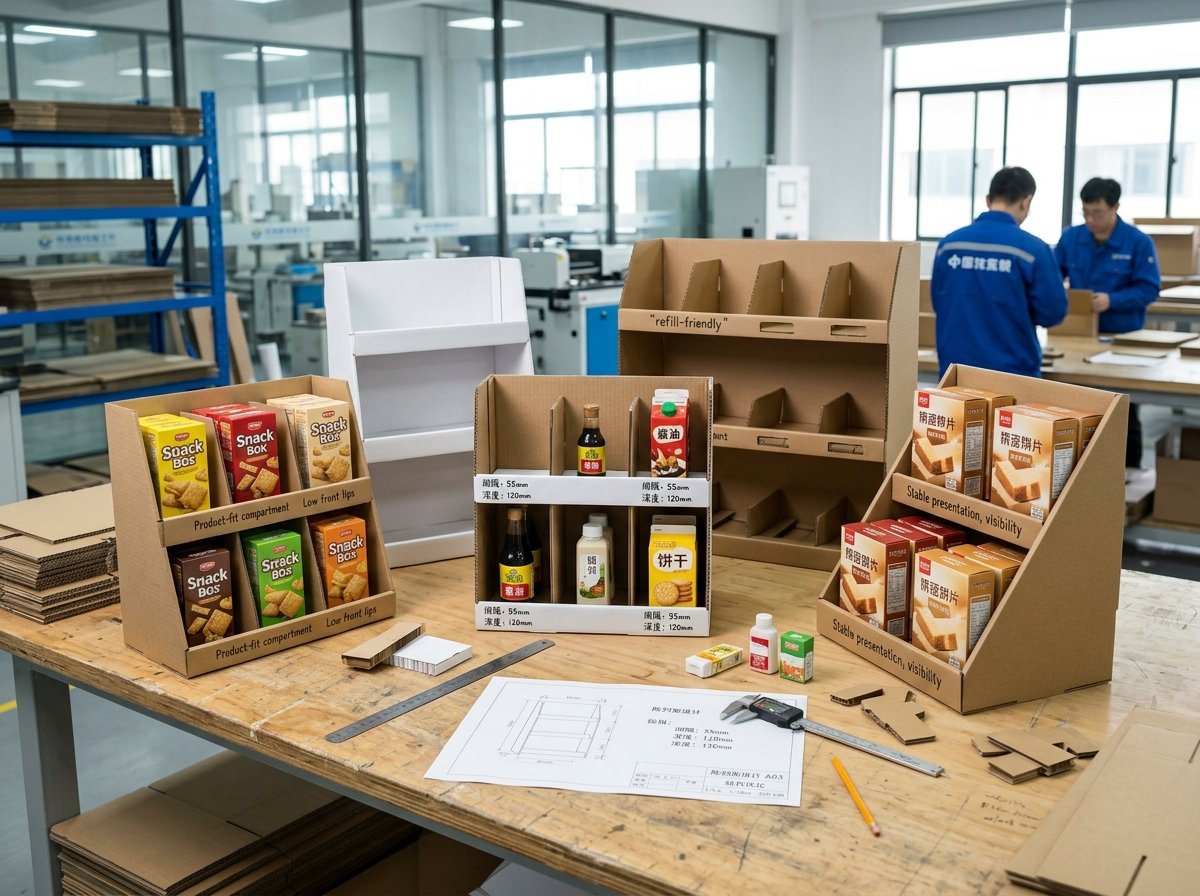
Fit is the first issue. If the display is too tight, products are hard to load and remove. If it is too loose, products shift, lean, and look messy. This is similar to one of the most common packaging complaints in the market: boxes that are too big, too small, or poorly matched to the item. Shelf displays need the same control. Product slots, divider width, front lip height, and back support all need to be sized with real tolerance in mind.
Visibility is the second issue. The display should not hide the product behind a wall of board. It should hold the pack neatly while still letting the shopper see branding, color, and key selling points. For some products, a stepped layout or angled front works better than a flat tray. For others, a clean front cut and a strong header card are more important.
Retail efficiency is the third issue. Buyers should ask simple questions. Can staff refill it quickly? Can it be packed flat? Can it be assembled without confusion? Does it fit common shelf modules? Does it waste vertical or horizontal shelf space? These points matter because a display can look strong in a sample room and still fail in real stores if it slows staff down.
| Design point | Why it matters | Risk if ignored |
|---|---|---|
| Product fit | Keeps packs stable | Leaning, disorder, fall-out |
| Front visibility | Improves shopper attention | Hidden branding |
| Shelf footprint | Uses retail space better | Space waste |
| Refill method | Saves store labor | Slow stocking |
| Header and graphics area | Supports promotion | Weak brand message |
Which Materials Are Used for Cardboard Shelf Displays?
Shelf displays are usually made from paperboard, corrugated board, or laminated structures. The correct material depends on product weight, display lifetime, store conditions, and print needs. Lighter products may work well in SBS paperboard or E-flute corrugated. Heavier products often need stronger corrugated grades, double-wall structures, or reinforced bases.
The main shelf display materials are paperboard for lighter and more visual displays, and corrugated board for stronger displays that need better load support and longer retail life.
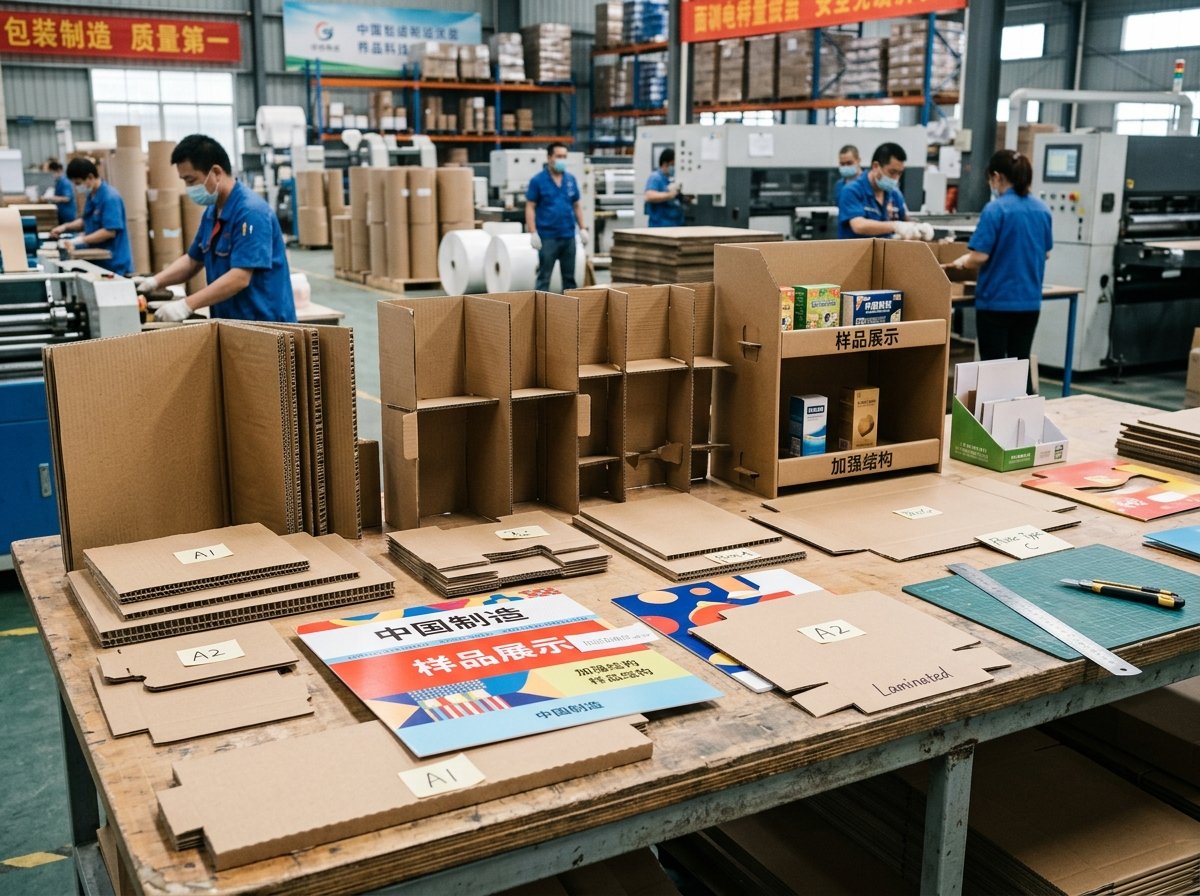
This is where many quality problems begin. Public feedback in packaging markets often mentions flimsy boxes, weak corners, poor stiffness, crushed structures, and packaging that feels cheaper than the product inside. A shelf display can create the same reaction if the board grade is too light for the product load. A display holding bottles, electronics accessories, canned goods, or multi-pack items should not be built like a light cosmetic tray.
Kraft liners are often used where a natural look or stronger surface is wanted. White-top liners are common when bright print quality matters. Laminated board may be used when both print quality and stiffness are needed. Some projects also use reinforced inserts, folded side walls, or hidden support panels to increase strength without making the display look bulky.
| Material | Best use | Main advantage |
|---|---|---|
| SBS paperboard | Light retail items | Smooth print surface |
| E-flute corrugated | Small to medium products | Balance of print and strength |
| B-flute corrugated | Heavier shelf displays | Better load capacity |
| Kraft-lined corrugated | Eco-style or stronger look | Good durability |
| Laminated board | Premium branded displays | Better finish and stiffness |
How Much Load Capacity Should a Shelf Display Have?
Load capacity should always be calculated from real product weight, not from guesswork. This includes the total weight of all units in the display, the pressure on the bottom panel, the force on front lips, and the stress on side walls during stocking and handling.
A shelf display should be built with enough safety margin to hold full product weight through transport, setup, stocking, and store use without bending, tearing, or collapsing.
This issue connects directly with many packaging complaints seen across reviews and forums. Thin board, weak seals, poor structure, and lack of support lead to collapse, corner crush, and poor customer trust. The same is true for shelf displays. If the display bends after a few days, the product starts to look neglected. If the front wall fails, products spill forward. If the base softens in humid conditions, the whole display can sag.
That is why load planning should include more than the product weight alone. It should also include display life, humidity, stacking during transit, and customer handling. Displays for supermarkets, convenience stores, beauty retail, and promotional events all face different stress conditions.
| Load factor | What to check |
|---|---|
| Total unit weight | Full load, not single unit |
| Base support | Bottom panel strength |
| Front lip stress | Product push and removal force |
| Side wall stiffness | Shape retention during handling |
| Humidity exposure | Strength loss in store conditions |
What Printing Options Work Best for Cardboard Shelf Displays?
Printing is a major part of shelf display performance because the display is not only structural. It is also a branding surface. Common options include flexo printing, offset printing, digital printing, and laminated litho mounting depending on budget, detail level, and volume.
The best printing method depends on required image quality, quantity, board type, and whether the display is meant for simple transport presentation or stronger retail branding.
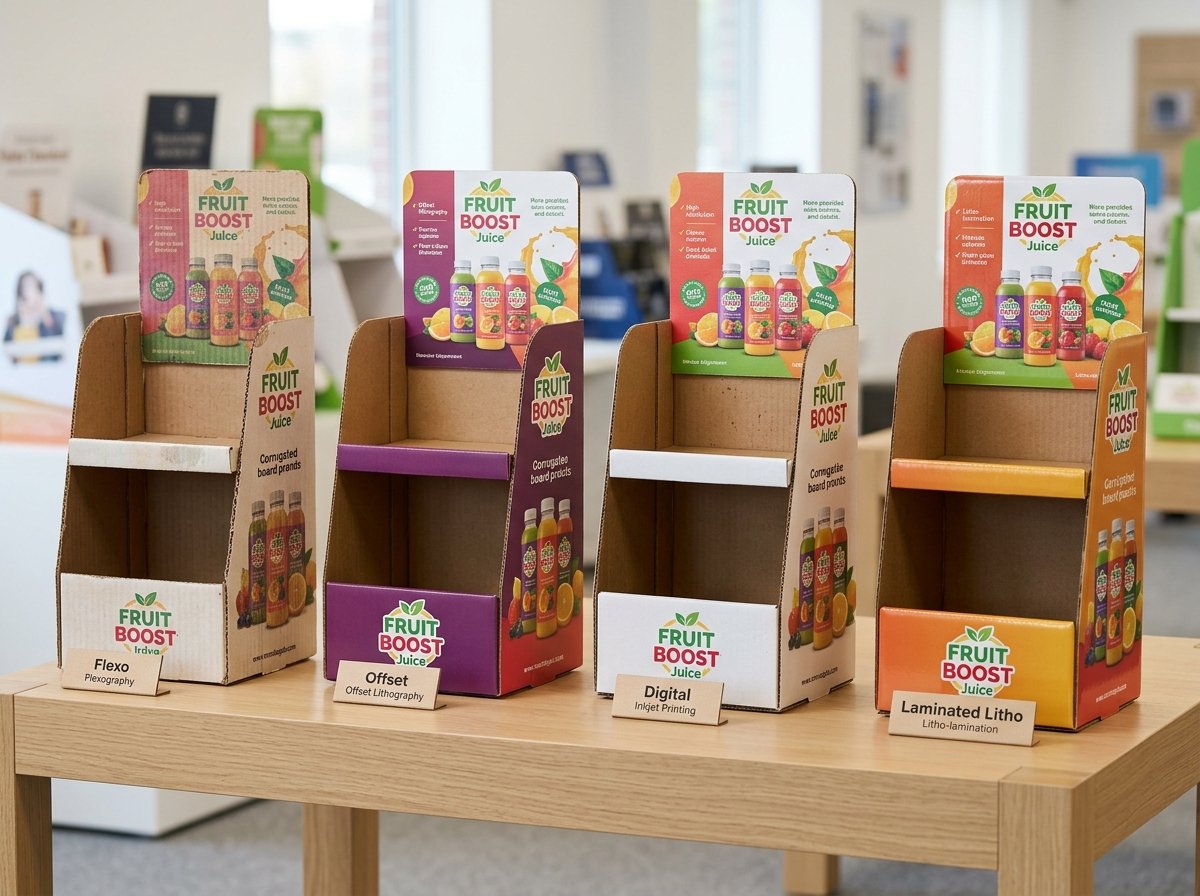
Simple kraft retail displays may work well with one-color or flexo print. Promotional displays with stronger branding often need offset-printed top sheets mounted onto corrugated board. Digital printing is useful for short runs, seasonal launches, or multiple SKU versions with lower setup cost. Matte or gloss coatings may be added where surface protection matters.
This part should never be ignored because poor print control can ruin the whole display. Packaging complaints often mention wrong colors, poor alignment, sticky ink, scratches, and low-quality surface finish. Those same failures damage shelf displays fast because the display is touched, restocked, and seen at close distance. Good print should stay clean, sharp, and consistent through the life of the promotion.
| Print option | Best for | Main benefit |
|---|---|---|
| Flexo print | Simple logistics or kraft displays | Lower cost |
| Offset print | Premium retail visuals | Better detail and color |
| Digital print | Short runs and fast changes | Flexible versioning |
| Laminated litho | High-impact displays | Strong print with corrugated support |
What Buyer Considerations Matter Most Before Ordering Shelf Displays?
Before ordering shelf displays, buyers should review product weight, product count, retail channel, shelf size, display lifetime, print standard, and assembly method. Cost matters, but total failure cost matters more. A cheap display that bends, scuffs, or wastes shelf space can cost more than a stronger display that performs well.
The most important buyer considerations are structural strength, product fit, print quality, assembly ease, shipping efficiency, and whether the display matches the real store environment.
Several packaging insights apply directly here. Thin material creates a cheap feel. Poor fit creates movement and visual disorder. Wrong size creates waste. Weak print lowers trust. Poor handling design slows retail staff. These are not small details. They affect reorder rates, store acceptance, and the final product image.
The most useful approach is to compare shelf display quotes in a structured way. The board grade should be clear. Load testing should be discussed. Product arrangement should be shown. Pack-out method should be confirmed. Assembly steps should be checked. For branded displays, print approval and color control should also be included.
| Buyer question | Why it matters |
|---|---|
| What is the real load per shelf or tray? | Prevents collapse |
| What board grade is being used? | Confirms strength |
| Is the display packed flat or pre-assembled? | Affects logistics and labor |
| How many products fit cleanly? | Controls retail efficiency |
| What print method is included? | Affects shelf impact |
| Is there a sample test before mass production? | Reduces risk |
How Can a Shelf Display Balance Cost, Strength, and Branding?
The best display is rarely the cheapest and rarely the most decorative. A strong shelf display balances three things: enough strength to hold the product, enough branding to attract attention, and enough cost control to make the project practical.
The smartest shelf display programs reduce waste, strengthen the load-bearing parts, use printing where it adds selling value, and avoid overbuilding parts that shoppers do not see.
This is the same lesson seen across many packaging complaints. Too little structure leads to damage and low trust. Too much material leads to waste and cost. The strongest result comes from controlled design. Board should be added where support is needed. Print should be strongest where shoppers look first. Product fit should remove unnecessary empty space. Inserts and dividers should only be used when they improve function.
A well-made shelf display should feel easy to understand. It should hold product cleanly, show the brand clearly, and stay presentable through the planned retail cycle. That is what turns a cardboard structure into a real selling tool.
Conclusion
Cardboard shelf displays work best when structure, fit, print, and retail use are planned together. Good displays do not just hold products. They help products get noticed and sold.