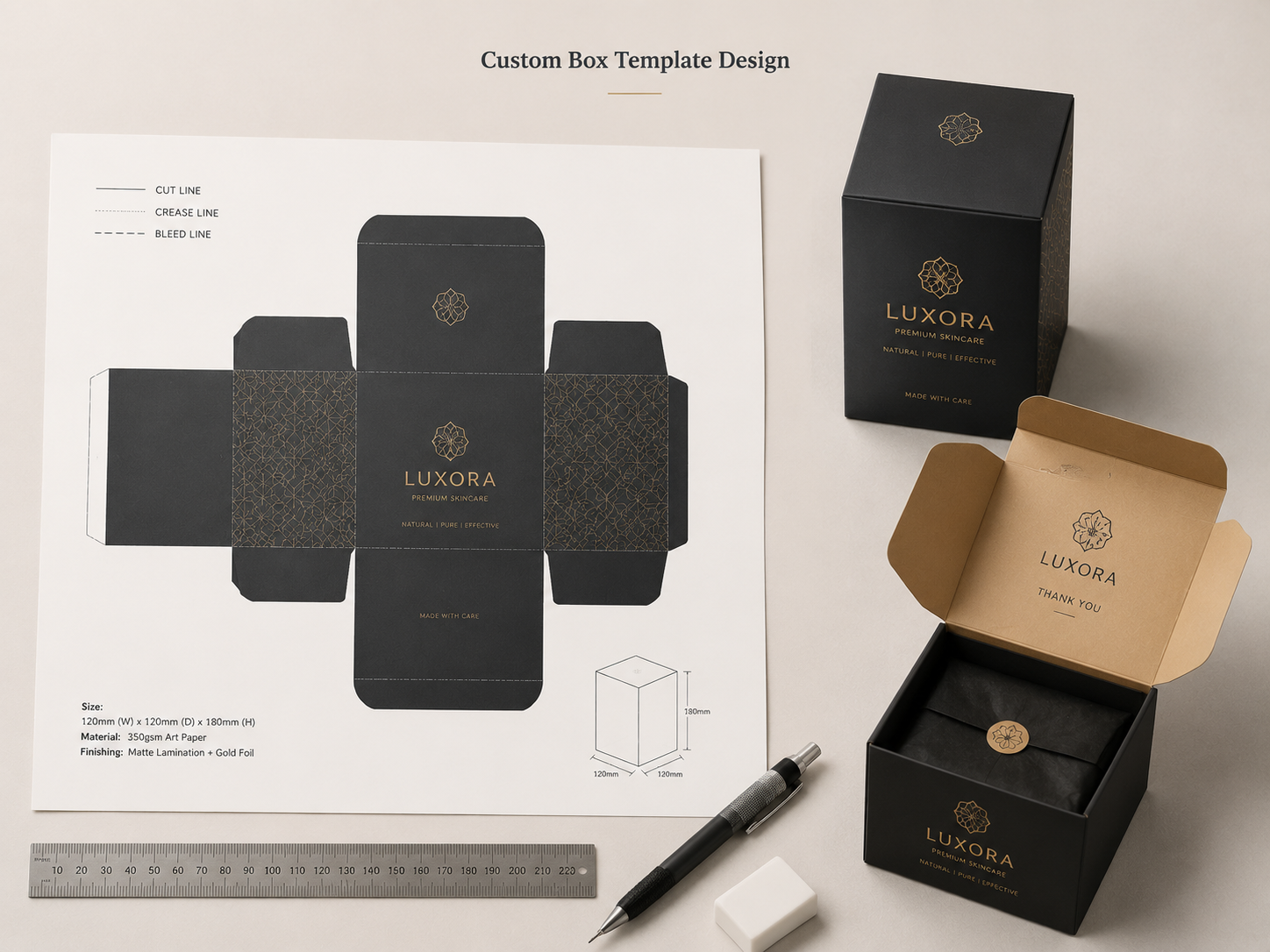
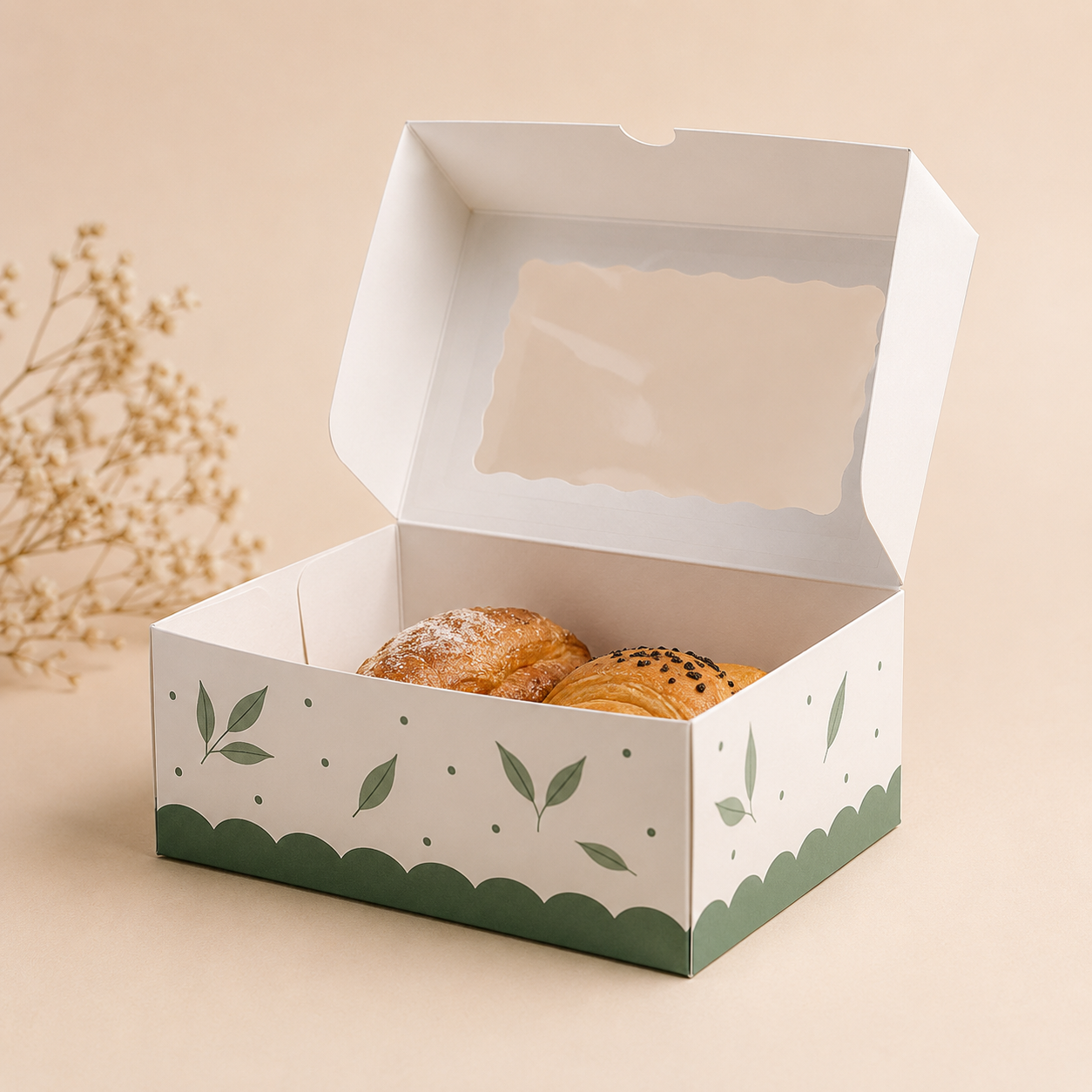
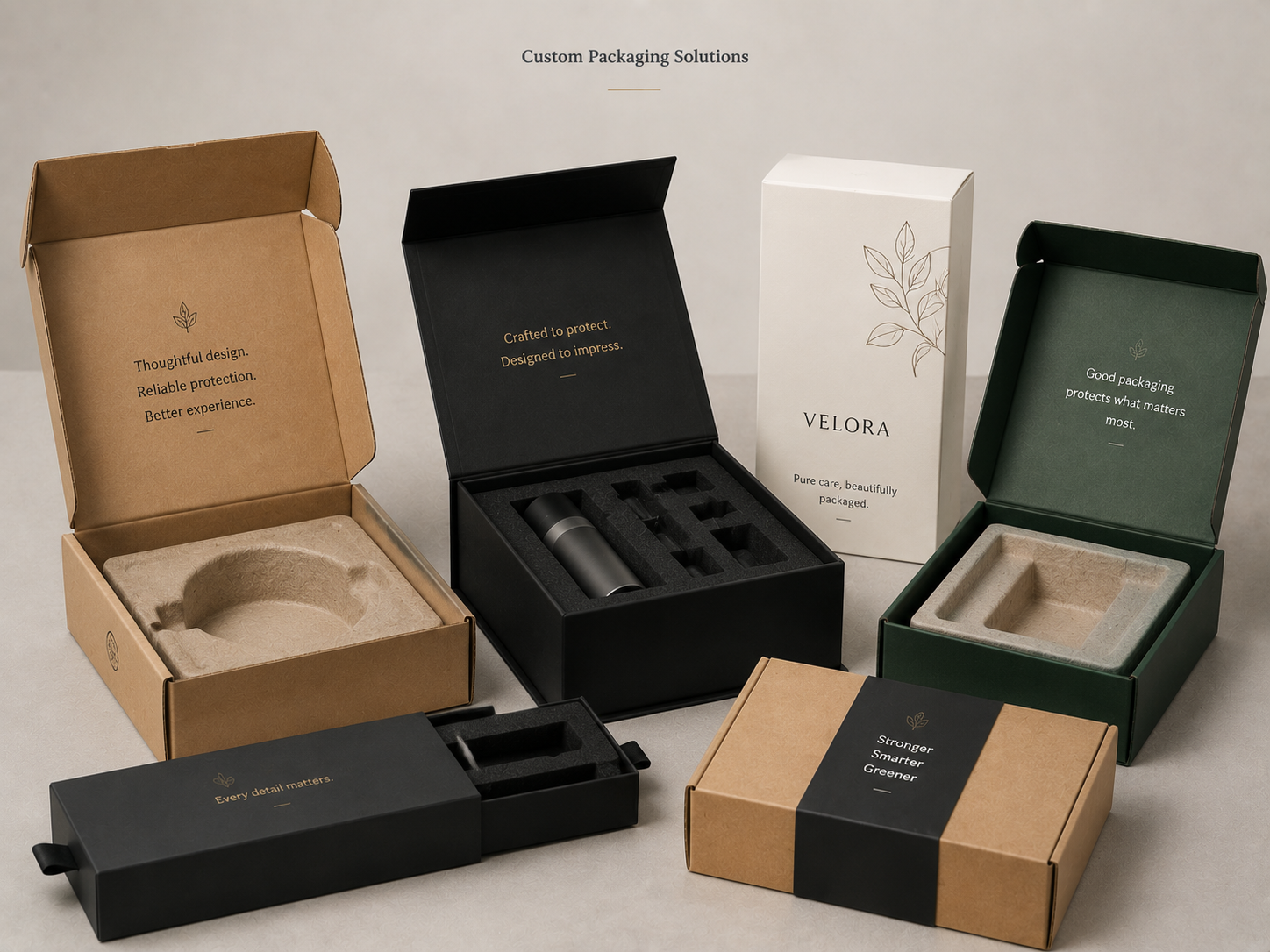
Poor packaging choices cause damage, waste freight, and weaken brand value. A box that looks fine on paper can fail in shipping, on the shelf, or during unboxing.
The right packaging matches product protection, brand position, and logistics needs at the same time. The best choice depends on product fragility, weight, shape, retail use, shipping risk, and how the package needs to look when it reaches the customer.
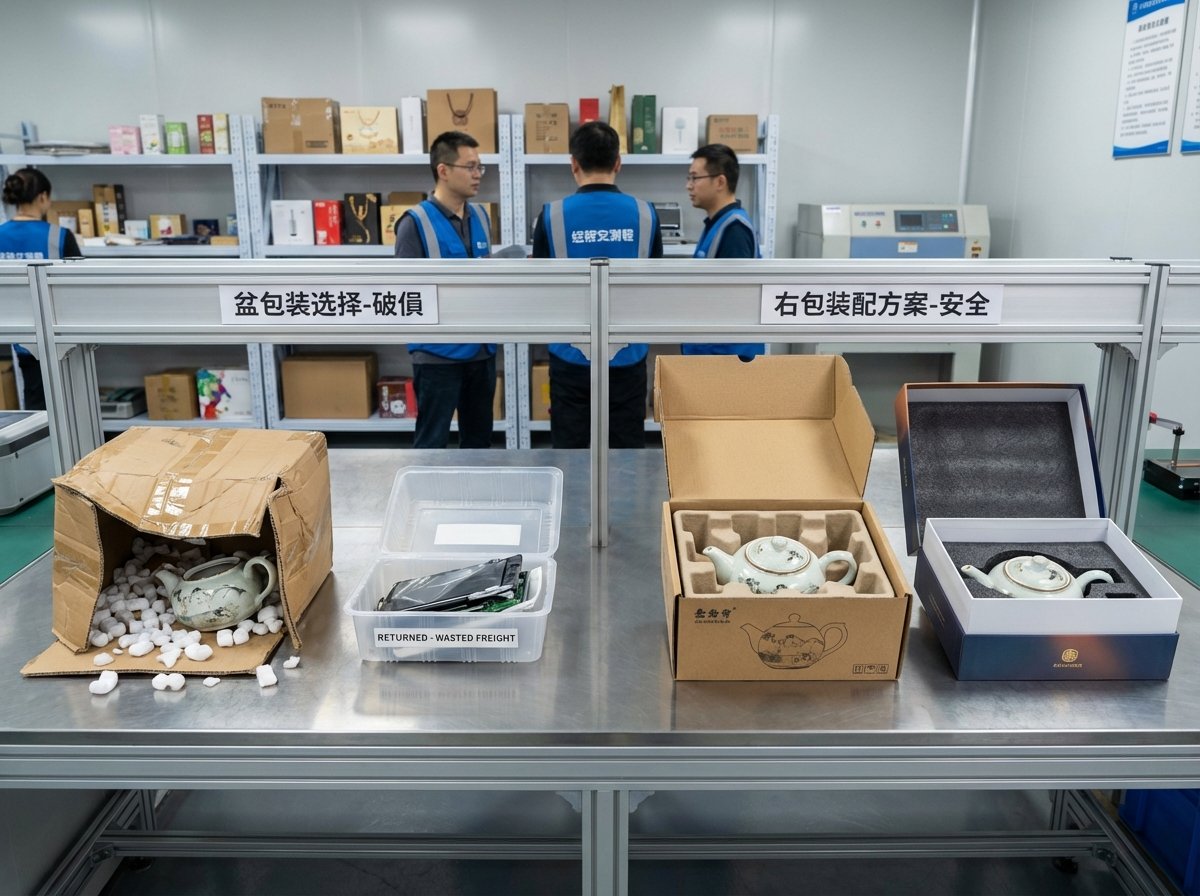
Choosing packaging is not only about finding a box. It is about finding the right structure, material, insert, and finish for the real job. Many packaging failures in the market come from the same basic mistakes: boxes are too weak, sizes are wrong, retail boxes are used as shipping boxes, or the package looks premium but performs poorly in transit. A better packaging decision starts by looking at the product, the sales channel, and the transport route together.
How to Match Packaging Type to Product Protection, Branding, and Logistics Needs?
Many products are packed in the wrong structure from the start. That is why some boxes arrive crushed, some gift boxes feel cheap, and some retail packs fail the moment they enter parcel delivery.
The right packaging type should match three things: how much protection the product needs, how the brand wants the product to feel, and what kind of handling the package will face during storage and shipping. A folding carton works for many light retail products. A corrugated mailer works better for direct shipment. A rigid box fits premium items that need stronger presentation and a more refined opening experience.
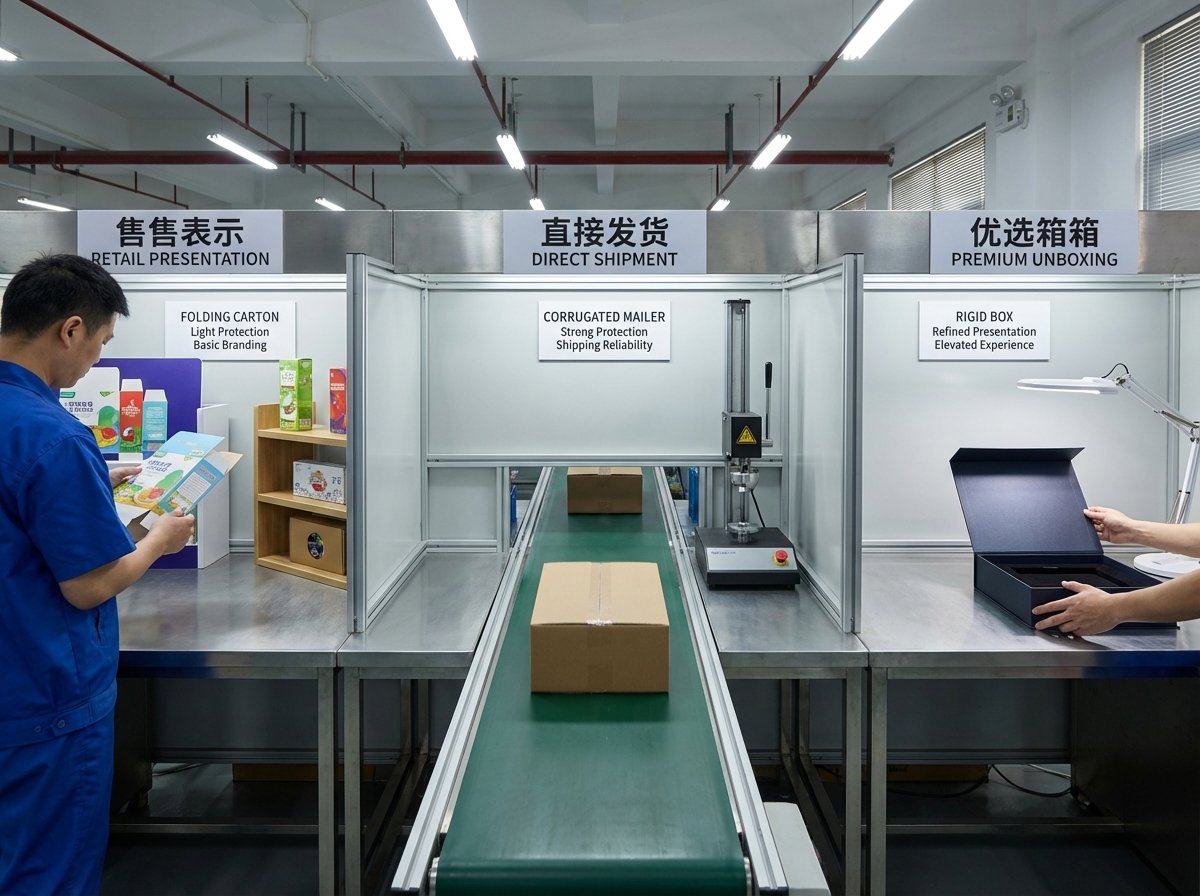
A lightweight skincare carton and a shipping box for electronics should not be built in the same way. A printed folding carton may be enough for shelf display, but it is often not enough for courier handling. A rigid gift box may look premium, but it still needs an outer shipping carton if the delivery route is rough. This is where product category matters. Electronics often need protection plus a clean retail look. Cosmetics often need refined printing and strong shelf appeal. Gift products often need both structure and presentation. E-commerce products need size control, stacking strength, and safer delivery performance.
The best results usually come from layered packaging design. The inner package supports the product and the brand. The outer package handles transport pressure, drops, and stacking. This prevents a common failure seen across many public complaints, where a beautiful sales box is treated like a shipping carton and arrives torn, bent, or crushed. Good packaging selection is not about choosing the most expensive box type. It is about choosing the structure that fits the real use case without under-packing or over-packing.
How Does Product Fragility Change the Packaging Choice?
Fragile products fail first when packaging is chosen only for appearance or only for low cost. Damage does not happen by accident in these cases. It usually starts with the wrong structure.
Fragile products need packaging that controls movement, absorbs shock, and protects weak points. Glass, ceramics, skincare bottles, electronics, and gift items often need inserts, dividers, corner support, or double-box solutions instead of a simple single-wall pack.
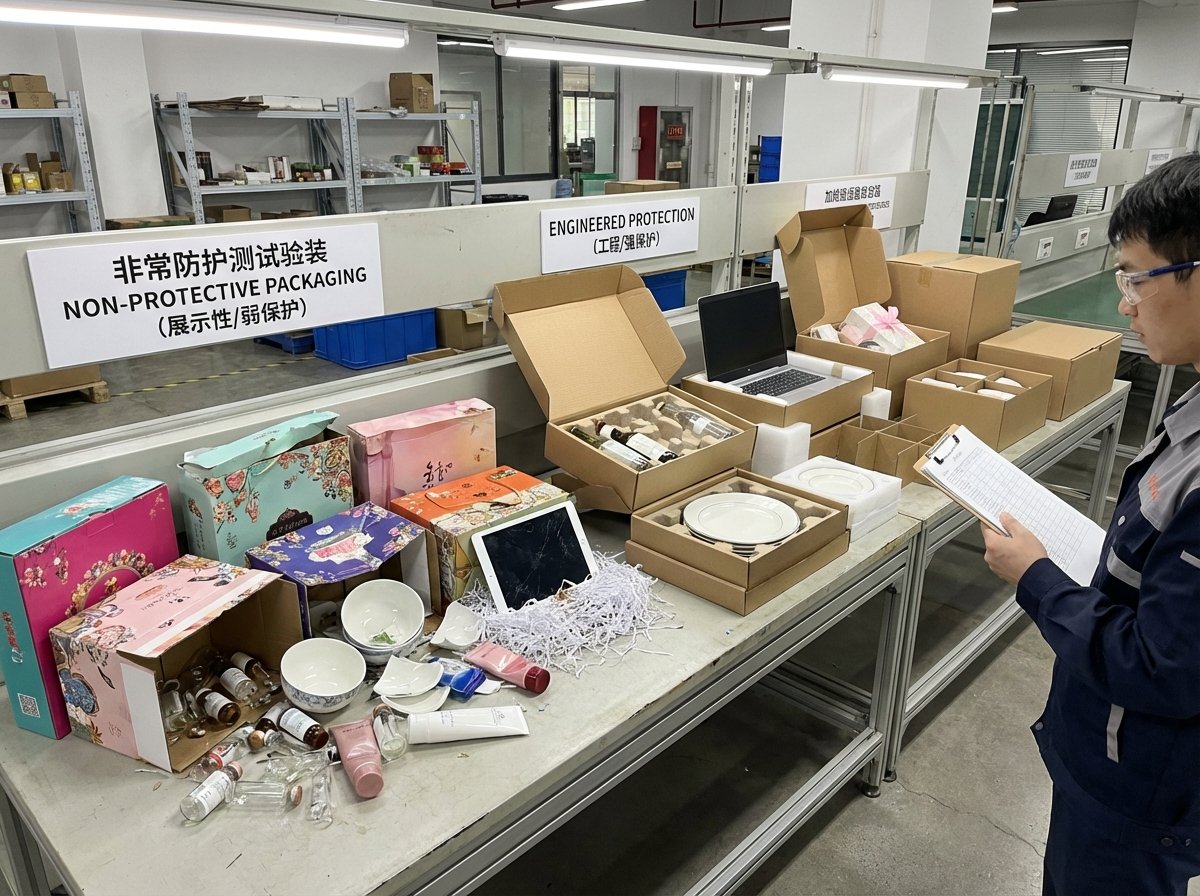
Many negative reviews about packaging follow the same pattern. A fragile item is placed in a thin box. There is no insert. The product moves inside. The corners take impact. Then the box arrives broken, burst open, or visibly damaged. This is not only a transport problem. It is a packaging selection problem. The product’s weak points were not considered at the start.
A more reliable approach is to group products by risk. Low-risk items may need only basic structure and surface protection. Medium-risk items may need tighter fit and paper inserts. High-risk items often need reinforced corrugated boxes, molded pulp, EVA, EPE, or custom paper supports. Liquids may need leak control and upright stability. Sharp tools may need fixed positioning and puncture resistance. Delicate accessories may need anti-scratch inner protection and less empty space inside the carton.
When the product is fragile, the packaging choice should begin with transport risk, not with decoration. Once the structure is secure, branding and finish can be added in a more controlled way.
How Should Packaging Change for Branding and Product Positioning?
A product’s packaging is judged before the product is touched. That is why packaging has a direct effect on perceived value. Still, high-end graphics alone do not create a premium result.
Branding works best when structure, material feel, print quality, and finishing all match the product position. A premium item needs more than foil or spot UV. It needs a package that feels stable, clean, well-finished, and consistent with the selling price.
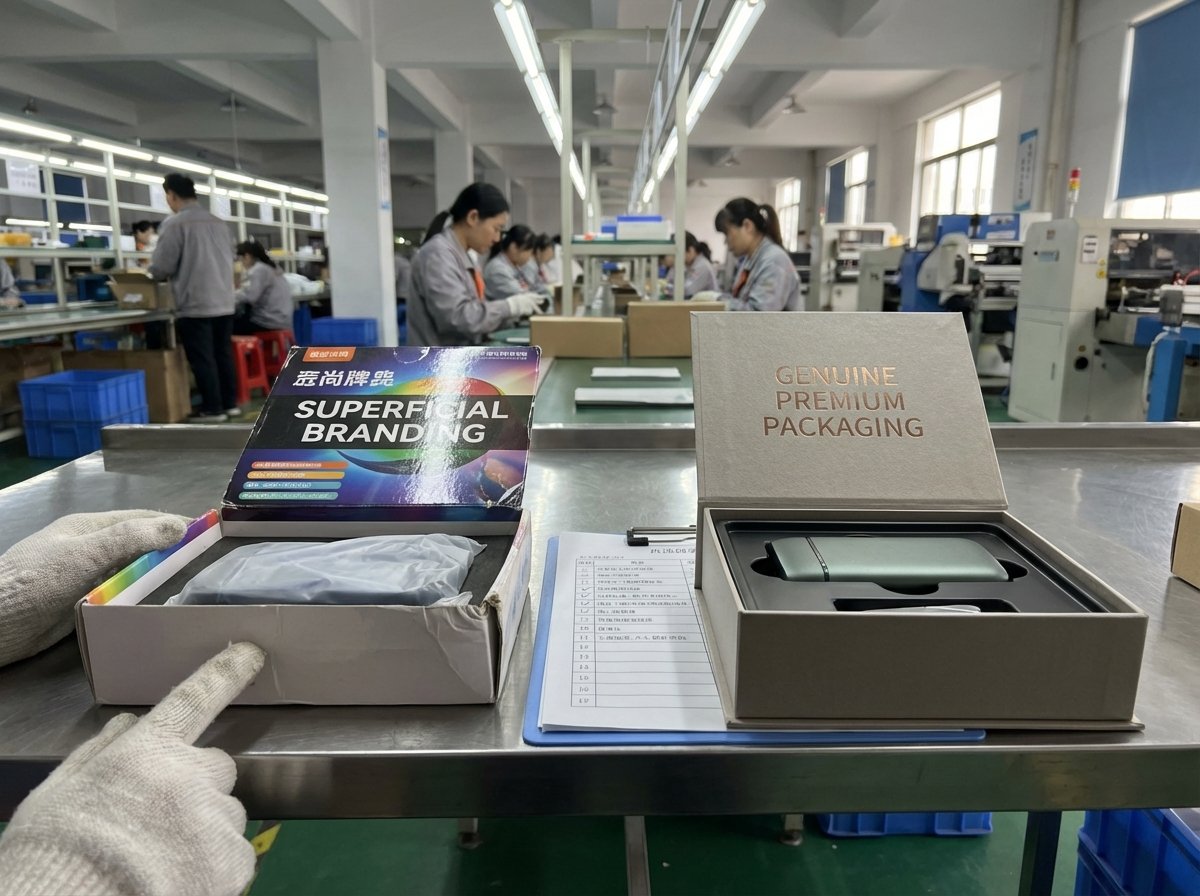
One common market problem is value mismatch. A box looks expensive in photos, but when it arrives, the board is soft, the wrap paper scratches easily, the corners are uneven, or the adhesive smell is too strong. That kind of packaging weakens trust fast. On the other side, a simple box can still feel professional if the fit is clean, the print is controlled, the board has good stiffness, and the opening experience feels deliberate.
This matters a lot for cosmetics, electronics accessories, wellness products, and gift packaging. These categories often depend on packaging to support pricing and help the product stand out. A rigid box may be right for a premium gift set. A well-printed folding carton with a smart insert may be enough for a mid-range cosmetic line. A clean corrugated mailer with strong branding may work better for direct-to-consumer electronics than an over-decorated box that fails in shipping.
Branding should never be treated as only surface design. The structure, touch, and protection level all shape brand perception. The right packaging choice supports both appearance and credibility.
Why Do Logistics and Shipping Conditions Matter So Much?
A box that works in a retail display can fail in delivery. A box that looks strong in a sample room can fail in stacking, moisture, or courier handling. Logistics conditions decide whether the packaging choice is realistic.
Packaging should always be chosen with logistics in mind, including shipping method, handling points, stacking pressure, freight efficiency, and moisture exposure. A package that ignores logistics often becomes too weak, too large, too heavy, or too costly to ship.
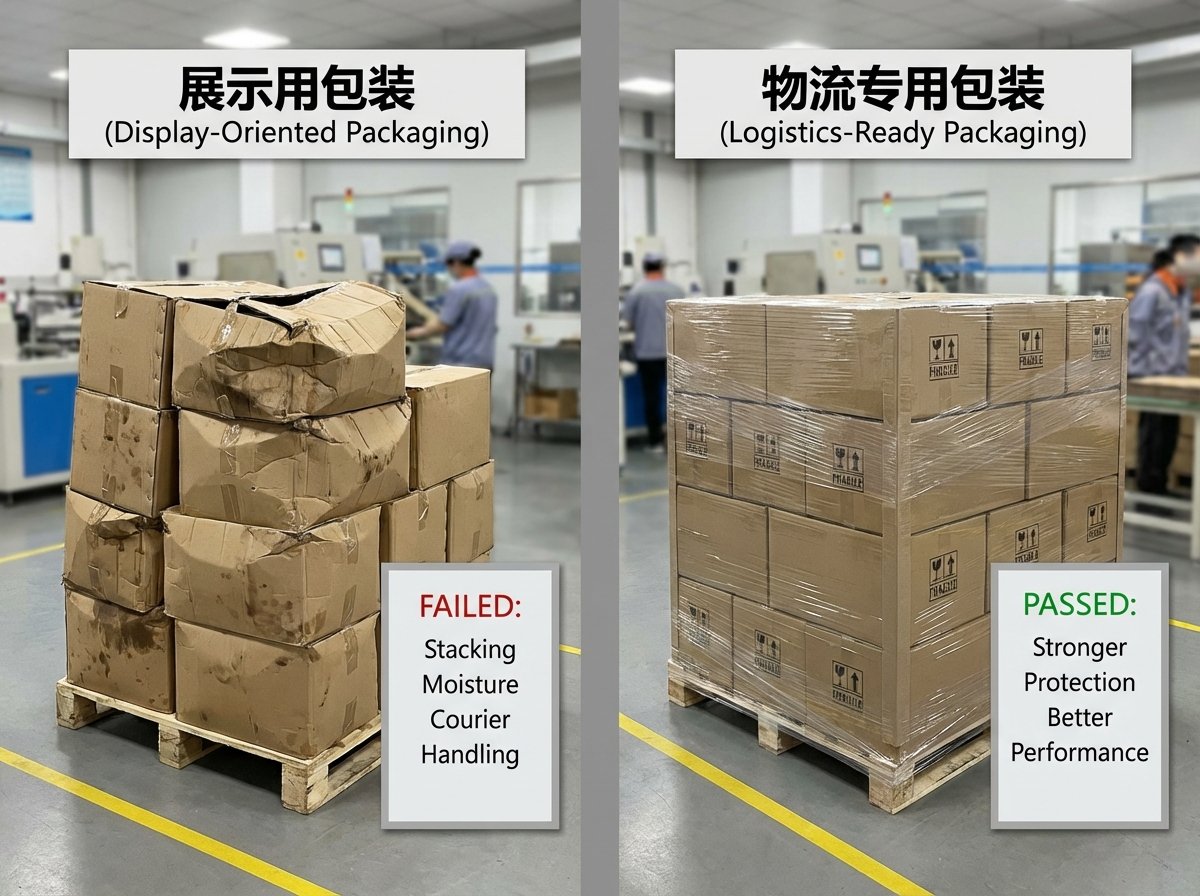
Several packaging complaints come from the same logistics mismatch. Products are placed in oversized cartons with too much empty space. Thin inner boxes float inside large outer cartons. Retail packaging is shipped without a transport box. Paper mailers are used for items that should be boxed. Thin corrugated cartons are used for products that need double-wall strength. These choices raise damage risk and freight cost at the same time.
Good logistics planning starts with route and channel. Local pallet delivery is different from cross-border parcel shipment. E-commerce handling is different from store replenishment. Multi-item orders may need one master carton instead of several small boxes. Premium retail packs may need an outer carton, corner protection, and reduced void ratio. Cold-chain or moisture-prone environments may need different board or coating performance.
Logistics also affect cost through box size. A carton that is too large wastes shipping volume and often increases dimensional weight. A carton that is too small may damage the product and slow down packing. The right packaging choice balances transport safety, freight efficiency, and pack-out speed.
What Common Mistakes Happen When Choosing Packaging for Different Products?
Many packaging failures are not caused by rare technical problems. They come from simple mistakes that repeat across industries and product types.
The most common packaging mistakes are choosing material that is too weak, using the wrong box size, skipping inserts, confusing retail packaging with shipping packaging, and adding decoration without solving structural needs first.
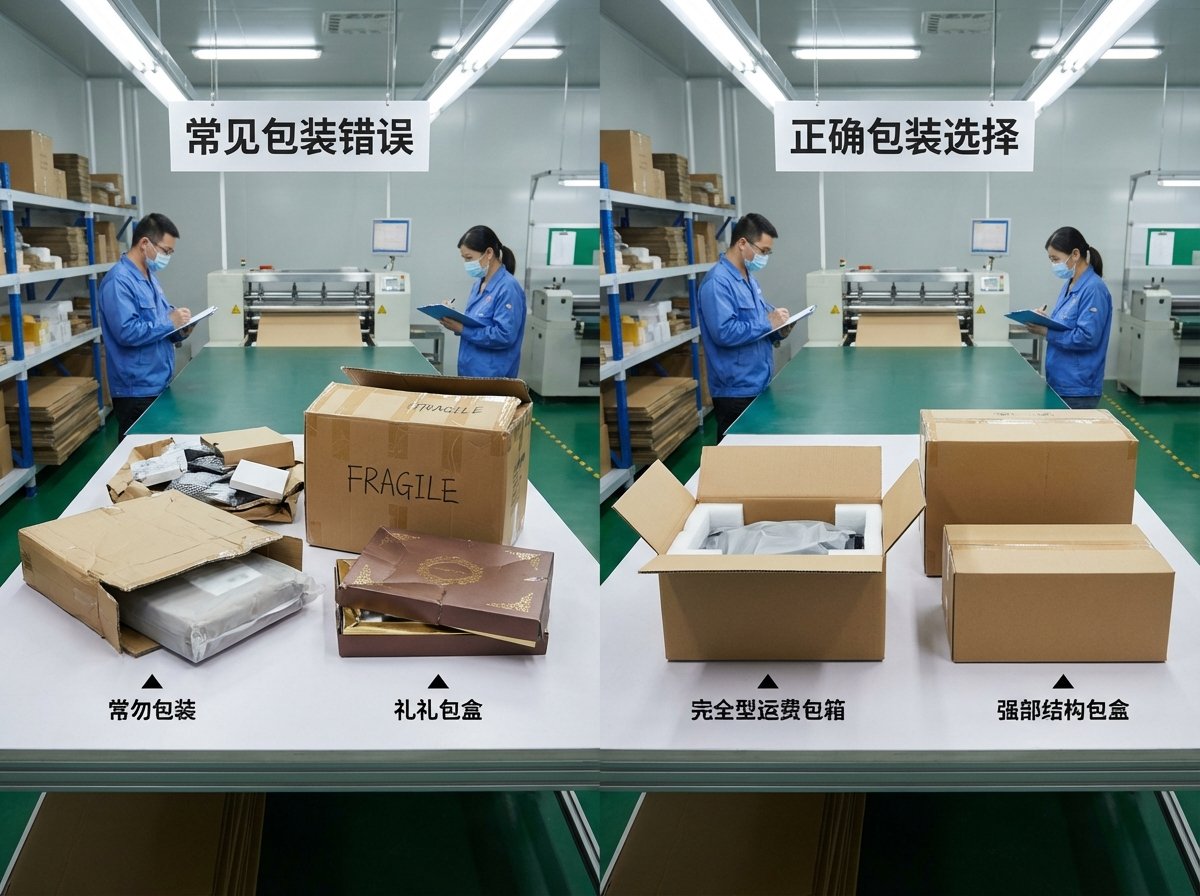
These mistakes appear in many forms. A heavy product is packed in thin board. A fragile item is sent in a mailer envelope. A premium gift box is shipped without an outer carton. A carton is much larger than the product, so the item moves and corners get damaged. A box is too tight, so the product looks forced inside. A glossy finish is added, but the surface scratches easily. A magnet box looks attractive, but the adhesive and forming quality are poor. In each case, the real issue is that the packaging was chosen by appearance, habit, or price only.
Another common mistake is treating every product with the same packaging logic. That leads to “one box for everything” decisions, and those decisions often fail. Electronics, candles, skincare sets, tools, garments, and gift items all need different levels of structure and fit. A standard box can work, but only if the product size, weight, and protection level are matched properly.
Good packaging choices come from product-based thinking. The product should decide the structure. The route should decide the protection level. The brand should guide the finish. When the order is reversed, packaging problems usually follow.
How Can Packaging Be Selected More Accurately for Different Product Categories?
Different products create different risks. That is why packaging selection becomes much easier when products are grouped by use, value, and transport sensitivity.
Packaging selection becomes more accurate when products are classified by weight, fragility, surface sensitivity, value level, and sales channel. This helps determine the right box style, board grade, insert type, and finish level before sampling starts.
A practical way to choose packaging is to break products into groups. Electronics accessories often need corrugated support, controlled fit, and anti-movement inserts. Cosmetics and wellness sets often need stronger visual presentation, stable print quality, and inserts that hold bottles or jars securely. Gift products often need a rigid or premium carton structure plus a safe outer shipper. Apparel may need cleaner presentation and shape control without excessive board. Printed accessories and small items may need dimensional efficiency more than decorative complexity.
This kind of planning also improves quote accuracy. Suppliers can recommend the right board grade, surface finish, and insert solution much faster when the product category is clear. It also reduces the risk of under-spec packaging, which often looks cheap at the start but becomes expensive after damage, returns, and complaints.
A more structured packaging process helps brands avoid guesswork. Instead of asking for “a nice box,” the project can be built around a clear packaging target: protect, present, ship, and pack efficiently.
What Buyers Should Ask Suppliers Before Finalizing Packaging Solutions?
Many packaging problems could be avoided before production if the right supplier questions were asked early. A sample alone is not enough if the real packaging conditions are not discussed in detail.
Before finalizing packaging, buyers should ask suppliers about structure, material grade, inserts, print control, transport testing, carton sizing, assembly method, lead time, and quality consistency. These questions help reveal whether the packaging is truly ready for production and shipment.
questions for packaging suppliers
A strong supplier discussion should cover more than box style and price. The first question should be whether the proposed structure matches the product’s weight, fragility, and shipping route. Then the buyer should check whether the packaging is meant for retail display, shipping, or both. It is also important to ask what board grade is recommended, what insert options are available, and how much empty space will remain inside the box.
Print and finish should also be discussed clearly. Buyers should ask how color is controlled, what tolerances apply to size and fit, and whether the production quality will match the approved sample. If the packaging includes magnets, ribbons, windows, trays, or dividers, the supplier should explain how those parts are checked during production.
Transport protection is another key point. Buyers should ask whether the supplier recommends an outer carton, whether drop or stacking tests are available, and how the package performs in real delivery conditions. Lead time, reorders, minimum order quantity, and defect handling should also be confirmed before the order is placed. These questions do not slow down the project. They usually save time, reduce risk, and lead to a packaging solution that is much more reliable in real business use.
Why Does the Best Packaging Choice Usually Come from Factory-Led Planning?
Packaging performs better when structure, materials, printing, and packing method are planned together. A packaging solution becomes weaker when these parts are handled as separate decisions.
The best packaging choices usually come from factory-led planning because production, protection, visual quality, and shipping performance are connected. A factory that understands board strength, box forming, inserts, printing, and transport needs can often prevent the exact issues that create complaints later.
factory led packaging planning
This matters because many packaging issues are not visible in artwork files or on a simple mockup. Problems show up later in compression, folding, sealing, transit, or batch consistency. A packaging factory can often improve the result by adjusting flute type, board thickness, crease depth, insert locking points, wrap paper choice, or the outer shipping carton. These changes may look small, but they often decide whether the package arrives in good condition or becomes another damaged-delivery complaint.
Factory-led planning also helps create better graded options. A standard paper version and a certified paper version may both work. A basic finish and a premium finish may both be possible. A standard mailer and a reinforced shipper may both be valid depending on product value and shipping route. This approach helps buyers compare packaging based on function and real cost, not only on appearance or the lowest quote.
Conclusion
The right packaging choice comes from matching the product, the brand, and the shipping conditions in one clear solution. Strong packaging protects the product, supports the selling price, and reduces avoidable loss. Poor packaging does the opposite. It creates damage, waste, and weakens trust before the product is even used.
That is why packaging should be chosen with more care than a simple box search. The right structure, the right material, the right fit, and the right supplier discussion all matter. When those parts are aligned, packaging becomes a practical tool for protection, presentation, and long-term business stability.