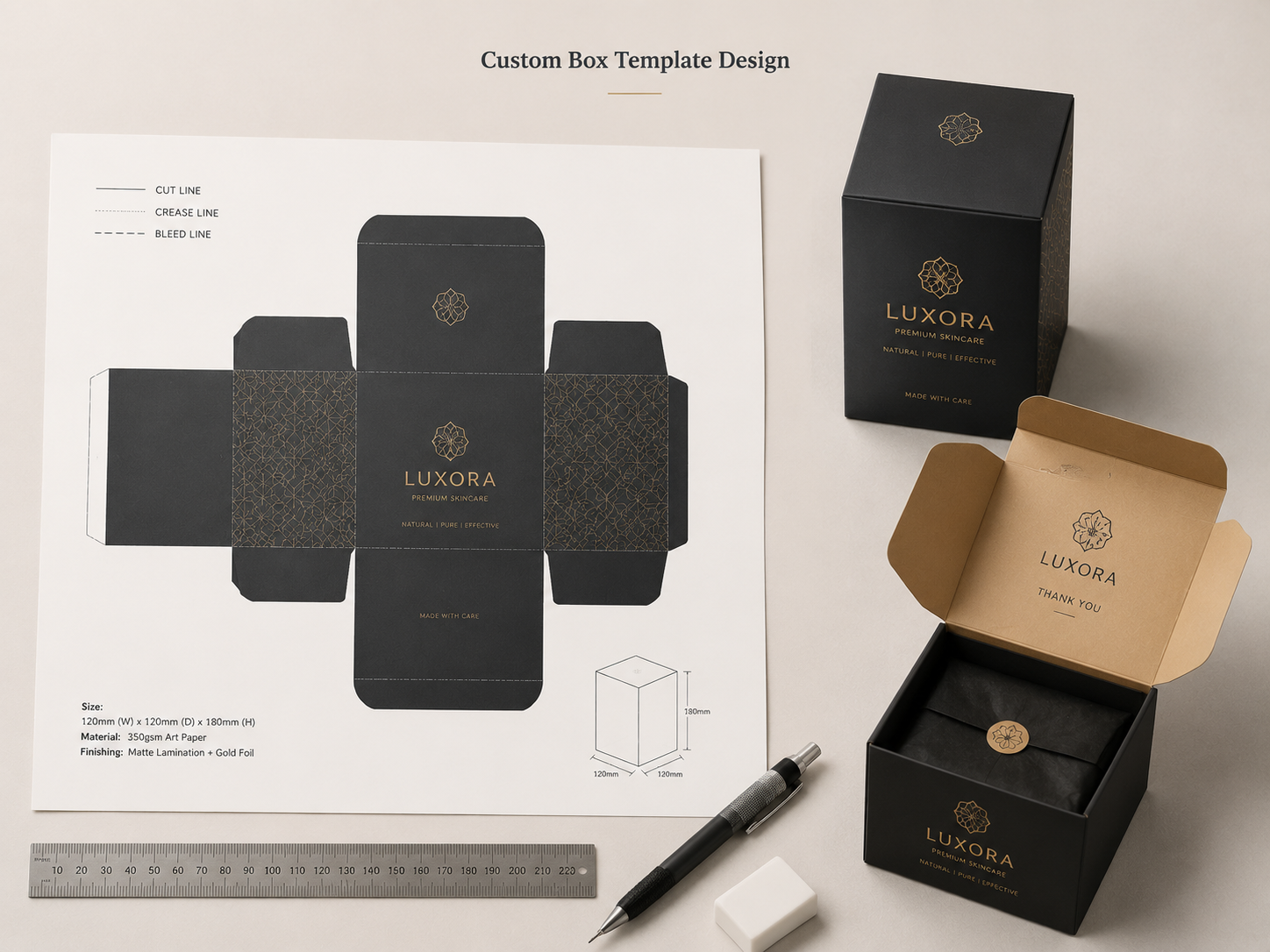
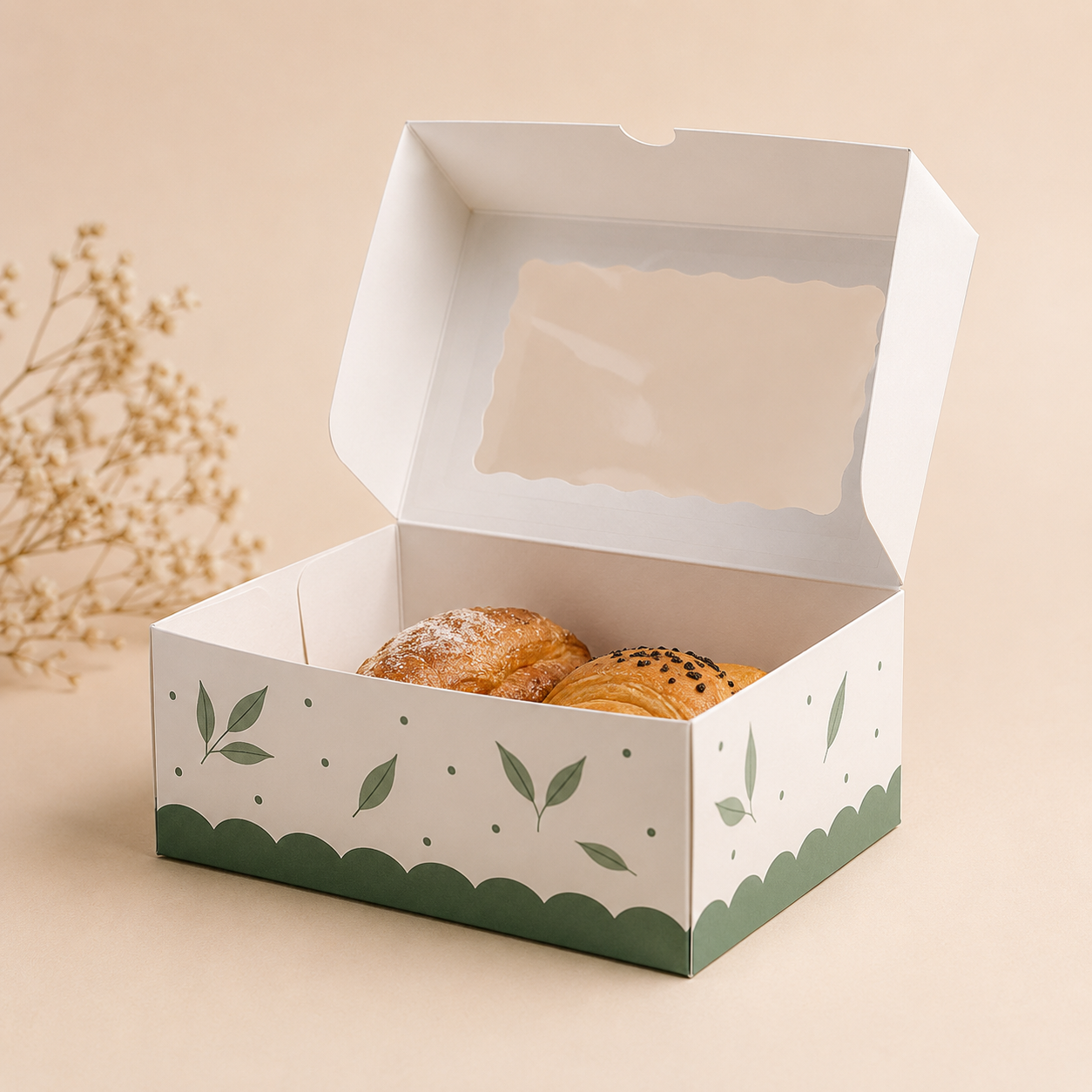
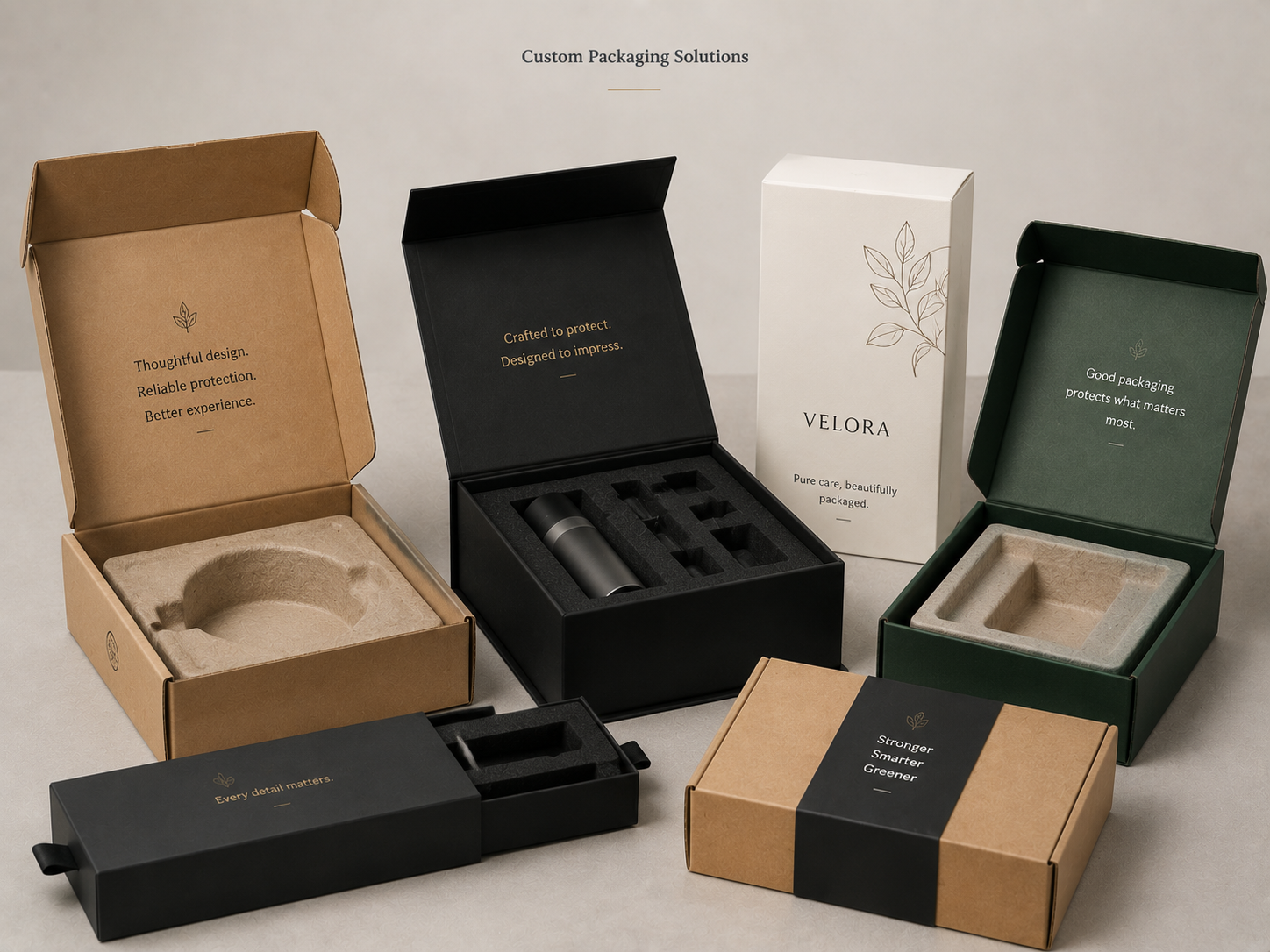
The wrong packaging material often looks acceptable before shipping. The real problem starts later, when boxes crush, surfaces scratch, seals fail, or the product arrives looking cheaper than expected.
The right packaging material should be chosen by product weight, fragility, shelf goals, shipping risk, print needs, and cost control. Paperboard, corrugated, rigid, and flexible materials each solve different packaging problems, so the best choice depends on how the product will be packed, displayed, and delivered.
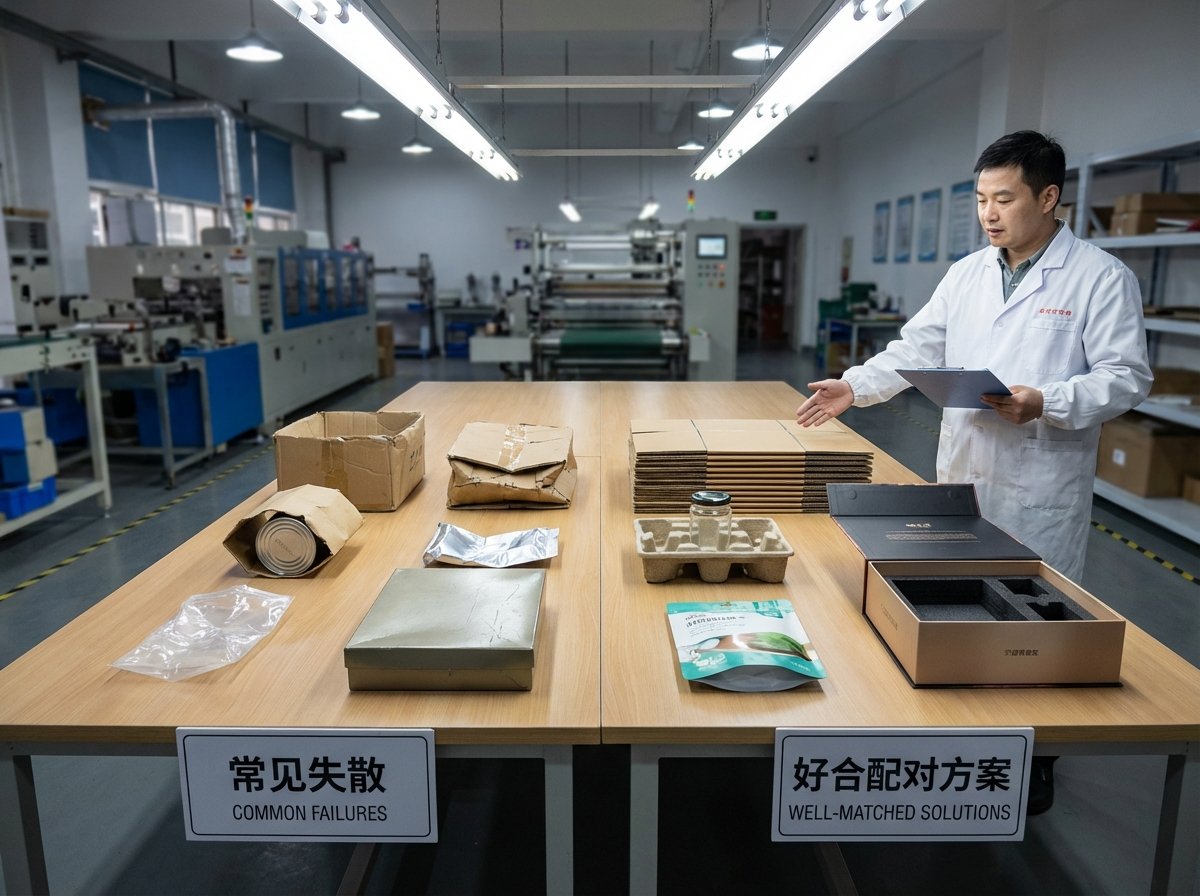
Many packaging failures begin with material mismatch, not with printing or box style. Public complaints across many product categories show the same pattern again and again: thin boxes collapse under weight, premium products arrive in weak-looking packs, retail boxes are used as shipping boxes, outer surfaces mark too easily, and products move inside oversized cartons with little protection. These problems usually come from one early mistake. The packaging material was chosen by price first and by function second. A more reliable packaging decision starts by asking what the packaging must do. It must protect the product, support the brand image, fit the sales channel, and remain stable from packing line to final delivery.
Why Does Packaging Material Choice Matter So Much?
Packaging material affects far more than basic protection. It shapes the first impression, the shipping result, the shelf appearance, and the long-term consistency of the packaging program.
Packaging material matters because it controls box strength, surface feel, print quality, product protection, shipping reliability, and brand perception. A material that looks cheaper or performs poorly can raise damage rates, weaken shelf impact, and reduce product value in the customer’s eyes.
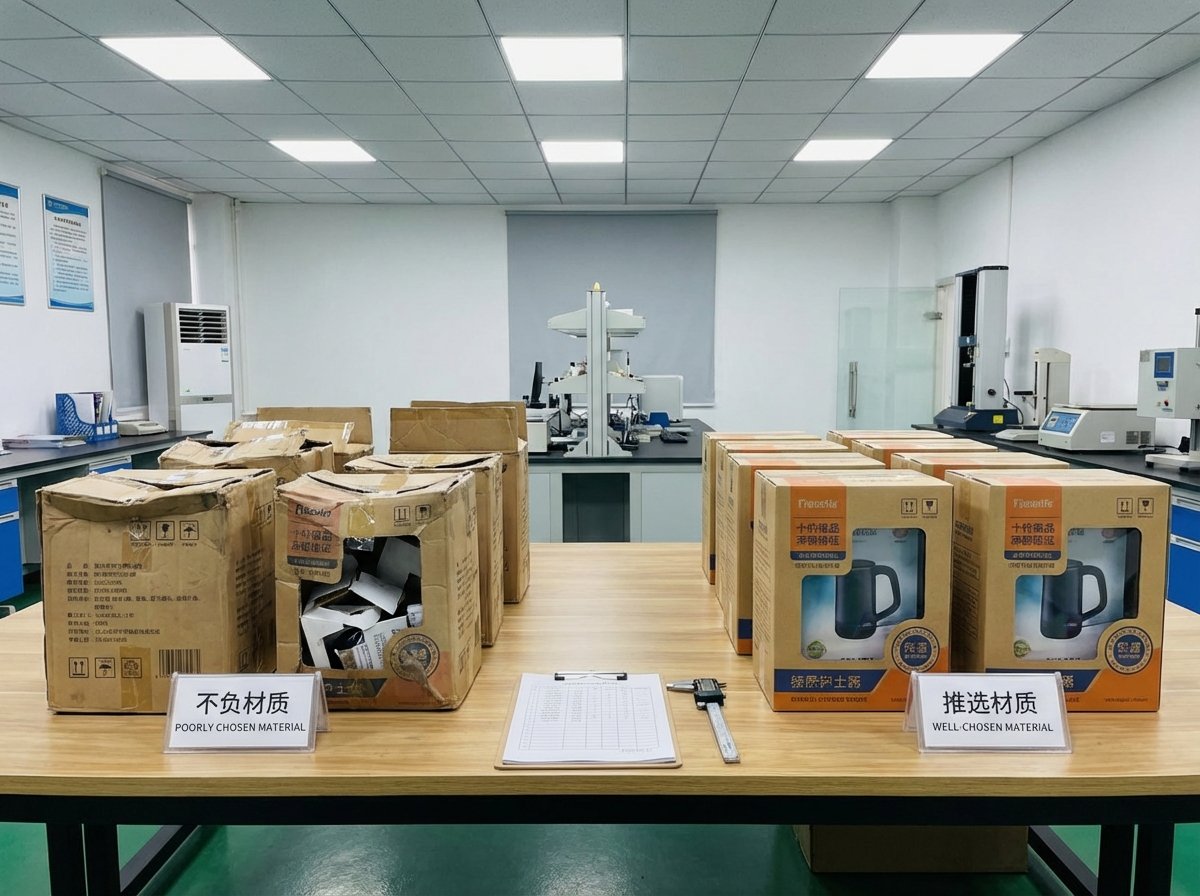
A thin folding carton may look neat in a sample room. It can still fail in transit if the product is too heavy or the outer shipping setup is too weak. A rigid box may feel premium on the shelf. It can still create problems if the wrapped paper scratches easily or the structure is not matched to the product weight. A corrugated carton may solve transport protection, but it can also feel too rough or too industrial for a product that needs stronger retail presentation.
This is why packaging material should not be selected in isolation. Material needs to match product type, product value, packing method, and transport risk. Many public complaints about packaging describe items arriving crushed, torn, bent, loosely packed, or looking cheap. These are not only design problems. They are material and system problems. The right material helps prevent those failures before they turn into returns, refunds, and damaged brand trust.
| What material affects | Why it matters |
|---|---|
| Strength | Prevents crush, collapse, and burst |
| Surface feel | Supports premium or practical positioning |
| Print result | Affects color, sharpness, and consistency |
| Shipping reliability | Reduces damage during handling and stacking |
| Shelf appearance | Helps the product stand out and look right |
| Cost efficiency | Balances performance with total packaging spend |
How to Choose Packaging Materials Based on Product Weight, Fragility, and Shelf Needs
Material choice should start with product reality, not with artwork. Weight, fragility, and shelf goals create the most important direction.
Packaging materials should be chosen by matching strength to product weight, cushioning support to fragility, and visual finish to shelf needs. Heavy products need more structural support, fragile products need better impact control, and retail-facing products need materials that hold shape and print well.
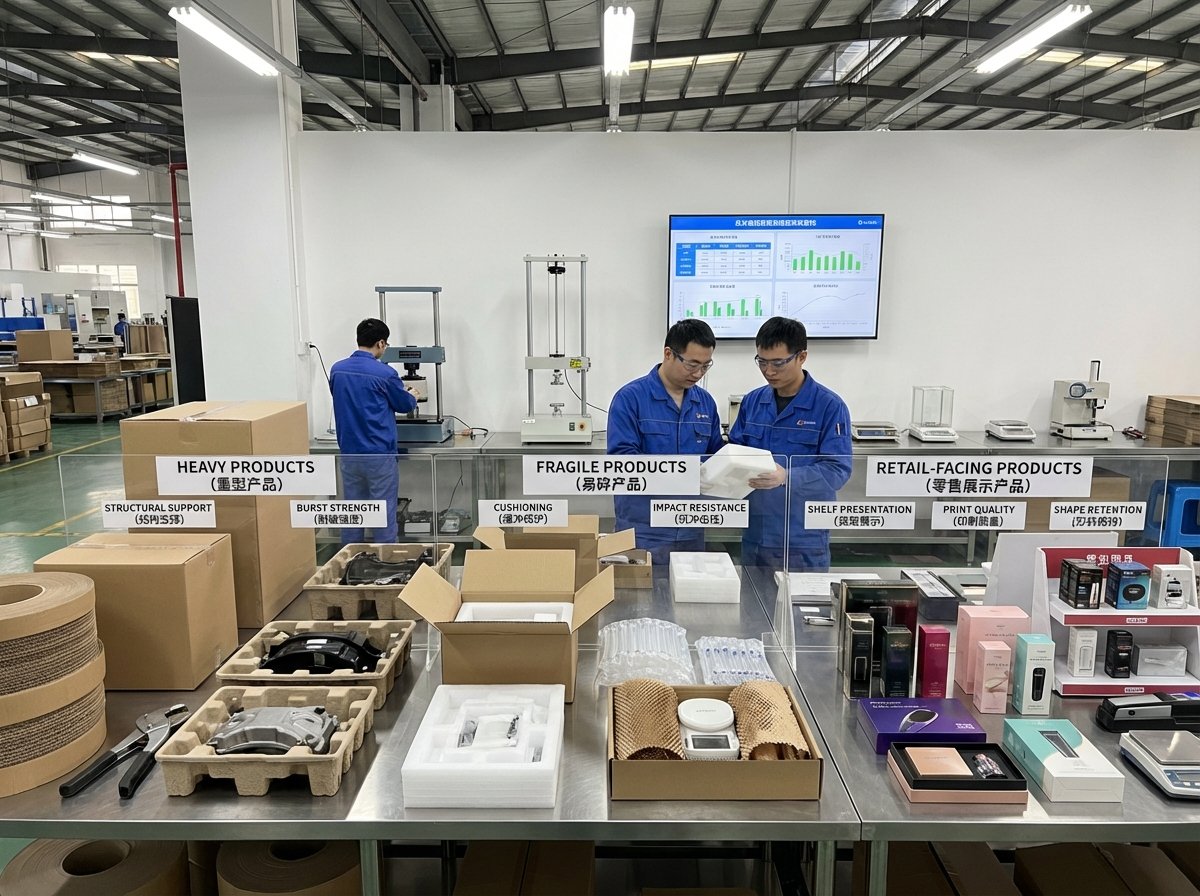
Product weight changes the minimum material requirement. Light items such as cables, accessories, cosmetics, and small daily-use products often work well in paperboard cartons or lighter corrugated mailers, depending on the shipping route. Heavier items need stronger corrugated board, reinforced structures, or rigid support if premium presentation is also required. Many packaging complaints about flimsy boxes come from heavy or dense products packed in materials that are simply too light for real shipping pressure.
Fragility adds another layer. Glass, skincare bottles, electronics, ceramics, and sensitive gift items need more than a box wall. They often need inserts, partitions, corner support, or a stronger shipping shell. Public complaints often mention products floating in large boxes, arriving with broken parts, or being packed in envelopes or soft packs with no protection. That is usually not only a packing issue. It starts with choosing a packaging material that does not match the actual risk level.
Shelf needs matter too. A product sold in retail or presented as a gift needs visual control. The package should hold its shape, resist marks, and support good print quality. A shelf-ready product may need a smoother paper surface, better lamination, or a rigid structure, even if a cheaper option could survive shipping.
| Product condition | Better material direction | Main reason |
|---|---|---|
| Light and non-fragile | Paperboard or light corrugated | Good cost and easy printing |
| Heavy but non-fragile | Strong corrugated | Better load and stacking performance |
| Fragile and light | Paperboard with insert or rigid with inner support | Protects shape and sensitive parts |
| Fragile and heavy | Corrugated plus insert or double protection system | Controls impact and weight stress |
| Shelf-focused premium product | Rigid or high-quality paperboard | Stronger appearance and tactile value |
| E-commerce sensitive item | Corrugated with controlled fit and insert | Better transit protection |
Paper, Corrugated, Rigid, and Flexible Packaging Materials Compared
Each packaging material category has its own strengths and limits. Choosing the right one means understanding what it is built to do well and where it is likely to fail.
Paperboard is best for retail print and light products, corrugated is best for shipping strength, rigid materials are best for premium presentation, and flexible materials are best for lightweight, space-saving applications. The right choice depends on whether the priority is shelf appeal, transit protection, premium feel, or packing efficiency.
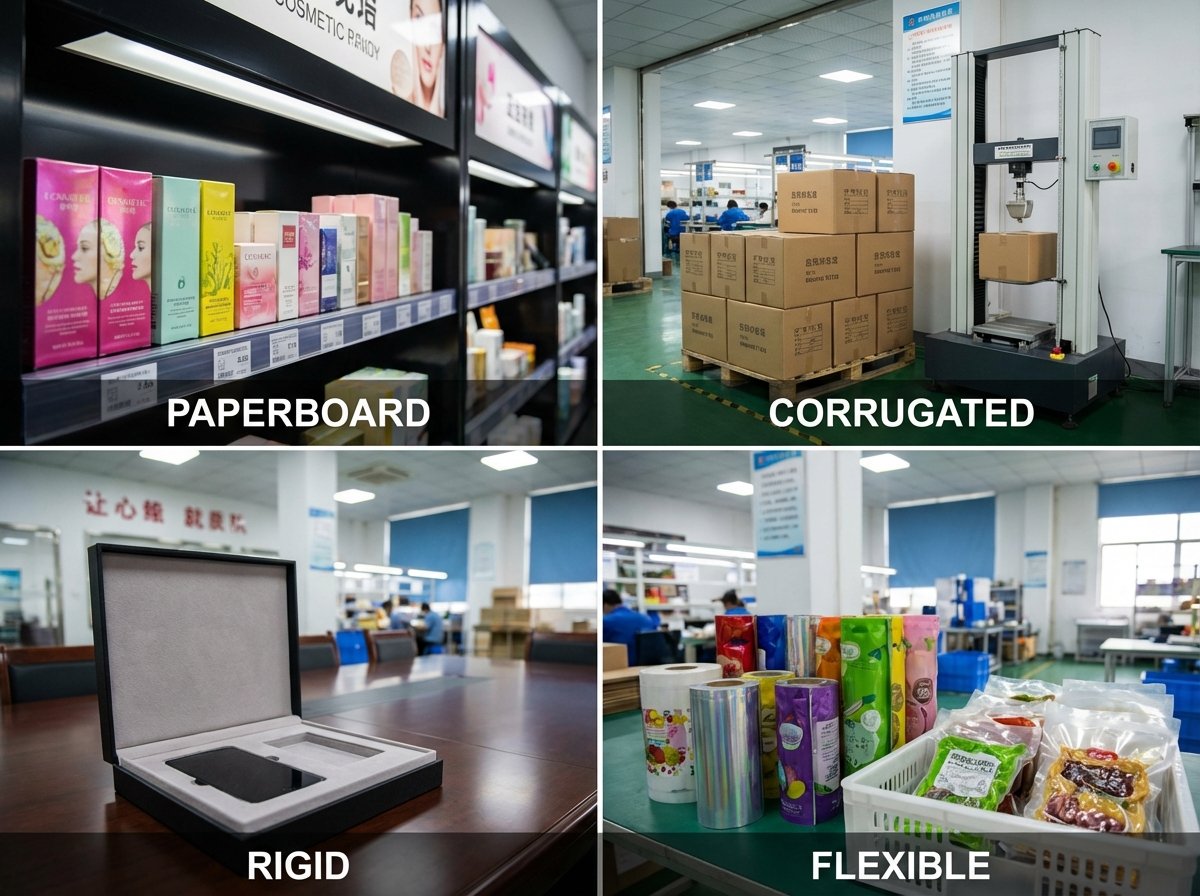
Paperboard is widely used for folding cartons, sleeves, small retail packs, and inner boxes. It prints well and supports clean branding. It works best for lighter items and shelf-facing packaging. Its weakness is structural strength in rough transport, especially if the product is heavy or the carton is expected to act as a shipping box.
Corrugated material is stronger and more suitable for shipping. It handles stacking pressure, edge crush, and transport stress better than standard paperboard. It is often the right answer for outer cartons, e-commerce mailers, and bulk transport packaging. Its weakness is that it can feel less refined unless the surface and print are handled well.
Rigid material is used when premium appearance matters. It offers high perceived value, stronger shape retention, and a more gift-ready result. It is common for electronics accessories, cosmetics sets, luxury daily-use items, and promotional kits. Its weakness is higher cost, more labor, and less shipping efficiency if used without a practical outer carton.
Flexible packaging includes pouches, bags, wraps, and some lightweight mailers. It works for products that do not need a rigid shell and where space efficiency matters. Its weakness is limited structure and lower protection for crush-sensitive goods.
| Material type | Main strength | Main weakness | Common use |
|---|---|---|---|
| Paperboard | Strong print surface and clean shelf look | Lower shipping strength | Folding cartons, sleeves, inner packs |
| Corrugated | Better crush and shipping protection | Less premium feel if untreated | Shipping cartons, mailers, outer boxes |
| Rigid | Premium appearance and strong shape | Higher cost and more labor | Gift boxes, electronics kits, cosmetic sets |
| Flexible | Lightweight and space-saving | Weak structure for fragile goods | Pouches, soft wraps, simple protective packs |
When Is Paperboard the Right Packaging Material?
Paperboard remains one of the most useful packaging materials because it balances print quality, shape control, and cost. Still, it only works well when used in the right role.
Paperboard is the right packaging material for light to medium-weight products that need strong branding, clean printing, and good shelf presentation. It works best for retail cartons, sleeves, inserts, and secondary packaging that is not expected to absorb heavy transit abuse by itself.
Paperboard is often used for skincare cartons, cosmetic boxes, consumer accessory packaging, labels, inserts, and promotional packs. It supports detailed print, precise die-cutting, and a wide range of finishes such as matte lamination, gloss lamination, UV, foil, and embossing. For products that win attention through branding and appearance, paperboard can be a very effective material.
The problem starts when paperboard is used beyond its real job. Many public complaints about damaged packaging describe retail cartons arriving bent, crushed, or torn during shipping. In many of those cases, the carton was not wrong for retail display. It was wrong for the shipping condition. A paperboard box should not be forced to do the work of a corrugated transit carton unless the product is very light and the route risk is low.
Paperboard also needs the right thickness and surface choice. Too thin, and the box feels cheap. Too soft, and the edges collapse. Too little surface protection, and the box scuffs before the customer opens it. Good paperboard packaging depends on matching the grade to the product and supporting it with the right outer pack when needed.
When Is Corrugated the Better Material Choice?
Corrugated is often treated as a transport material only. In reality, it is one of the most important materials for reducing packaging failure.
Corrugated is the better material choice when products need shipping strength, stacking resistance, better edge protection, or safer e-commerce performance. It is especially useful for heavier items, fragile items, and products moving through courier networks.
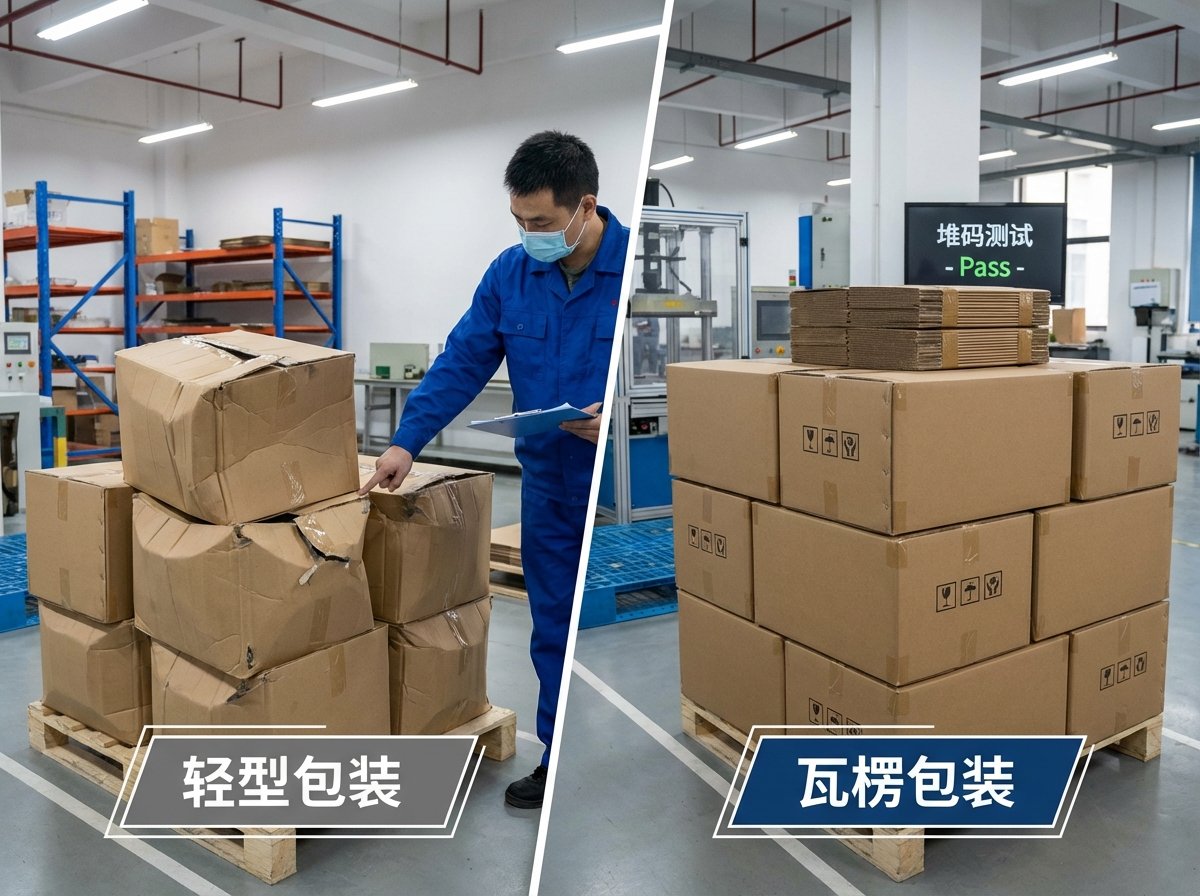
Corrugated material is designed to handle pressure and movement better than standard paperboard. This makes it the natural choice for transit cartons, e-commerce mailers, and protective outer boxes. It also helps solve some of the most common packaging complaints in the market: crushed corners, burst boxes, loose products inside oversized cartons, and goods shipped in packs that are too thin for the route.
For electronics accessories, gift sets, daily-use items, and fragile products sold online, corrugated often serves as the safety layer that protects the branded inner packaging. It is also useful when product weight varies by SKU, because the board grade can be matched more precisely to the load.
Still, corrugated should not be treated as one simple material. Flute choice, board grade, wall construction, and box style all affect performance. A weak corrugated box can still fail if the void space is too large, the fit is poor, or the packing method is inconsistent. Better corrugated packaging is not just thicker material. It is the right material with the right structure and the right box size.
When Does a Product Need Rigid Packaging?
Rigid packaging is chosen when packaging must do more than protect. It must also add value through appearance, hand feel, and presentation.
A product needs rigid packaging when premium presentation, shape stability, and stronger perceived value are important. Rigid boxes are most suitable for gift items, higher-end accessories, cosmetic sets, and products where the packaging is part of the purchase experience.
when a product needs rigid packaging
Rigid boxes are usually made from greyboard wrapped with printed or textured paper. They can include magnets, ribbons, EVA, paper inserts, or molded inner supports. Their main advantage is visual and tactile quality. They hold shape well, feel substantial, and create a stronger opening experience.
This is valuable for many branded products. Electronics accessories with gift potential, skincare sets, promotional kits, personal care products, and premium daily-use goods all benefit when the packaging supports a higher perceived value. A weak-looking pack can make a good product feel ordinary. A well-built rigid box can move the perception in the other direction.
Still, rigid packaging needs control. Public complaints often mention gift boxes that feel flimsy, arrive bent, smell strongly of glue, or look expensive but perform poorly. That happens when the box is built for appearance only and the material and process are not controlled well. A rigid box should have the right board thickness, clean wrapping, stable adhesion, and a proper outer shipping setup. Without that, the premium effect is lost quickly.
What Role Does Flexible Packaging Play?
Flexible packaging is not right for every product, but it can be useful when the product does not need a hard shell and when shipping volume needs to stay low.
Flexible packaging works best for lightweight products, simple protective needs, or inner wrapping applications where space-saving and lower material use matter more than rigid structure. It should not be used for products that need crush protection, premium shape retention, or high-end shelf presentation by themselves.
Flexible packaging includes pouches, wraps, soft mailers, and some lightweight protective formats. It can reduce shipping volume, save storage space, and support fast packing for non-fragile products. It is often useful for refill packs, accessories, soft goods, or as an inner protective layer.
The problem comes when flexible packaging is used where a box is clearly needed. Many public complaints describe fragile products sent in envelopes, paper bags, or soft packs with little or no protection. In those cases, flexible material was chosen to save cost, but the result was breakage, poor arrival condition, and strong negative reaction from buyers.
Flexible packaging works best as part of a system, not as a shortcut. It can support efficiency, but it cannot replace structure where structure is required.
What Buyers Should Check Before Finalizing Packaging Material Choices
Choosing a material is not only about selecting a category. Buyers need to confirm whether the actual material grade and finish will perform as expected in production and shipping.
Before finalizing packaging material choices, buyers should check board grade, thickness, surface durability, print performance, fit with inserts, shipping method, sustainability level, and consistency between sample and bulk production.
what buyers should check before finalizing packaging material choices
The first check should be actual use condition. Is the pack for shelf display, e-commerce delivery, export shipping, or gift presentation? A material that works in one environment may fail in another. The second check is strength level. Material should be matched to product weight, stacking load, and likely handling pressure. This is especially important for heavier electronics accessories, glass products, cosmetic kits, and multi-piece sets.
Surface durability is also important. If the product needs a premium shelf look, the material should resist scratching, marking, and edge wear. Public complaints often focus on packaging that feels too soft, marks too easily, or arrives looking used. That usually means the surface was not matched well to the real use condition.
Print stability should also be reviewed. A material may look good in a flat sample but behave differently in full production. Color hold, sharpness, wrapping quality, and lamination performance all matter. For products with environmental requirements, certified paper or recycled content should be discussed early so the cost and performance can be compared clearly.
| Buyer checkpoint | What to confirm |
|---|---|
| Product use condition | Shelf, shipping, export, gift, or mixed use |
| Material grade | Enough strength for real handling |
| Surface finish | Scratch resistance and visual quality |
| Print compatibility | Color stability and finish performance |
| Insert fit | Product stays secure inside |
| Sustainability need | FSC or recycled options if required |
| Sample-to-bulk consistency | Same material standard in production |
How to Balance Cost, Protection, and Brand Image When Choosing Materials
The best packaging material is rarely the cheapest one and rarely the most expensive one. The right decision usually sits in the middle, where function and presentation are both handled well.
The best way to balance cost, protection, and brand image is to choose materials by role. Use stronger materials where transport risk is high, use better print surfaces where shelf image matters, and avoid paying for premium material where it adds no practical value.
balance cost protection and brand image in packaging
A practical packaging system often uses more than one material level. A premium product may use a rigid box for presentation and a corrugated carton for transport. A retail carton may need only paperboard on shelf, but it may still need a corrugated outer pack for shipping. A simple accessory may work well in a folding carton with a sleeve, while a fragile skincare bottle may need both a paperboard outer carton and a formed insert.
This layered approach often controls cost better than forcing one material to do every job. Many failures happen because a business tries to save by removing the protective layer or by treating the retail pack as the full packaging solution. That often leads to more damage, more replacements, and weaker brand perception.
The better path is to decide where performance matters most, then build the material plan around that. Strong packaging decisions usually come from clear role separation, realistic shipping assumptions, and materials chosen to fit the product instead of only the quote.
Conclusion
Choosing the right packaging material starts with product reality. Weight, fragility, shelf goals, shipping risk, and print needs should shape the decision long before artwork and finishing are discussed. Paperboard, corrugated, rigid, and flexible materials all have useful roles, but each one performs best in the right application.
The most reliable packaging material choice is the one that protects the product, supports the intended brand image, and stays consistent from sample stage to final delivery. When materials are selected with real use conditions in mind, packaging becomes more than a container. It becomes a stable part of product quality, customer experience, and long-term packaging efficiency.
For businesses comparing packaging options, the key is not to ask which material is cheapest. The better question is which material will do the job well, hold up in transit, and still make the product look right when it reaches the customer. That is where the real value of packaging material choice begins.