Many products look safe when they leave the warehouse. Then weak corrugated packaging turns into crushed corners, burst seams, wasted freight, and unhappy customers during shipping.
Corrugated boxes protect products by combining structure, board strength, and box design. The right choice depends on wall type, flute strength, product weight, shipping route, stacking pressure, and whether the box is used for retail display, e-commerce delivery, or industrial transport.
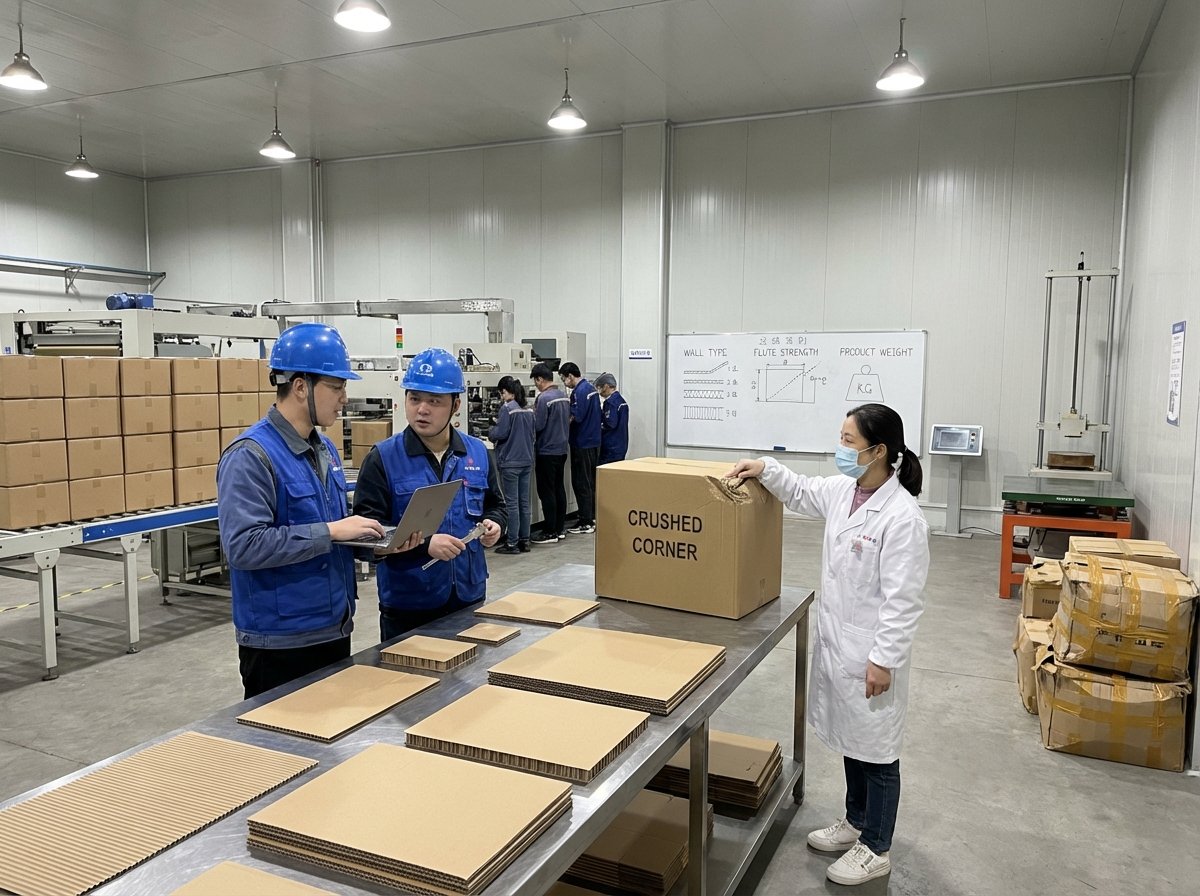
Corrugated boxes are still one of the most widely used packaging formats across retail, e-commerce, industrial supply, electronics, cosmetics, gifts, and consumer goods. That is not only because they are practical. It is also because they can be adapted to very different packaging needs. A corrugated box can work as a light mailer, a protective shipping carton, a shelf-ready display box, or a heavy-duty master carton. Still, many packaging failures happen because the wrong corrugated structure is chosen for the wrong job. Public complaints often repeat the same problems: boxes that are too flimsy, cartons that are too large, products floating inside with no support, retail boxes used as shipping boxes, and packages that arrive crushed, torn, or burst open. These problems are rarely caused by corrugated material alone. Most of the time, the real problem is poor matching between board type, box strength, product weight, and transport conditions. A good corrugated box is not simply a brown box. It is a packaging system built around real use.
What Makes Corrugated Boxes Different from Other Packaging Types?
Many packaging formats can hold a product. Corrugated boxes are different because they are built to combine cushioning, compression strength, and structural protection in one material system.
That is why corrugated packaging is used so often for shipping, storage, and transport-heavy environments.
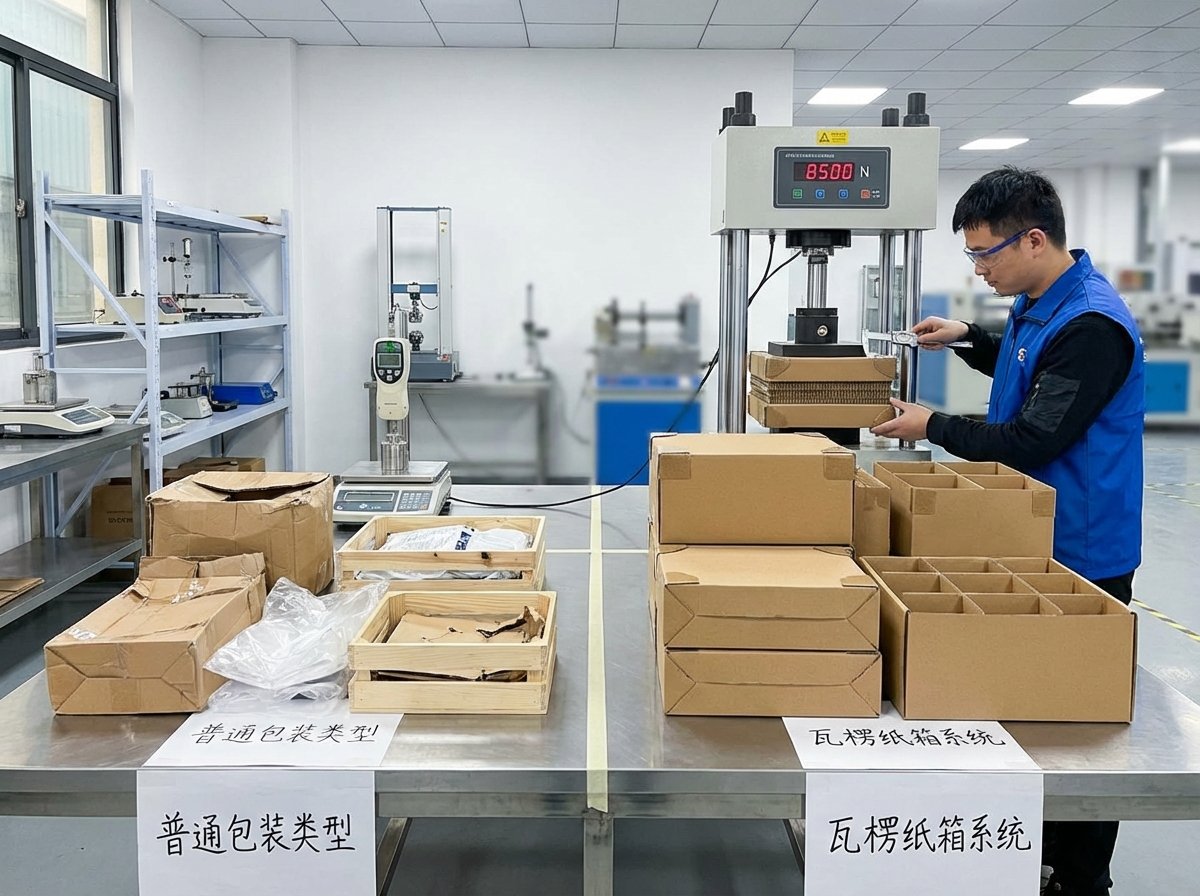
Corrugated board is made from liner paper and a fluted inner medium. This fluted layer is what gives the material its strength and shock-absorbing behavior. Unlike flat paperboard cartons, corrugated boxes can resist vertical stacking pressure better and can absorb more impact during movement. That makes them a natural choice for shipping goods that face drops, vibration, and warehouse handling. Corrugated packaging can also be converted into many box styles, from regular slotted cartons to die-cut mailers and internal fitments. Another advantage is flexibility. The same general material family can be adjusted for light retail packs, fragile glass products, electronics accessories, premium gift shipping, and bulk industrial parts. Still, corrugated packaging is not automatically strong enough in every case. The board grade, flute type, wall construction, and box size all need to match the job.
| Packaging Type | Main Strength | Main Limitation | Best Use |
|---|---|---|---|
| Folding carton | Good print and shelf display | Limited shipping strength | Retail presentation |
| Rigid box | Premium feel and strong form | Higher cost and heavier weight | Gift and luxury packaging |
| Corrugated box | Protection, stacking strength, flexibility | Can fail if under-specified | Shipping, storage, transport |
| Mailer envelope | Low cost and simple packing | Weak for crush-sensitive products | Soft, low-risk items |
Differences Between Single Wall, Double Wall, and Specialty Corrugated Boxes?
Many packaging failures begin with the wrong wall type. A box may look fine when empty, but it can collapse once the real shipping load is applied.
Single wall, double wall, and specialty corrugated boxes are built for very different performance levels.
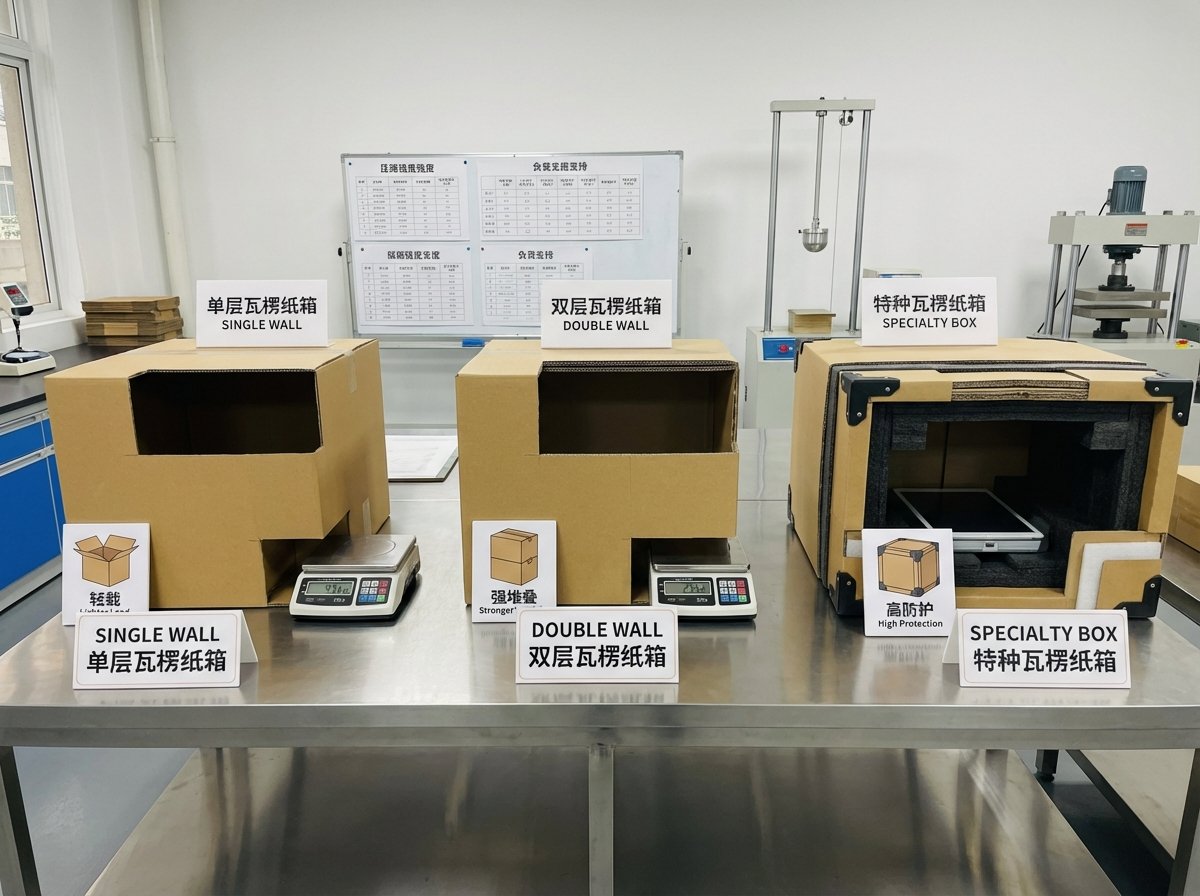
Single wall corrugated board has one fluted medium between two liners. It is the most common option for general packaging because it balances protection, weight, and cost. It works well for many standard e-commerce shipments, retail replenishment cartons, and light to medium-weight products. Double wall corrugated board uses two fluted mediums and three liner layers. This gives better compression strength, more puncture resistance, and stronger stacking performance. It is often used for heavier goods, fragile items, export cartons, and products that move through rougher shipping conditions. Specialty corrugated boxes cover a wider group. This can include heavy-duty triple-wall board, die-cut mailers, reinforced boxes, anti-moisture corrugated packaging, insulated corrugated formats, shelf-ready boxes, and boxes with built-in inserts or partitions. These are usually chosen when standard board construction is not enough. In practical packaging work, the right wall type should never be chosen by guesswork alone. Product weight, dimensions, fragility, route risk, and stack height all need to be considered first.
| Corrugated Type | Structure | Typical Strength Level | Common Use |
|---|---|---|---|
| Single wall | 1 flute + 2 liners | Standard protection | E-commerce, light retail, general shipping |
| Double wall | 2 flutes + 3 liners | Higher compression and durability | Heavy products, export, industrial cartons |
| Triple wall | 3 flutes + 4 liners | Very heavy-duty | Large machinery, bulk industrial transport |
| Specialty corrugated | Modified board or design | Performance based on application | Moisture-sensitive, premium, display, or fragile products |
Why Do Flute Types Matter in Corrugated Box Performance?
Two corrugated boxes can both be single wall and still perform very differently. The reason often comes down to flute type.
Flute choice affects thickness, cushioning, stacking strength, print surface, and how the finished box behaves during packing and shipping.
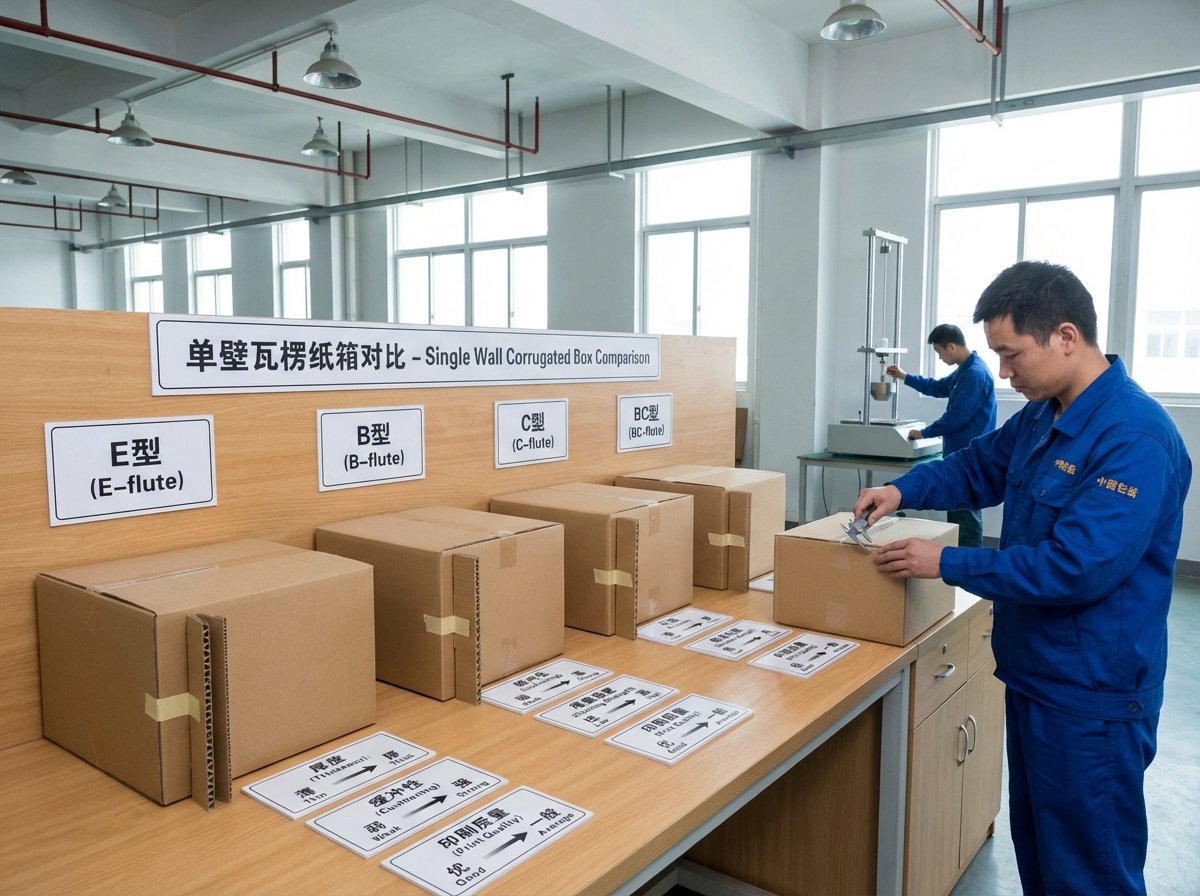
A flute offers more cushioning and compression resistance because it is thicker. B flute provides better puncture resistance and a flatter surface for print and die-cut work. E flute is thinner and more refined, which makes it useful for retail mailers and branded packaging where print quality and clean folds matter. C flute is a common balance for many shipping cartons. BC flute and EB flute combinations are also used in double wall packaging when stronger performance or a better print result is needed. The wrong flute can create problems even when the board looks acceptable on paper. A box may be too bulky for efficient packing, too soft under stack pressure, or not clean enough in appearance for branded applications. That is why flute selection should be linked to both protection need and presentation goal.
| Flute Type | Typical Character | Best Fit |
|---|---|---|
| A flute | Thick and cushioning-focused | Fragile products, stack support |
| B flute | Stronger puncture resistance | Cans, retail transit cartons |
| C flute | Balanced performance | General shipping cartons |
| E flute | Thin and print-friendly | Mailers, small retail packs |
| BC / EB flute | Combined performance in double wall | Heavier-duty or mixed-use packaging |
How to Choose Corrugated Box Strength Based on Product and Shipping Needs?
A corrugated box should not be selected by appearance alone. A clean-looking carton can still fail fast if the strength does not match the product and the shipping route.
The right box strength depends on product weight, fragility, stacking load, shipping distance, handling intensity, and internal fit.
A light accessory pack and a heavy electronics carton should never follow the same corrugated specification. The first step is product weight. Heavier products need stronger board, better edge crush performance, and often stronger bottom sealing. The second step is fragility. A fragile product may need more than a stronger carton. It may also need inserts, partitions, or corner support to control internal movement. The third step is route condition. A carton moving through cross-border parcel delivery, warehouse stacking, and multiple handling points needs more safety margin than a local pallet shipment. Humidity also matters. Boxes used in cold chain, rainy delivery environments, or long storage periods may need better moisture resistance. Another common issue is box size. Oversized cartons often perform worse because void space reduces overall support and allows products to shift. In many public complaints, the carton was not only weak. It was also too large, poorly filled, or used with no internal support. Strength selection should always be tied to total pack design, not board grade alone.
| Decision Factor | What to Check | Packaging Effect |
|---|---|---|
| Product weight | Net and packed weight | Drives wall type and board grade |
| Product fragility | Breakability, scratch risk, leak risk | Determines need for inserts and cushioning |
| Shipping route | Local, parcel, export, pallet, courier | Changes required safety margin |
| Stack pressure | Warehouse height and load duration | Affects compression requirement |
| Box size | Product-to-box fit | Too much void weakens protection |
| Environment | Moisture, cold, oil exposure | May require specialty corrugated treatment |
Why Do Internal Fit and Void Control Matter So Much?
A strong corrugated box can still fail when the inside is unmanaged. Many damaged deliveries happen because the carton protects the outside shape but not the product inside.
Good corrugated packaging needs internal control, not only outer box strength.
When there is too much empty space inside a carton, the product moves, impacts the walls, and transfers stress to corners and seams. That movement leads to scratches, broken closures, burst flaps, and crushed edges. In some complaints, books arrived loose in a box with no padding. In others, fragile items floated inside thin cartons or bags. These are not small packing mistakes. They are structural failures in the packaging plan. Corrugated inserts, partitions, die-cut fitments, molded pulp trays, and paper cushioning can all improve performance when chosen well. For heavier goods, the internal support may need to spread load away from pressure points. For glass, bottles, and electronics, internal separation is often critical. Void ratio should also be controlled before adding filler. A better-sized box with a proper fitment often performs better than a much larger box filled with random loose material.
| Internal Design Choice | Benefit | Problem if Missing |
|---|---|---|
| Corrugated insert | Holds product in place | Product shifts and hits walls |
| Partition | Separates multiple units | Items collide with each other |
| Corner support | Protects impact-sensitive edges | Corners crush under shock |
| Right box fit | Reduces filler need and movement | Empty space weakens whole pack |
Common Corrugated Box Applications in Retail, E-commerce, and Industrial Packaging?
Corrugated boxes are used almost everywhere, but the performance target changes by market. A retail display box does not face the same pressure as an e-commerce carton or an industrial master pack.
The best corrugated application is always the one that matches the real use environment.
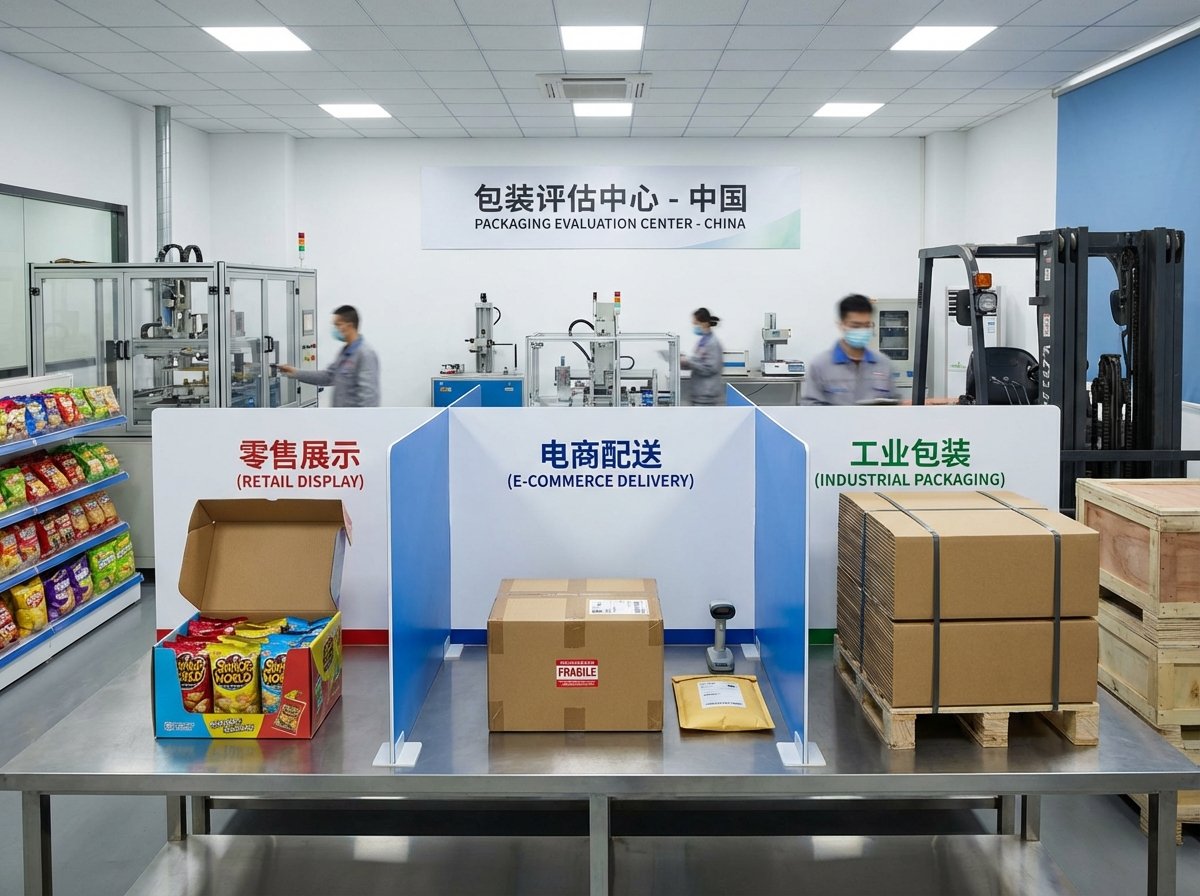
In retail packaging, corrugated board is often used for shelf-ready cartons, display boxes, outer replenishment cases, and protective transit packaging for branded inner packs. In e-commerce, corrugated mailers and shipping cartons are the main choice because they combine protection with efficient packing and brand customization. Here, box fit and transit strength matter most. Many customer complaints in online selling come from thin boxes, oversized cartons, or retail boxes shipped without outer protection. In industrial packaging, corrugated boxes are used for spare parts, tools, components, bulk shipments, and export master cartons. These applications often need higher board grades, stronger stacking strength, and better unitization for pallets. Corrugated packaging is also common in electronics, cosmetics, books, food accessories, and gift products. The format may change, but the key principle stays the same: corrugated packaging works best when the board type, structure, and insert design are chosen for the real shipping and handling scenario.
| Market | Common Corrugated Use | Key Requirement |
|---|---|---|
| Retail | Shelf-ready boxes, replenishment cartons | Presentation plus handling protection |
| E-commerce | Mailer boxes, shipping cartons | Strong fit, transit safety, efficient packing |
| Industrial | Master cartons, export boxes, parts cartons | Compression strength and transport durability |
| Electronics | Product shippers, kits, partitions | Protection against impact and movement |
| Gift and cosmetics | Branded corrugated mailers, premium outers | Clean look plus protective function |
When Should a Corrugated Box Be Upgraded?
A standard corrugated box is not always enough. Some products, routes, and customer expectations require a higher level of protection or finish.
Upgrading the box is usually necessary when the risk of damage, visible wear, or shipping failure becomes too high.
An upgrade may be needed when products are heavy, fragile, high-value, moisture-sensitive, or expected to arrive in giftable condition. It may also be needed when parcels move through express courier networks, long-distance export routes, or rough warehouse handling. Common upgrade options include double wall construction, stronger flute combinations, better surface liners, moisture-resistant treatment, reinforced edges, inner supports, and outer master cartons. For premium products, a corrugated shipper can also be used to protect a printed retail box inside. This is one of the most practical ways to stop the common failure of sales boxes arriving crushed or torn. Upgrades should not be treated as waste by default. A stronger corrugated solution often costs less than returns, reshipments, refunds, and damaged brand image.
What Are the Main Benefits of Corrugated Boxes for Modern Packaging?
Corrugated boxes remain important because they solve many packaging problems at once. They are not only transport boxes. They are also structural tools for protection, organization, and cost control.
The main benefits come from flexibility, strength, printability, efficiency, and broad application range.
Corrugated boxes can be made in many strengths, sizes, and styles. They support both standard and custom packaging programs. They can be printed for brand visibility, die-cut for better fit, and combined with inserts for fragile products. They are also more adaptable than many rigid packaging formats when product lines include many sizes or changing SKU counts. For factories and brand owners, corrugated packaging can help lower damage rates, improve shipping efficiency, and keep packaging specifications more systematic across product categories. Another benefit is layered packaging design. Corrugated boxes can protect inner retail packs without forcing the retail pack to carry shipping risk by itself. This is especially important in markets where buyers care about both product protection and packaging appearance.
| Benefit | Why It Matters |
|---|---|
| Structural protection | Reduces crush and impact damage |
| Flexible customization | Supports different sizes, styles, and inserts |
| Shipping efficiency | Works well for storage, stacking, and transport |
| Brand support | Can be printed and finished for stronger presentation |
| System packaging value | Helps separate retail and shipping functions clearly |
Conclusion
Corrugated boxes work best when strength, structure, size, and shipping need are matched carefully. The right wall type, flute profile, and internal design can reduce damage, control freight waste, and protect product value from warehouse to delivery.
For businesses that rely on safer shipping and more consistent packaging performance, corrugated boxes are not just a basic packaging choice. They are one of the most practical ways to balance protection, efficiency, and presentation at the same time. A well-designed corrugated solution can support retail image, e-commerce delivery, and industrial transport without forcing one box to do the wrong job. That is why the real value of corrugated packaging does not come from using more material. It comes from using the right structure for the right product, with the right level of protection built in from the start.