Measuring a box may seem like a simple task, but when it comes to custom packaging, accurate dimensions are essential. The right box size not only ensures your products fit securely but also helps reduce material waste, shipping expenses, and storage costs.
Even small measurement errors can lead to oversized packaging, increased transportation fees, or insufficient protection during transit. A properly sized box minimizes empty space, keeps products stable, and reduces the risk of damage throughout the supply chain.
Box dimensions play a crucial role in packaging design, production planning, and logistics. Whether you’re ordering custom packaging, calculating shipping costs, or optimizing warehouse space, knowing how to measure a box correctly is the first step.
In this guide, you’ll learn how to accurately measure box dimensions, identify length, width, and height, calculate box volume, and avoid common mistakes that can affect packaging performance and costs.
Understanding the Three Dimensions of a Box
Accurate box measurements are essential when designing custom packaging, calculating shipping costs, selecting product packaging, or creating packaging dielines. Before determining the dimensions of a box, it is important to understand the three primary measurements used throughout the packaging industry: length, width, and depth (or height).
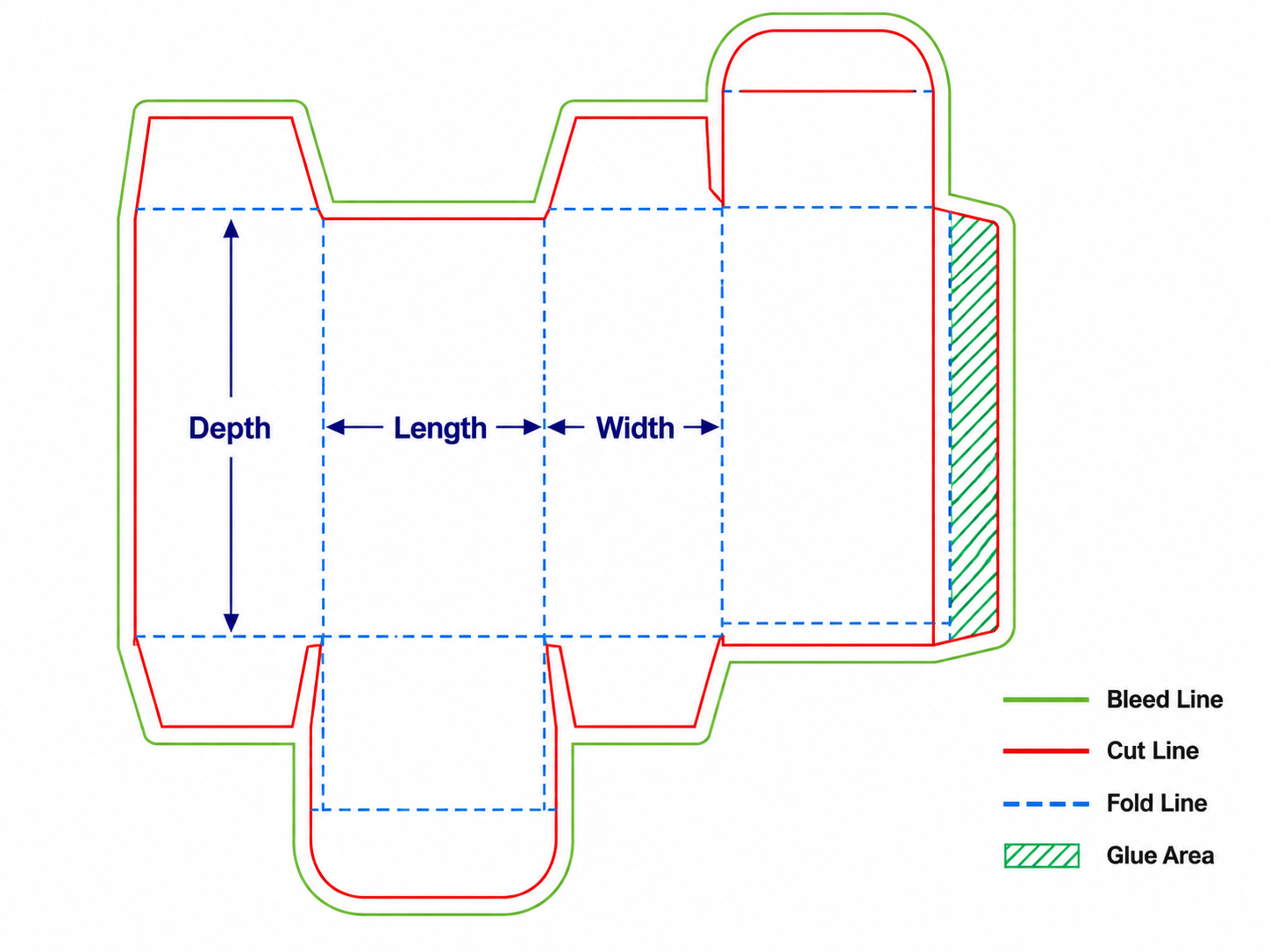
For the most accurate results, packaging dimensions should always be measured from the inside of the box rather than the outside. Internal measurements reflect the actual usable space available for the product and help ensure a proper fit, reducing the risk of damage during storage and transportation.
The Three Key Box Dimensions
Length (L)
The length is the longest side of the box when viewed from the top opening. It is typically the first dimension recorded in packaging specifications and serves as the primary reference point when measuring a carton or packaging box.
Width (W)
The width is the shorter side of the box when viewed from the top. Together, the length and width define the opening area and overall footprint of the packaging.
Depth / Height (D or H)
The depth, sometimes referred to as height, measures the vertical distance from the top opening to the bottom of the box. Although some manufacturers use the terms interchangeably, both refer to the third dimension of the package.
Standard Box Dimension Format
Across the packaging and printing industry, box dimensions are typically expressed in the following format:
Length × Width × Depth (L × W × D)
or
Length × Width × Height (L × W × H)
For example:
- 12″ × 8″ × 4″
- 300 mm × 200 mm × 100 mm
Following the standard dimension sequence helps avoid confusion during packaging production, shipping calculations, and communication with packaging suppliers.
Why Accurate Measurements Matter
Correct box dimensions are important for:
- Custom packaging design
- Packaging dieline creation
- Shipping and logistics calculations
- Product protection and fit
- Material cost estimation
- Warehouse storage optimization
Even small measurement errors can affect packaging performance, increase production costs, or lead to shipping issues. Therefore, always verify internal dimensions carefully before finalizing packaging specifications.
Tip: Always measure the internal dimensions of a box when ordering custom packaging. Inside measurements provide the most accurate representation of the usable space available for your product.
Understanding Box Dimensions for Different Box Shapes
While the standard measurement sequence remains Length × Width × Depth (L × W × D), the relative size of each dimension can vary significantly depending on the box design and intended application. Understanding how these dimensions change across different box styles is essential for accurate packaging specifications and product fit.
Measuring Tall or Vertical Boxes
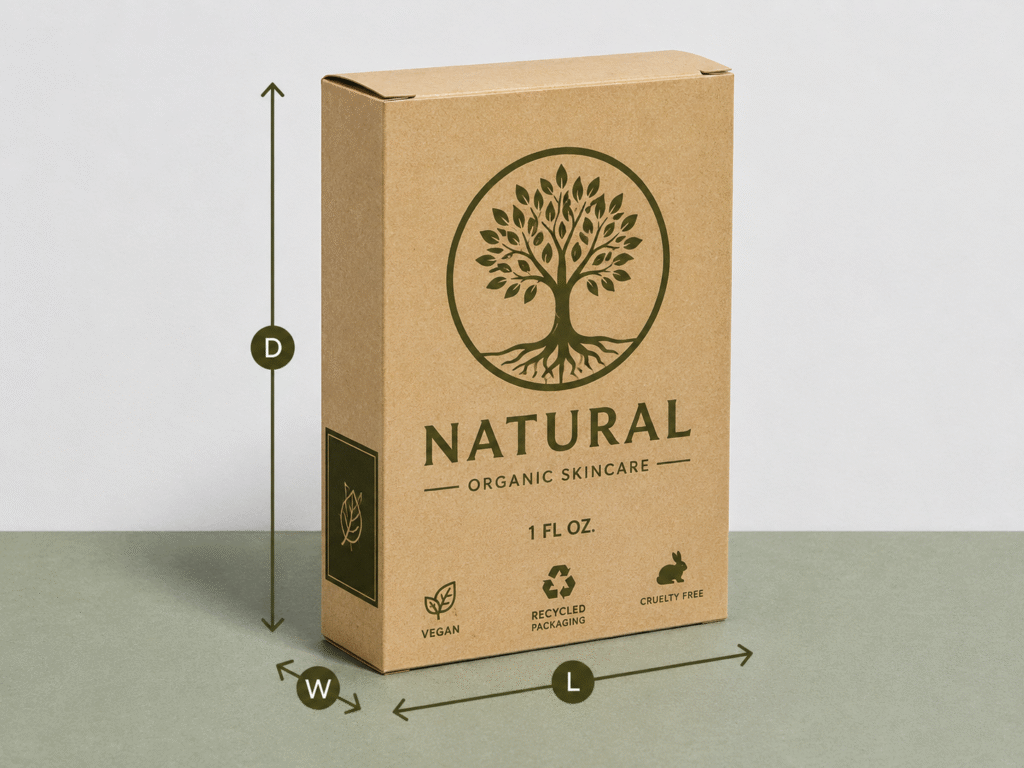
For tall or vertically oriented boxes, the depth (or height) becomes the most dominant dimension. These types of boxes are commonly used for products such as bottles, cosmetics, candles, and premium retail packaging.
In a vertical box:
- Depth (Height) is the largest measurement.
- Length and width are typically smaller.
- The box extends upward rather than outward.
Although the depth may be the most noticeable dimension, measurements should still be recorded using the industry-standard format:
Length × Width × Depth (L × W × D)
Maintaining this format helps avoid confusion during packaging design, manufacturing, and shipping calculations.
Measuring Long Rectangular Boxes
For long packaging boxes, such as those used for electronics, tools, posters, or specialty products, the length becomes the dominant dimension.
Characteristics of long boxes include:
- Length is significantly greater than width and depth.
- Width and depth are usually much smaller.
- The box extends horizontally rather than vertically.
Examples of products commonly packaged in long boxes include:
- LED light fixtures
- Golf clubs
- Kitchen utensils
- Electronic accessories
- Promotional display products
In these cases, the standard measurement order remains unchanged, regardless of which dimension is the largest.
Why Box Orientation Matters
Understanding the orientation of a package helps manufacturers optimize:
- Product protection
- Material usage
- Shipping efficiency
- Storage space utilization
- Packaging design accuracy
Whether the box is tall, square, or elongated, correctly identifying the length, width, and depth ensures that the packaging accurately fits the product while minimizing wasted space and shipping costs.
Tip: No matter what type of box you are measuring, always record dimensions in the standard order of Length × Width × Depth (L × W × D). Consistent measurement standards help prevent manufacturing errors and ensure accurate custom packaging production.
Why Accurate Package Dimensions Are Essential
No matter what type of packaging you choose, obtaining precise box dimensions is a critical step before moving into production. Accurate measurements help ensure that the packaging fits the product properly, minimizes material waste, reduces shipping costs, and supports efficient manufacturing processes.
Whether you are designing custom packaging boxes, retail packaging, shipping cartons, or luxury product packaging, knowing the exact length, width, and depth of the package allows packaging manufacturers to create structures that provide both protection and visual appeal.
Incorrect measurements can lead to:
- Poor product fit
- Increased production costs
- Packaging material waste
- Shipping and storage inefficiencies
- Delays in manufacturing and fulfillment
For this reason, professional packaging suppliers always verify box dimensions before creating dielines, prototypes, or mass production orders.
Common Box Types and Measurement Examples
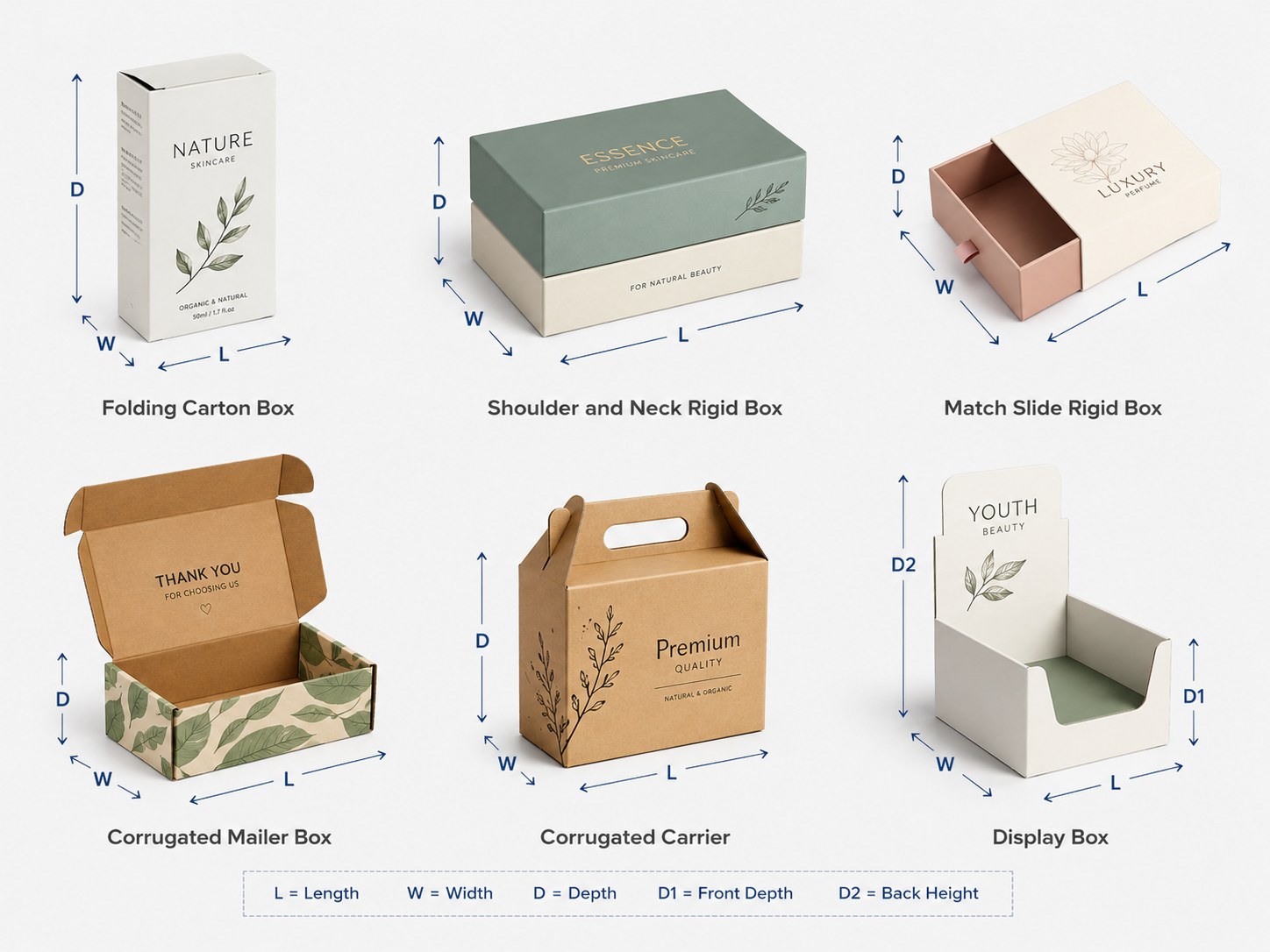
Different packaging styles may appear unique in shape, but they all follow the same industry-standard measurement format:
Length × Width × Depth (L × W × D)
The challenge is identifying which side represents each dimension based on the box structure.
Some common packaging styles include:
- Folding carton boxes
- Corrugated shipping boxes
- Mailer boxes
- Rigid gift boxes
- Product display boxes
- Subscription boxes
- Tuck-end packaging boxes
By understanding where to locate the length, width, and depth on different box designs, businesses can ensure accurate packaging specifications and smoother communication with packaging manufacturers.
In the following examples, we’ll look at several common box styles and demonstrate how to correctly identify each dimension for packaging design and production purposes.
Tip: Before requesting a packaging quote or creating a dieline, double-check all internal box dimensions. Accurate measurements help avoid costly production errors and ensure the best fit for your product.
Calculating the Volume of a Box
After measuring the length, width, and depth of your box, the next step is to calculate its volume. Knowing the box volume helps determine whether your product will fit properly inside the package and provides valuable information for shipping, warehousing, and logistics planning.
Box volume also plays an important role in packaging optimization, helping businesses reduce material waste, improve storage efficiency, and control transportation costs.
The formula for calculating box volume is simple:
Length × Width × Depth = Volume
For example:
30 cm × 20 cm × 10 cm = 6,000 cm³
While the calculation itself is straightforward, it is still recommended to identify the correct length, width, and depth measurements to maintain consistency throughout the packaging design and manufacturing process.
Tip: Always calculate volume using the internal dimensions of the box to ensure accurate packaging and shipping measurements.
Why Internal Dimensions Matter More Than External Dimensions
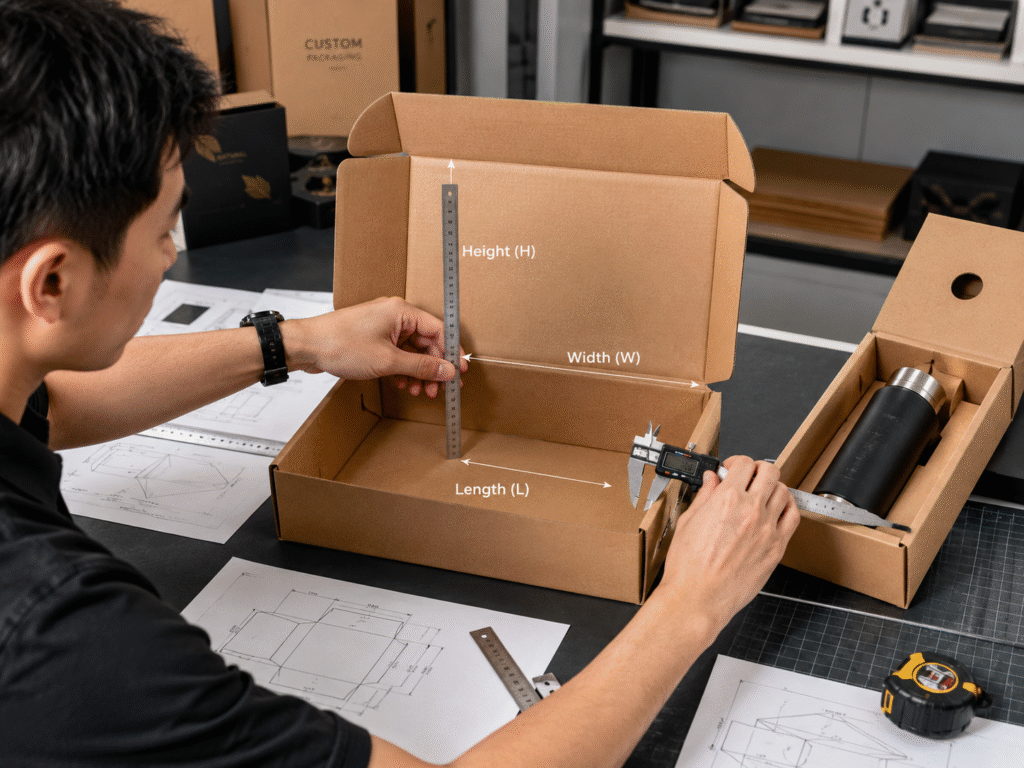
Although measuring a box may seem straightforward, one critical factor in custom packaging design is understanding the difference between internal and external dimensions.
In the packaging industry, the standard practice is to use internal box dimensions when designing custom packaging boxes. Internal measurements represent the actual usable space inside the package and ensure that your product fits securely and accurately within the box. This is especially important when working with a professional packaging manufacturer or ordering custom packaging solutions.
Many businesses naturally measure the outside of a box because it is easier to access. However, external dimensions include the thickness of the packaging material, which can result in inaccurate sizing and potential product fit issues. For this reason, most packaging suppliers and manufacturers rely on internal measurements when creating packaging specifications.
Using accurate box dimensions helps:
- Ensure proper product fit
- Improve packaging efficiency
- Reduce manufacturing errors
- Optimize shipping and storage costs
- Improve custom packaging performance
- Simplify communication with your packaging manufacturer
Whether you are designing retail packaging, shipping boxes, or custom product packaging, providing accurate internal dimensions is essential for achieving the best results and avoiding costly production mistakes.
Tip: Always provide internal box dimensions when requesting quotes from a packaging manufacturer. Accurate internal measurements ensure your custom packaging is designed to fit your product perfectly.
Why Internal Dimensions Are Essential for Custom Packaging
Using internal box dimensions is the most effective way to ensure your product fits securely inside the package. Accurate internal measurements help minimize excess space, reducing product movement during shipping, handling, and storage. This not only improves product protection but also enhances the overall customer experience by delivering products in perfect condition.
For businesses investing in custom packaging, proper sizing plays a crucial role in maintaining product quality, reducing damage rates, and creating a professional presentation. A well-fitted package can also help optimize packaging materials and lower shipping costs.
On the other hand, relying on external dimensions can lead to sizing inaccuracies because external measurements do not account for the thickness of the packaging material. As a result, the finished package may not provide the internal space required for your product, potentially causing fitting issues during production.
Why This Matters for Corrugated Boxes
The difference between internal and external dimensions becomes even more important when working with corrugated packaging boxes.
Corrugated boxes are constructed using multiple layers of material, including a fluted corrugated layer positioned between liner boards. This structure increases the overall strength and durability of the packaging but also adds thickness to each side of the box.
Because of this construction:
- External measurements are larger than the usable internal space.
- Material thickness affects the final box dimensions.
- Accurate internal measurements are critical for product fit.
- Packaging manufacturers typically design based on internal dimensions.
For this reason, most professional packaging manufacturers and packaging suppliers recommend measuring the inside dimensions of corrugated boxes whenever possible.
Tip: When measuring corrugated boxes, always use the internal dimensions to ensure accurate product fit and avoid costly packaging production errors.
Final Thoughts
Now that you understand how to identify a box’s length, width, and depth, calculate its volume, and distinguish between internal and external dimensions, you can confidently apply these principles to future custom packaging projects.
Accurate box dimensions are the foundation of effective packaging design, helping businesses improve product protection, reduce material waste, optimize shipping efficiency, and create better packaging solutions for their customers.
While understanding the basics of packaging measurements is important, working with an experienced packaging manufacturer can help ensure the best results. Professional packaging experts can assist with structural design, material selection, custom packaging development, and production optimization to create packaging that perfectly matches your product requirements.