A skincare brand may use a folding carton on the shelf, a rigid box for a gift collection, and a corrugated shipper for online orders. None of those choices is contradictory. Each package performs a different job.
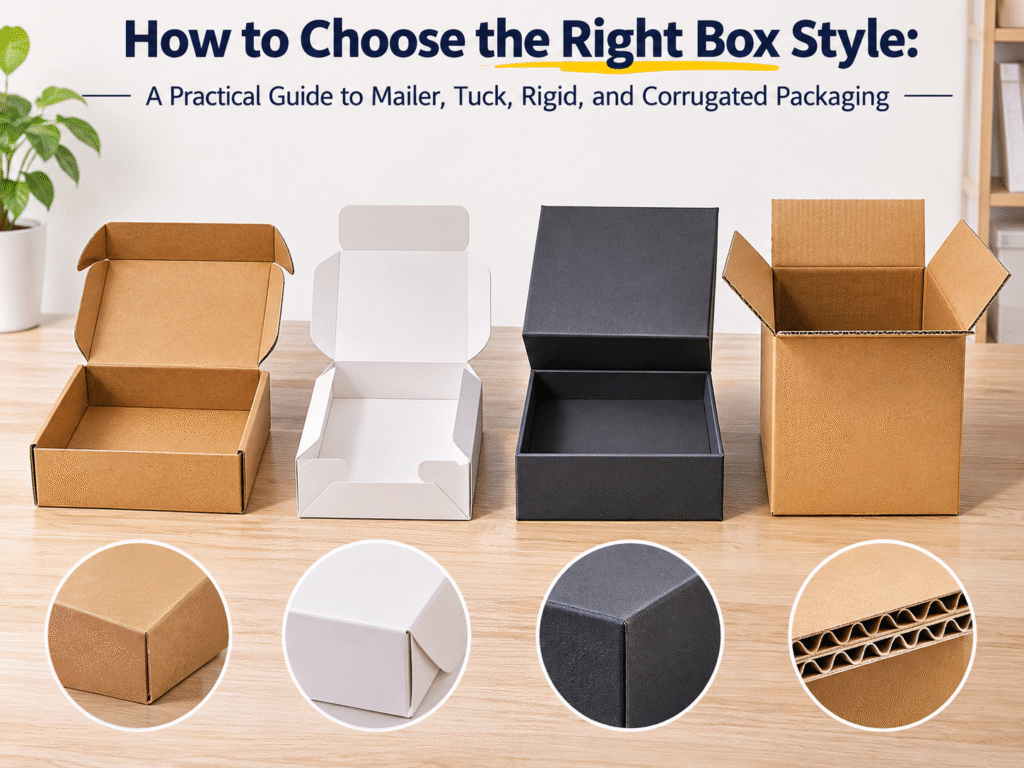
Problems arise when the appearance of one format is used to decide a function it has not been designed to perform. A substantial gift box may still need transit protection. A neatly printed mailer may be unsuitable for a heavy glass set. A plain shipping carton can be the correct outer layer around an excellent presentation package.
The useful question is not which box style is best overall. It is which combination of structure, material, support, and closure meets the product’s requirements at an acceptable total cost.
This guide provides a practical framework for comparing mailers, tuck cartons, rigid boxes, and corrugated shipping formats before committing to a production order.
The Short Answer
Start with the product and its distribution route. Establish protection requirements, then compare formats that can meet them.
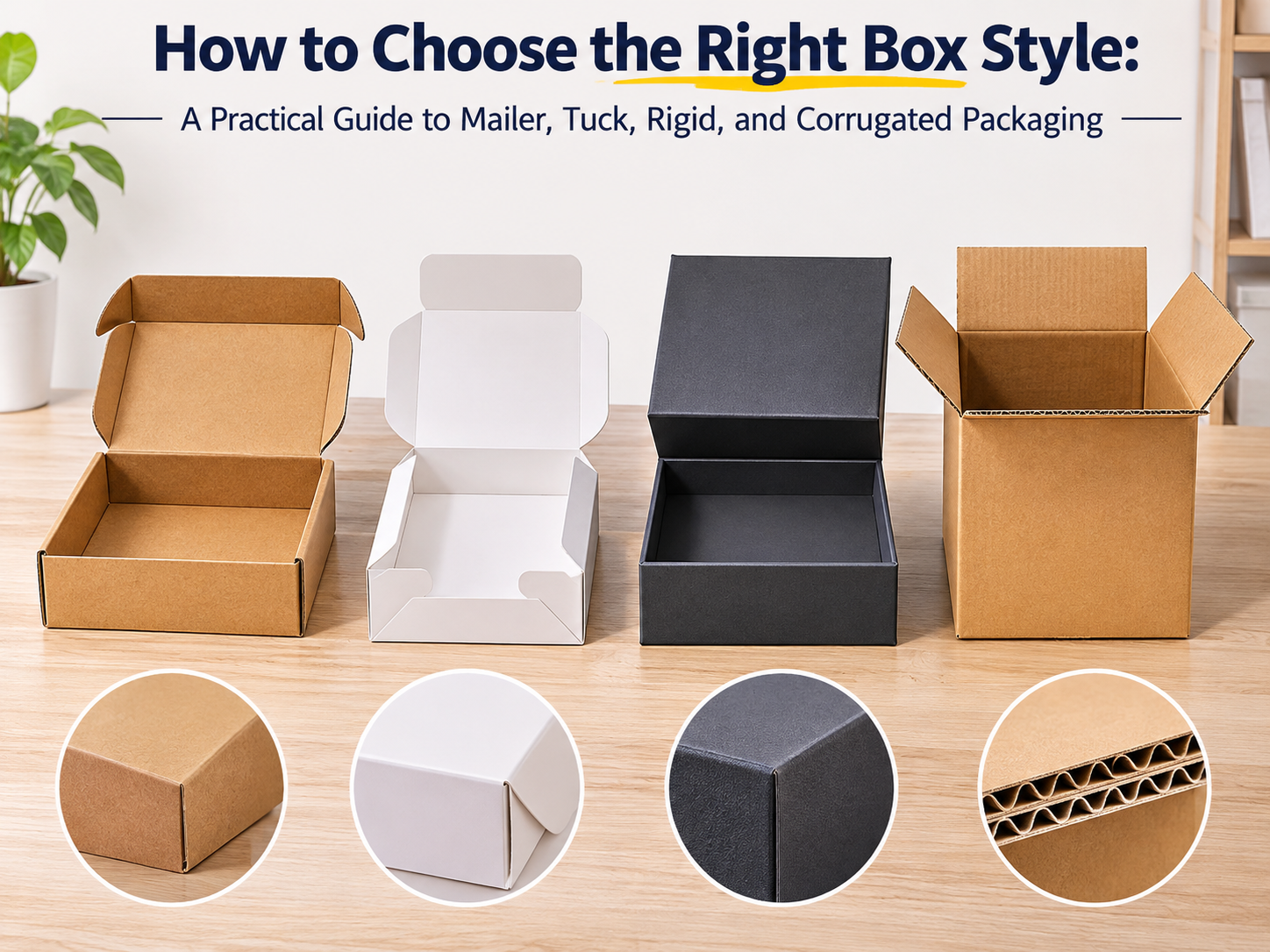
Folding tuck cartons are often useful for compact retail presentation. Corrugated mailers can combine branding and shipping functions where the complete package is suitable. Rigid boxes can support structured presentation and gifting. Corrugated shipping cases can be engineered for parcel, pallet, or other distribution conditions.
These are starting points, not automatic performance ratings. The final choice also depends on internal support, loading method, storage, closure, and testing.
First, Separate Box Style from Material
The four terms do not describe equivalent categories.
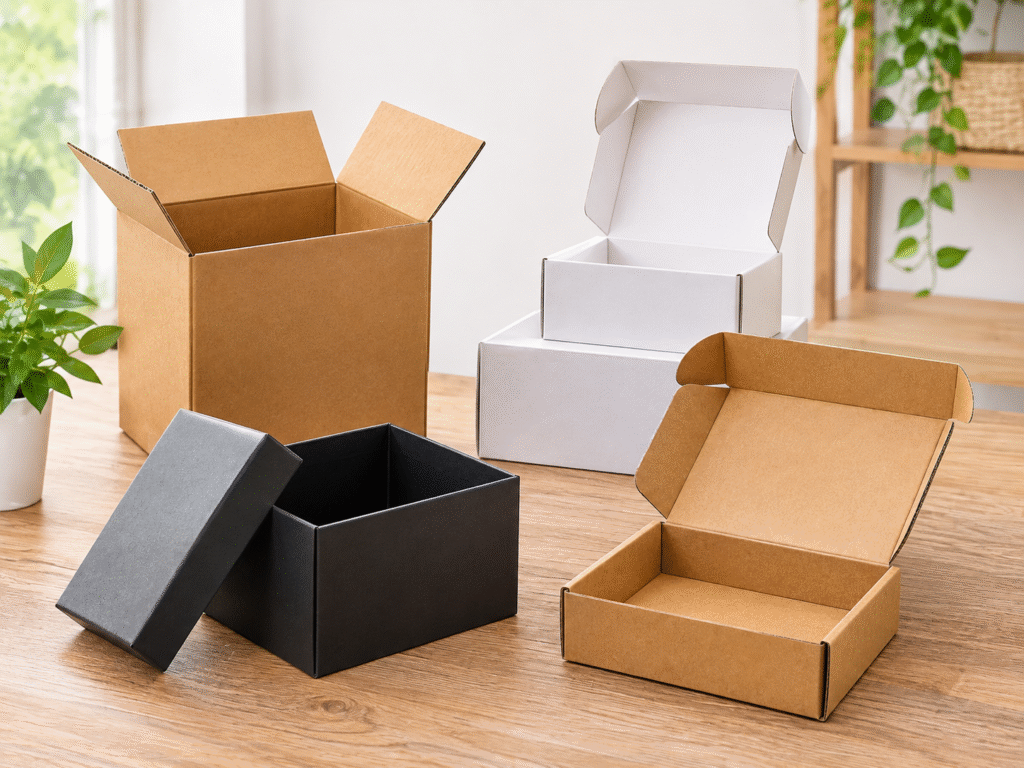
Mailer describes a packaging format and intended use. Tuck describes a closure. Rigid describes a construction family. Corrugated describes a material structure.
A mailer can therefore be both corrugated and tuck-closing. A tuck closure can appear on a paperboard retail carton or a corrugated package.
Likewise, not all folding cartons are tuck cartons. They can have glued ends, automatic bottoms, or other constructions.
Clarifying this vocabulary prevents a supplier discussion from becoming a comparison of overlapping labels. Specify the intended construction rather than relying on a style name alone.
The Main Packaging Formats
Corrugated Mailer Boxes
A common mailer is a die-cut corrugated box with a hinged lid and folded side structures. Many are supplied flat and erected at the packing station.
Tabs may hold the lid closed, but that does not establish a secure shipping closure for every application. Tape, an adhesive strip, or another feature may be required.
Mailers can provide an organized opening experience and printable interior and exterior surfaces. They are worth considering for compact online orders, subscriptions, and promotional kits.
Packboxprint’s custom mailer boxes provide a relevant format for evaluating branded parcel packaging alongside product fit and assembly requirements.
Paperboard Tuck Cartons
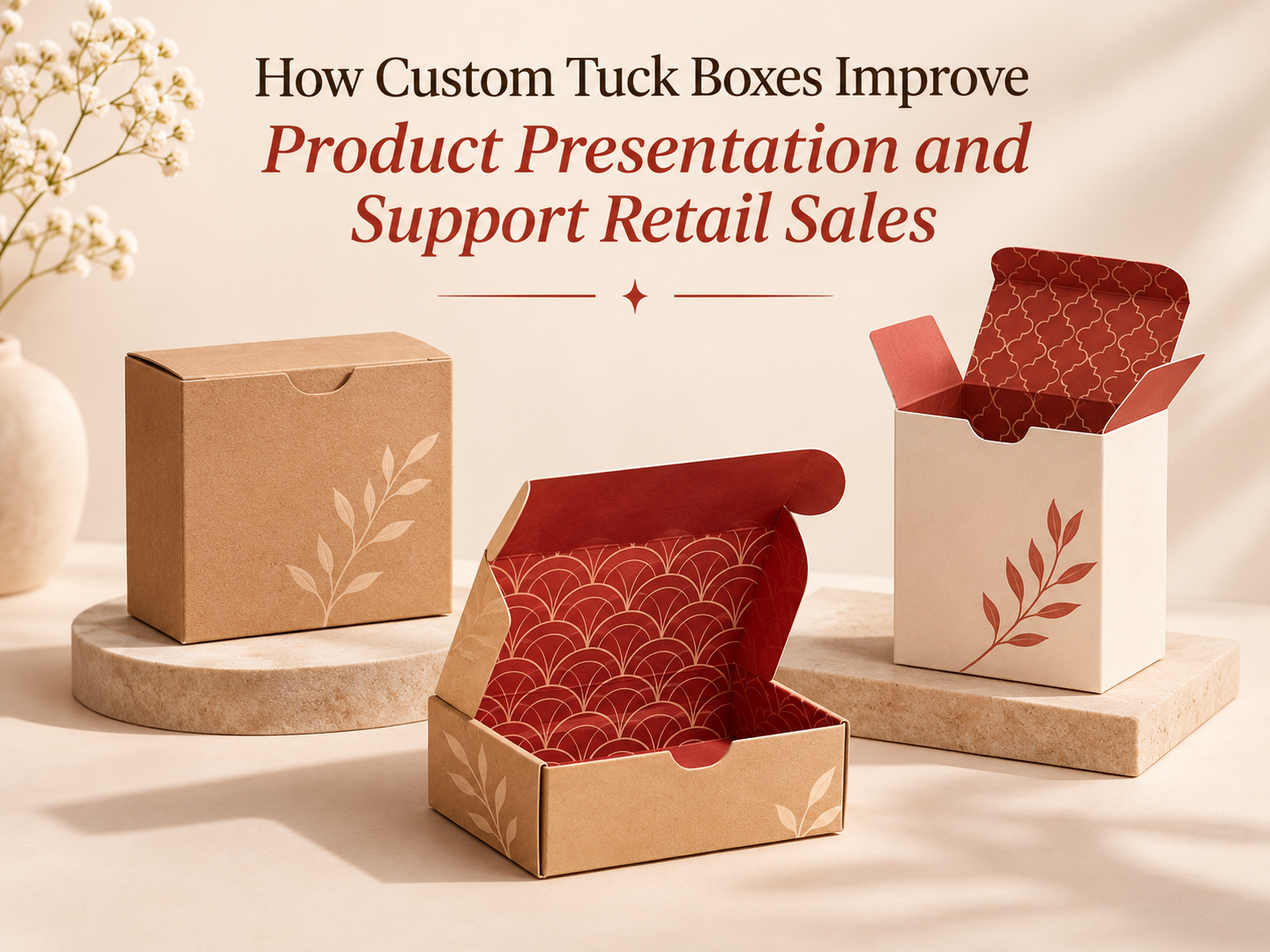
A typical retail tuck carton is cut and creased from paperboard, with a glued side seam and one or more tuck closures.
It offers space for product identification, instructions, and graphics. Its dimensions can be developed around a bottle, card deck, accessory, or another compact article.
A retail tuck carton commonly travels inside a master case or an individual shipping package. Standalone shipping suitability must be established for the actual design.
For custom folding paper boxes, consider the base closure, loading access, panel stiffness, and the effect of the product on the tuck tab.
Rigid Presentation Boxes
A conventional set-up rigid box uses thick supporting board, often covered with a printed or decorative wrap. Familiar formats include lid-and-base, drawer, and hinged constructions.
They can create a substantial presentation and organize a set of products. The wrap, internal tray, opening method, and edge construction all contribute to the experience.
Many set-up versions arrive assembled and occupy considerable storage volume. Collapsible rigid constructions also exist, so “rigid” does not always mean non-collapsible.
Packboxprint’s rigid packaging boxes are relevant where the brief calls for a structured gift or presentation format. Transit protection still requires separate consideration.
Corrugated Shipping Cases
Corrugated shipping packaging includes regular slotted cases, die-cut containers, and other structures.
Its role may be to carry one product, consolidate several retail units, or form part of a palletized load. An ordinary single-wall case and an engineered multiwall container can serve very different applications.
Corrugated packaging is not restricted to basic graphics. Print method, liner surface, and additional printed layers can support different presentation requirements.
A Comparison Table for Initial Selection
Use this table to shortlist candidates. It does not replace a material specification or performance validation.
| Format | Common role | Operational consideration | Main question to resolve |
|---|---|---|---|
| Corrugated mailer | Branded parcel delivery and kits | Erection, closure, and insert loading | Can the filled package handle the actual route? |
| Paperboard tuck carton | Retail presentation and product grouping | Filling speed and closure access | What transport layer is required? |
| Rigid presentation box | Gifts, sets, and structured presentation | Storage volume and packing sequence | How will it be protected during distribution? |
| Corrugated shipping case | Individual or consolidated transport | Sealing, stacking, and handling | What board and support system meet the load? |
Define the Product’s Vulnerabilities
Weight matters, but fragility is not simply a consequence of weight.
A light glass ornament may need careful cushioning. A heavier textile product may tolerate compression but require protection from dirt and moisture.
Record the product’s dimensions, packed mass, center of gravity, projecting parts, surface sensitivity, and orientation requirements. Include accessories and primary containers.
Identify what constitutes failure. Breakage, a leaking closure, a scratched finish, a crushed retail carton, and a nonfunctional electronic component require different protective measures.
Avoid a universal rule such as “single-wall below a particular weight.” A large box with a concentrated load behaves differently from a smaller case containing evenly distributed goods.
Map the Distribution Route
Describe what happens between packing and customer receipt.
Will cartons be palletized, moved as individual parcels, replenished to stores, or handled through several warehouses? Will the load be stacked for long periods? Are temperature and humidity relevant?
A retail package shipped in a master case has a different protective role from a parcel sent individually through a delivery network.
If several channels apply, define the package for each route. One universal format may be possible, but it should be evaluated against the most demanding relevant conditions rather than assumed suitable.
Do not treat “e-commerce” as one exposure pattern. A compact local shipment and a long, mixed-mode route can differ materially.
Design Internal Support with the Outer Box
The insert and outer container form one protective system.
A support can locate the product, separate components, control movement, and distribute loads. Cushioning can reduce transmitted shock when selected and configured appropriately.
A very tight insert is not automatically protective. It can transfer force directly to a fragile area or make removal difficult.
Folded paperboard, corrugated partitions, molded fiber, and different cushioning materials each have suitable applications. Select contact points and clearances around the product rather than choosing only by appearance.
The product need not always be isolated from every wall. What matters is the engineered load path, appropriate restraint, and performance of the complete package.
Prototype the loading sequence as well as the final arrangement. Staff must be able to position the product consistently without damaging the insert or applying excessive pressure.
Decide Which Surface the Customer Encounters
Retail and direct delivery create different presentation requirements.
On a shelf, the customer may see the front panel, a side panel, or the package through a display tray. Product category, variant, quantity, and key information need to remain legible in that position.
For direct delivery, the outer package may arrive marked by labels and handling. Decide whether the branded reveal belongs on the exterior, inside the lid, or on a separate product package.
A two-layer approach can be appropriate: a consistent retail carton inside a shipping case, for example. It can preserve shelf identity while allowing transport protection to vary by order.
A gift set may justify a rigid presentation box inside a plain protective shipper. The outer layer can perform its logistics function while the inner package delivers the intended presentation.
Match Presentation to the Brand Brief
A rigid box can support a deliberate opening sequence, but it does not make every product appear more desirable. The result depends on proportion, detail, materials, and whether the format suits the purchase.
A simple folding carton can feel carefully considered through good typography, clean folds, and a well-chosen substrate. A corrugated mailer can communicate an equally coherent identity.
Set a clear presentation objective. A collectible launch, everyday replacement part, and subscription assortment should not necessarily use the same treatment.
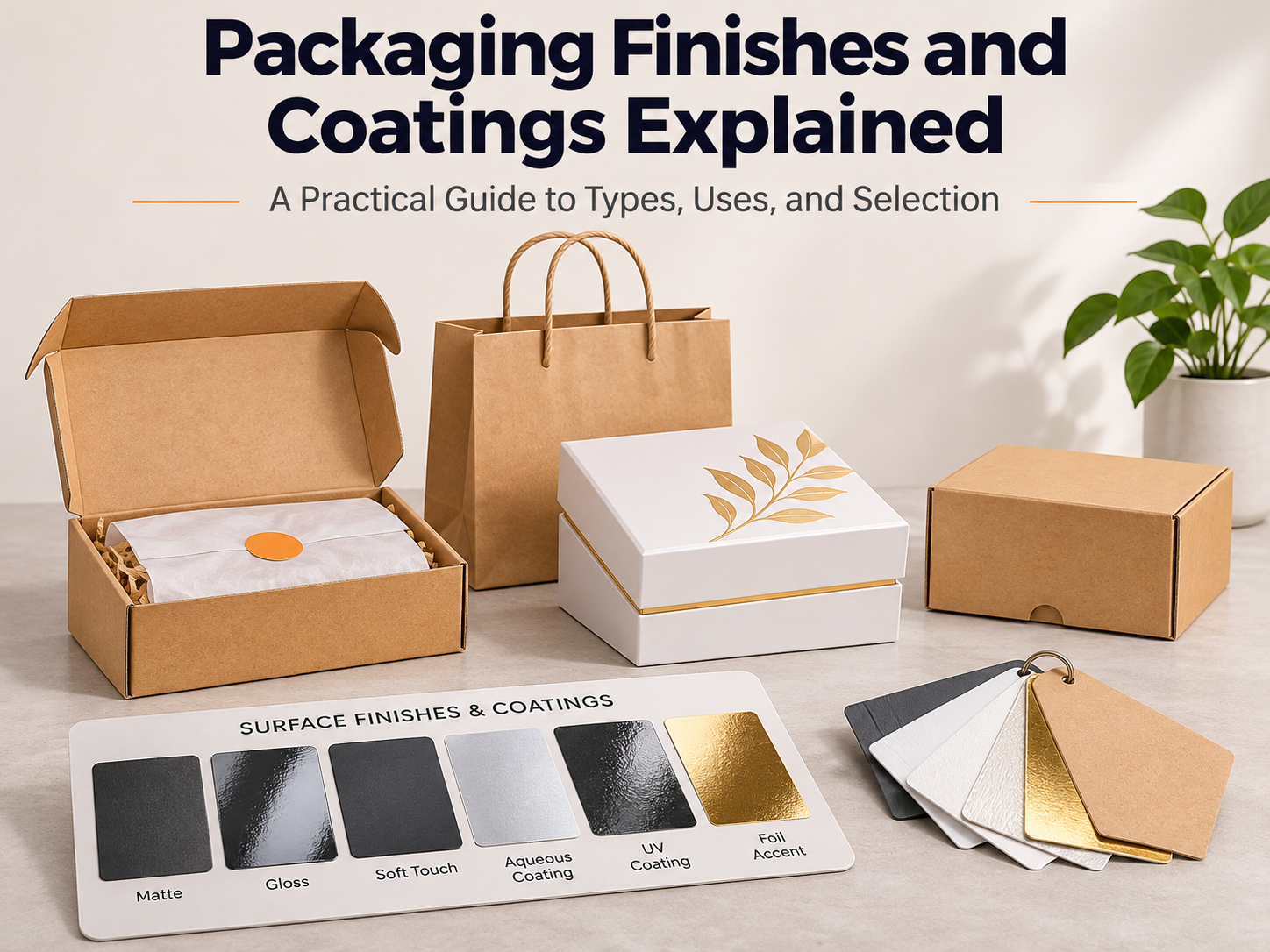
Finishes such as foil, embossing, matte coatings, or soft-touch surfaces introduce cost and production requirements. Their value should be assessed through the actual design rather than assumed to be inexpensive.
Packboxprint’s custom packaging design services can help connect the brand brief with structure, artwork, and the packing process.
Specify the Material Beyond the Name
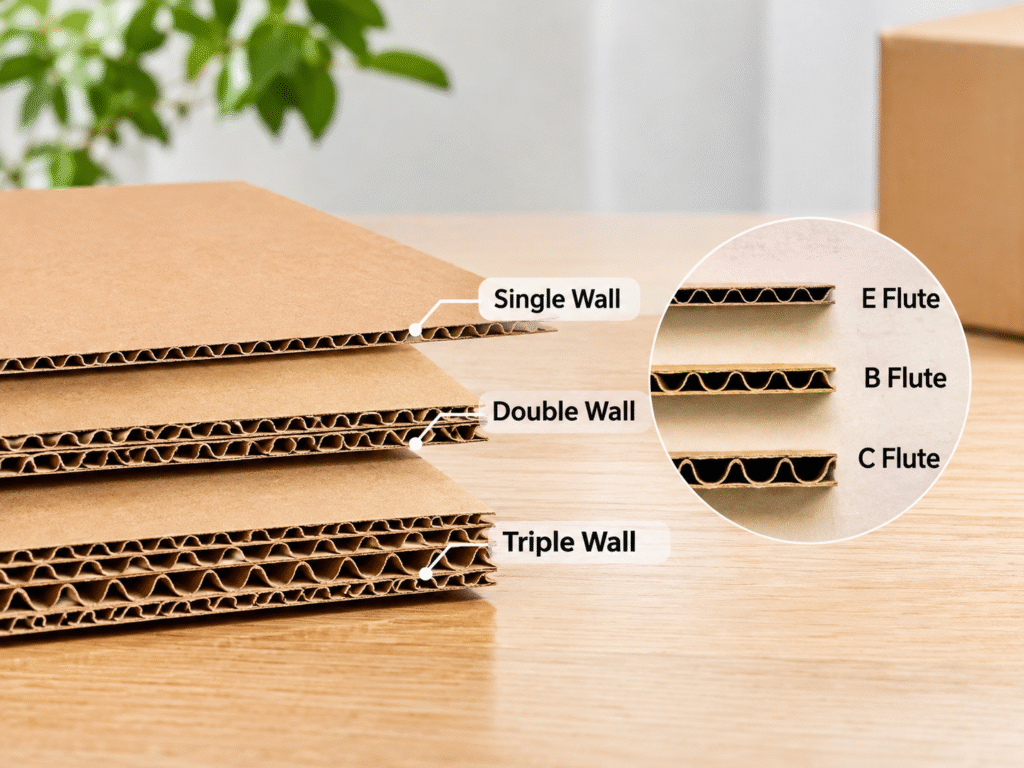
For corrugated packaging, flute profile and wall construction are part of the specification, not complete performance ratings.
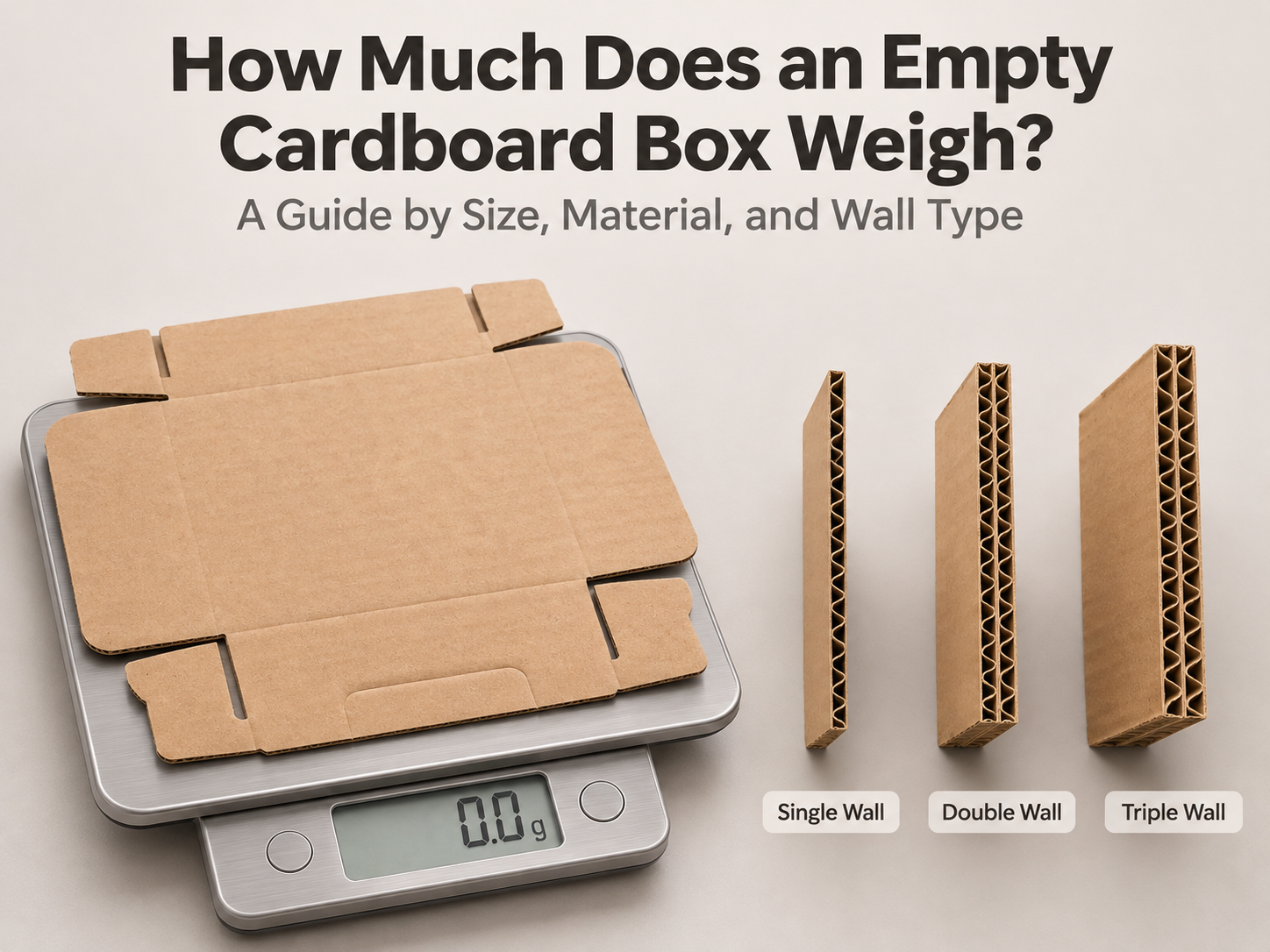
Single-wall board conventionally combines two liners and one fluted medium. Double-wall and triple-wall constructions introduce further fluted layers and liners.
A finer flute can support a compact appearance and certain print requirements. However, finished behavior also depends on liner grades, medium properties, board quality, dimensions, and conversion.
Do not rank every E-, B-, or C-flute box using a universal strength hierarchy. Likewise, double-wall is not the only possible solution for a fragile product.
For paperboard, identify the grade, nominal caliper, and relevant properties. GSM measures mass per area, not a direct carrying capacity.
For rigid packaging, specify the supporting board, wrap, internal fit, and joints. The decorative surface alone says little about the whole structure.
Packboxprint’s packaging material options provide a starting point for discussing these details with the proposed box design.
Check Dimensions and Product Fit
Use internal dimensions to define the available cavity and external dimensions for shelf, master-carton, storage, and shipping constraints.
Record the measurement order on a drawing. A retail carton described by front width, side depth, and height can be misread if its numbers are interpreted using another convention.
Account for protective components, closure intrusion, and the loading path. Do not order a cavity equal to the bare product envelope and assume everything will fit.
For a hypothetical 180 × 100 × 60 mm product, adding an insert can change all three required dimensions. The insert’s outside envelope, assembly variation, and removal access should define the next prototype.
A larger box may improve loading but allow movement or increase transport volume. Test the chosen balance rather than applying one clearance allowance to every product.
Step 8: Evaluate Storage and Fulfillment
A suitable package must work where orders are packed.
Measure the delivered storage requirement per usable unit. Flat blanks save space, but bundles, inserts, and protective packing still occupy room.
For rigid boxes, distinguish assembled set-up formats from collapsible versions. For mailers and folding cartons, check whether they arrive unglued, side-seam glued, or otherwise prepared.
Time the complete process: retrieving the box, erecting it, placing the insert, loading the product, adding information, closing, sealing, and labeling.
A tuck carton is not always faster than a mailer. An automatic bottom may reduce one assembly task, while a complicated insert can add time elsewhere.
Use the same operators and realistic conditions for comparisons. A practiced sample demonstration is not equivalent to a normal shift.
A Simple Labor Comparison
Suppose one packaging system takes 18 seconds per order and another takes 30 seconds.
At 3,000 orders, the 12-second difference represents:
3,000 × 12 ÷ 3,600 = 10 labor hours
At an assumed labor cost of $20 per hour, that equals $200 in direct labor.
These are illustrative figures. Actual savings depend on workflow, staffing, and whether the time can be used productively.
Compare Total Cost per Successful Delivery
Compare complete systems using equivalent requirements.
Relevant costs include the outer box, presentation carton, insert, cushioning, seals, labels, tooling, assembly, storage, transport, and damage-related work.
A $0.15 lower box price does not help if it requires $0.25 more filler and additional packing time. Conversely, an elaborate presentation structure may add cost without a useful role in the product experience.
Measure packed mass and finished external dimensions. A smaller package can change space-based shipping calculations, but the actual result depends on the applicable service rules.
For bulk purchasing, also assess inventory exposure. A custom format used for only one slow-selling product can tie up more stock than a shared structure with variant-specific artwork.
Three Practical Selection Examples
Lightweight Retail Skincare Product
A compact paperboard carton may provide the required product information and shelf presence around a sealed primary container.
For online orders, that retail unit can travel inside a suitable shipping package. The support must address the primary container’s vulnerability, especially if it is glass.
There is no need to force the retail carton to perform every transit function.
Multi-Item Gift Collection
A rigid or structured folding presentation box can organize several products. Compare both if either can meet the appearance and usability brief.
Products of different weights need appropriate separation and support. The final package may require an outer transit carton.
The choice should include storage volume, assembly, and removal experience as well as the initial reveal.
Heavy Replacement Component
A corrugated case with suitable restraint may be more practical than a presentation-led format.
Concentrated loads, sharp edges, surface protection, and handling need explicit attention. Some products may require a different transport system beyond the four common options discussed here.
Select the structure from the load and route rather than assuming that a named flute or wall count guarantees success.
Validate the Complete Packed Product
A rendering answers appearance questions. A structural sample helps assess fit and loading. A production-representative package supports more meaningful functional evaluation.
Agree checks for closure retention, compression, impact, vibration, abrasion, and environmental exposure where relevant to the route.
Use appropriate procedures and acceptance criteria with the supplier or testing specialist. A thicker board is not a substitute for this evaluation.
Record the approved structure, material, insert, closure, product configuration, and packing method. Changes that could affect performance should trigger a review and, where appropriate, renewed testing.
A successful test applies to the tested configuration and conditions. It should not be treated as an unlimited guarantee for every future product variation.
Common Selection Mistakes
| Mistake | Better decision |
|---|---|
| Treating corrugated and mailer as exclusive categories | Separate material, closure, and format |
| Choosing only by product weight | Include fragility, geometry, route, and stacking |
| Assuming every rigid box is a transit package | Evaluate its role within the full system |
| Buying the outer box before designing the insert | Develop protection and fit together |
| Comparing empty-box prices alone | Compare packed cost and operational performance |
| Assuming tabs make a secure shipping closure | Validate the actual sealing arrangement |
| Approving an unfilled sample | Test the intended contents and packing sequence |
The most useful shortlist usually contains a few complete packaging concepts rather than a long list of empty box styles.
Prepare a Brief for Your Packaging Manufacturer
Provide product dimensions, packed weight, vulnerable features, quantities, sales channels, distribution conditions, and the desired presentation.
Include storage constraints, filling method, artwork, closure needs, and any maximum external dimensions. Identify which requirements are essential and which remain flexible.
When evaluating a custom packaging manufacturer, discuss sampling, process capabilities, inspection, and how specification changes will be controlled.
For a Packboxprint packaging inquiry, product samples or accurate drawings make the comparison more concrete.
Choose the format that performs the required job, then refine the material, dimensions, support, and graphics. A filled sample and a documented evaluation provide a stronger decision than a photograph of an attractive empty box.
Frequently Asked Questions
1. What is the difference between a mailer and a rigid box?
A common mailer is a flat-supplied corrugated format assembled for packing. A rigid presentation box typically uses thick supporting board and a decorative wrap, often supplied assembled.
2. Is a mailer box corrugated?
Many are. Mailer describes a format or intended use, while corrugated describes the material. Confirm the exact construction rather than assuming all mailers are identical.
3. Are tuck boxes and folding cartons the same?
A tuck carton is one type of folding carton. Other folding cartons use glued ends, locking bottoms, or different closures.
4. Can a folding carton ship without an outer box?
Suitability must be established for the actual product and route. Many retail paperboard cartons need an additional transport package.
5. Are rigid boxes always supplied assembled?
Conventional set-up versions commonly are, but collapsible rigid constructions also exist. Confirm delivery format and assembly requirements.
6. Which format is best for fragile products?
Choose a complete system with suitable support, cushioning, closure, and outer structure. Fragility alone does not identify one universally correct style.
7. Does double-wall board guarantee better protection?
It can contribute useful properties, but performance depends on the full design, materials, load, and handling conditions. Validate the proposed system.
8. Do mailers need packing tape?
Some closures require tape or another seal for the intended route. A self-locking tab does not automatically provide sufficient retention or tamper evidence.
9. Which box style costs the least?
The answer depends on dimensions, materials, quantity, printing, assembly, and protective components. Compare total packed cost rather than style labels.
10. What should I request before a bulk order?
Request an agreed specification, representative samples, approval records, and suitable performance evaluation. Confirm dimensions, materials, inserts, closure, artwork, and production responsibilities.