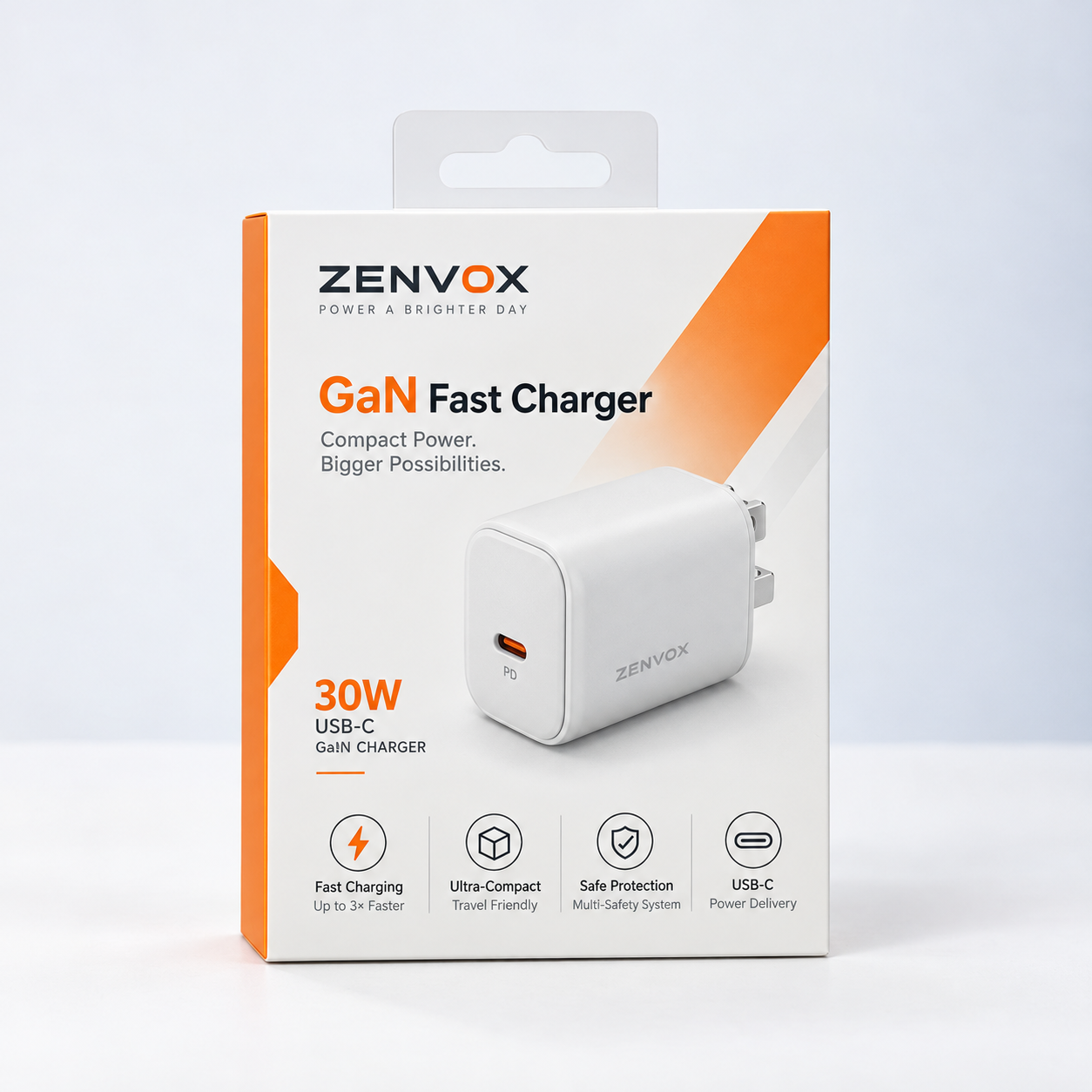
A charger packaging box needs to do more than display a logo. It must hold the product securely, protect its finish, organize accessories, and communicate specifications clearly. For brands and importers, it also needs to support efficient assembly, storage, and distribution.
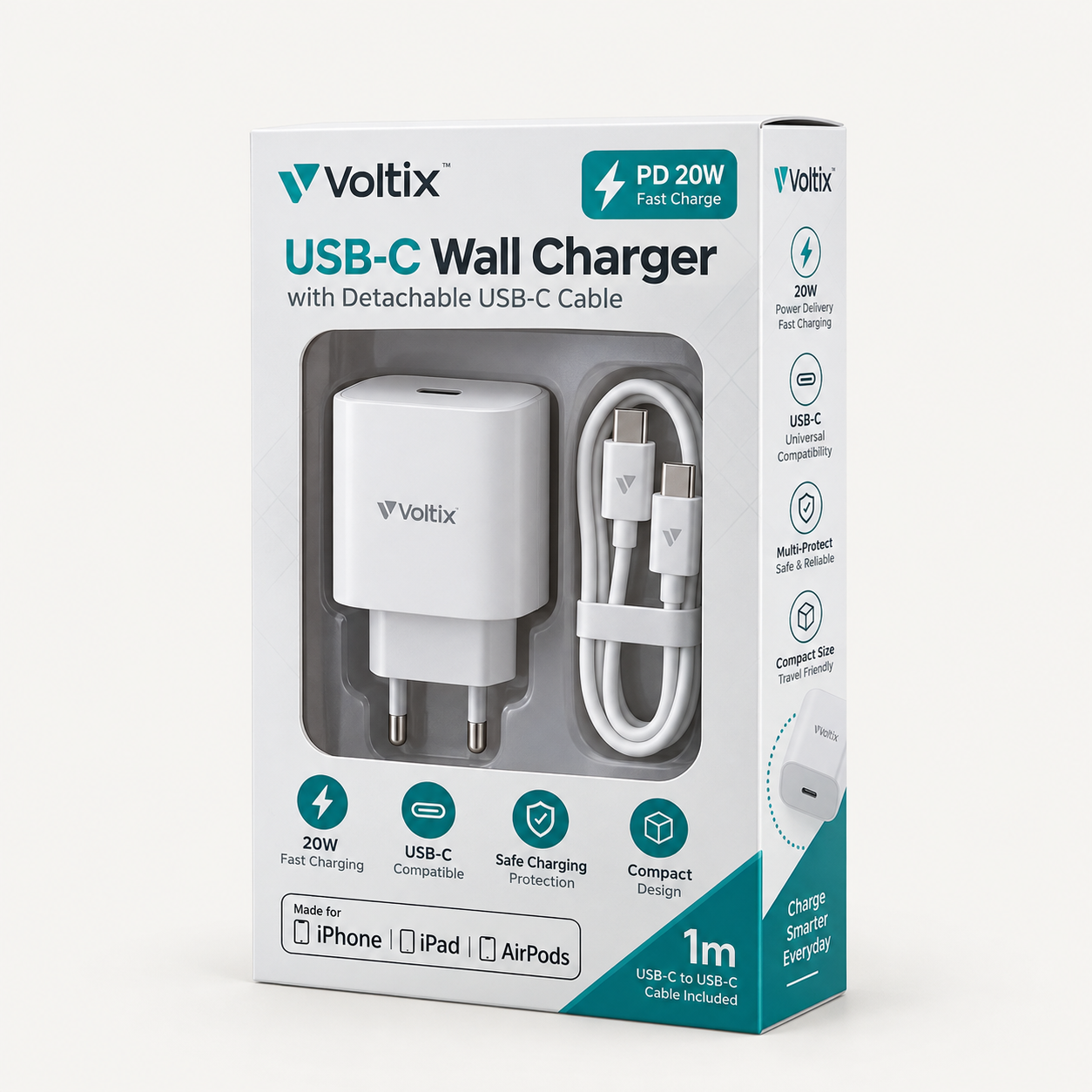
The right solution depends on the charger itself. A compact wall adapter, a multi-port desktop charger, and a wireless charging stand have different dimensions, pressure points, and accessory requirements. Designing around the actual product is the foundation of effective packaging.
This guide explains how to select charger packaging structures, materials, inserts, printing finishes, and quality-control requirements for custom and wholesale projects.
Start With the Product and Sales Channel
Before selecting a box, define exactly what it will contain. Use a physical production sample whenever possible, including the correct plug configuration, cable, manual, and any interchangeable adapters.
Record the product dimensions, weight, exposed pins, surface finish, and accessory arrangement. Confirm whether different regional plug versions require separate inserts or can share one structure.
The sales channel also matters. Retail packaging prioritizes shelf presentation and clear product identification. E-commerce packaging must work within a shipping system that may expose it to drops, vibration, and compression. Distributor orders may require efficient master-carton packing and easy SKU identification.
A retail box and a shipping box perform different jobs. A decorative folding carton should not automatically be treated as a parcel-ready shipping container.
Choose the Right Box Structure
Folding Carton Boxes
Folding cartons are a practical option for compact chargers and accessory kits. They can be supplied flat and support detailed printing without the storage volume of an assembled rigid box.
Closure options include tuck-end and locking-bottom designs. Choose according to product weight, packing method, and retention needs rather than appearance alone.
Rigid Boxes
Rigid boxes can provide a substantial presentation for premium charging kits, gift sets, or larger products. Common formats include lift-off lids, drawer boxes, and hinged structures.
They generally require more storage and shipping space than flat folding cartons. Evaluate whether the presentation benefit justifies the additional material, assembly, and logistics costs.
Corrugated Boxes
Corrugated structures are useful where cushioning, stacking strength, or parcel distribution is a priority. Printed corrugated mailers can combine branding with transport protection, provided the complete packed configuration is validated.
| Box Type | Typical Application | Main Consideration |
|---|---|---|
| Folding carton | Wall chargers and compact accessory kits | Retention, board stiffness, and closure strength |
| Rigid box | Premium sets and gift-oriented products | Presentation versus storage and freight volume |
| Corrugated box | Shipping packs and larger charging products | Protection, compression resistance, and fit |
Select Materials by Performance
Paperboard selection should consider thickness, stiffness, surface quality, and converting behavior. Grammage alone does not establish packaging strength.
A coated white board may suit detailed graphics and bright colors. Kraft-faced materials can support a different visual identity, while recycled-content boards offer other sourcing options. Each must still meet the required structural and printing specifications.
Grain direction and crease design affect folding performance. The board, cutting tools, and crease settings should be matched to reduce cracking and help the box form correctly.
Ask the supplier to identify the board grade and thickness rather than quoting only “premium paper.”
Design Inserts Around the Charger
The insert should prevent excessive movement while allowing straightforward removal. It should support the product without placing concentrated pressure on plug pins, ports, buttons, or delicate surfaces.
Common options include folded paperboard, molded fiber, and foam inserts.
Paperboard inserts can create separate compartments for the charger, cable, and documentation. Their effectiveness depends on geometry, locking features, and fit.
Molded fiber inserts can provide shaped support, but tooling, dimensional variation, and surface contact should be reviewed through samples.
Foam inserts can offer cushioning and close-fitting cavities. Specify the foam type and product-contact requirements instead of assuming all foams provide the same protection.
For polished or coated chargers, check for rubbing and surface marks after handling and transport testing. An insert that looks secure during unboxing may still allow damaging movement in transit.
Organize Accessories and Product Information
Cable placement should avoid sharp bends or concentrated pressure on connectors. Separate loose accessories where necessary so they cannot strike the charger or fall out when the box opens.
Plan space for manuals and warranty information before finalizing the dimensions. Adding documents late can change fit and packing efficiency.
The artwork should clearly distinguish the model, included contents, and relevant product specifications. For multi-port chargers, avoid presenting total rated output in a way that suggests every port can deliver that output simultaneously.
Use product-approved technical information and verified compatibility claims. Packaging graphics should not imply features or accessories that are absent from the box.
Choose Printing and Finishes With Purpose
Printing should support legibility and brand consistency. Establish color references, artwork versions, barcode placement, and minimum text sizes before production.
Matte or gloss coatings can change appearance and handling. Foil, embossing, and selective gloss may highlight branding, but they also introduce additional production steps and inspection requirements.
Review finishes on the selected material. Dark colors may show scuffing or fingerprints, and heavily decorated folds may reveal cracking more clearly.
Approve a production-representative printed sample, not just a digital mockup. A screen image cannot confirm texture, folding quality, color reproduction, or product fit.
Validate the Complete Shipping Configuration
Packaging testing should reflect how the product will actually travel. Include the charger, insert, accessories, closures, and any outer shipping container used in distribution.
Relevant checks may include drops, vibration, compression, and environmental conditioning. Select the test approach according to the distribution route and agreed acceptance criteria.
ISTA procedures evaluate the product-and-package combination; they do not establish that an empty box will protect every product placed inside it.
After testing, inspect both packaging condition and product condition, including surface damage, retention, and functional checks agreed with the charger supplier. Changes to components, cushioning, or shipping configuration may warrant retesting.
Make Specific Sustainability Choices
Reduce unnecessary packaging volume before adding environmental messaging. A well-fitted structure may reduce material use and improve carton utilization, provided protection remains adequate.
Consider recycled content, material separation, and the effect of coatings or mixed-material inserts on disposal options. Avoid assuming that every paper-based pack is recyclable in every market.
Where FSC labeling is requested, confirm the appropriate supply-chain documentation and label authorization. The presence of paperboard alone does not justify an FSC claim.
Prepare a Clear Packaging Specification
A complete brief makes quotations more comparable and reduces revisions.
| Specification | Details to Confirm |
|---|---|
| Product | Model, dimensions, weight, plug version, and accessories |
| Structure | Box style, internal dimensions, closure, and insert layout |
| Materials | Board grade, thickness, insert material, and coatings |
| Artwork | Approved files, colors, graphics, and barcode locations |
| Quality | Fit criteria, cosmetic tolerances, and inspection methods |
| Packing | Flat or assembled delivery, units per carton, and protection |
| Commercial terms | Quantity per design, tooling, samples, and lead time |
Keep the approved sample and specification sheet together. Any material substitution or structural change should be reviewed before implementation.
Conclusion
Effective charger packaging combines protection, clear communication, and efficient production. The best structure is the one that fits the product, supports the sales channel, and performs reliably through distribution.
Start with the actual charger and accessories, validate the insert and box together, and approve measurable specifications before bulk production. This creates a stronger foundation for consistent packaging and a dependable customer experience.Charger Packaging Boxes – The Complete Guide